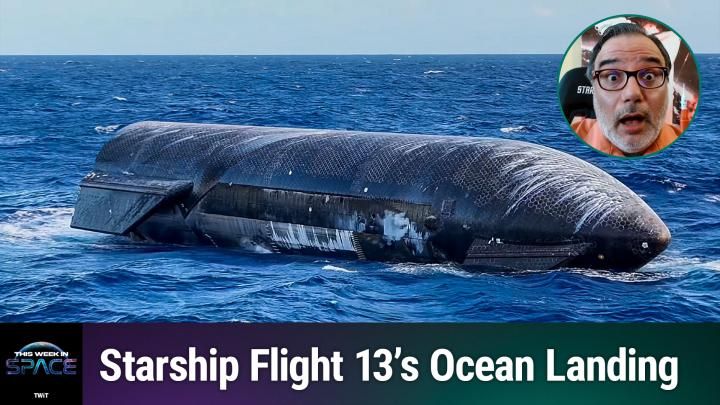
SpaceX's Starship completed a controlled reentry during Flight 13 that left the vehicle intact enough to remain buoyant in the ocean, according to discussion on Episode 221 of the "This Week In Space" podcast. Hosts Tariq Malik and Rick Jenet of the National Space Society examined the implications of the test flight.
The Starship's survival through reentry marks progress toward SpaceX's goal of developing a fully reusable super-heavy launch vehicle. Reentry represents one of the most challenging phases of spaceflight, subjecting hardware to extreme temperatures and aerodynamic forces. That the vehicle retained structural integrity demonstrates advances in thermal protection systems and materials engineering.
The buoyancy of the spacecraft after landing signals that the hull remained watertight despite the violent reentry environment. This outcome suggests the design can withstand the harsh conditions of atmospheric return without catastrophic failure. SpaceX has been iterating rapidly on Starship's capabilities across successive test flights, with each mission building toward the goal of catching the booster with ground infrastructure and eventually achieving orbital refueling.
The podcast discussion examined technical aspects of the reentry sequence and what the intact recovery suggests about Starship's readiness for operational missions. Future flights will continue testing the vehicle's thermal protection tiles, structural systems, and landing mechanisms. Full recovery and reuse of both the booster and upper stage remains central to SpaceX's cost reduction strategy for deep space exploration missions.
The achievement comes as competition increases in the commercial space industry and as SpaceX works toward lunar missions as part of NASA's Artemis program. Successful reentry and recovery of large orbital-class vehicles remains rare, making each test flight valuable data for engineers designing next-generation launch systems.