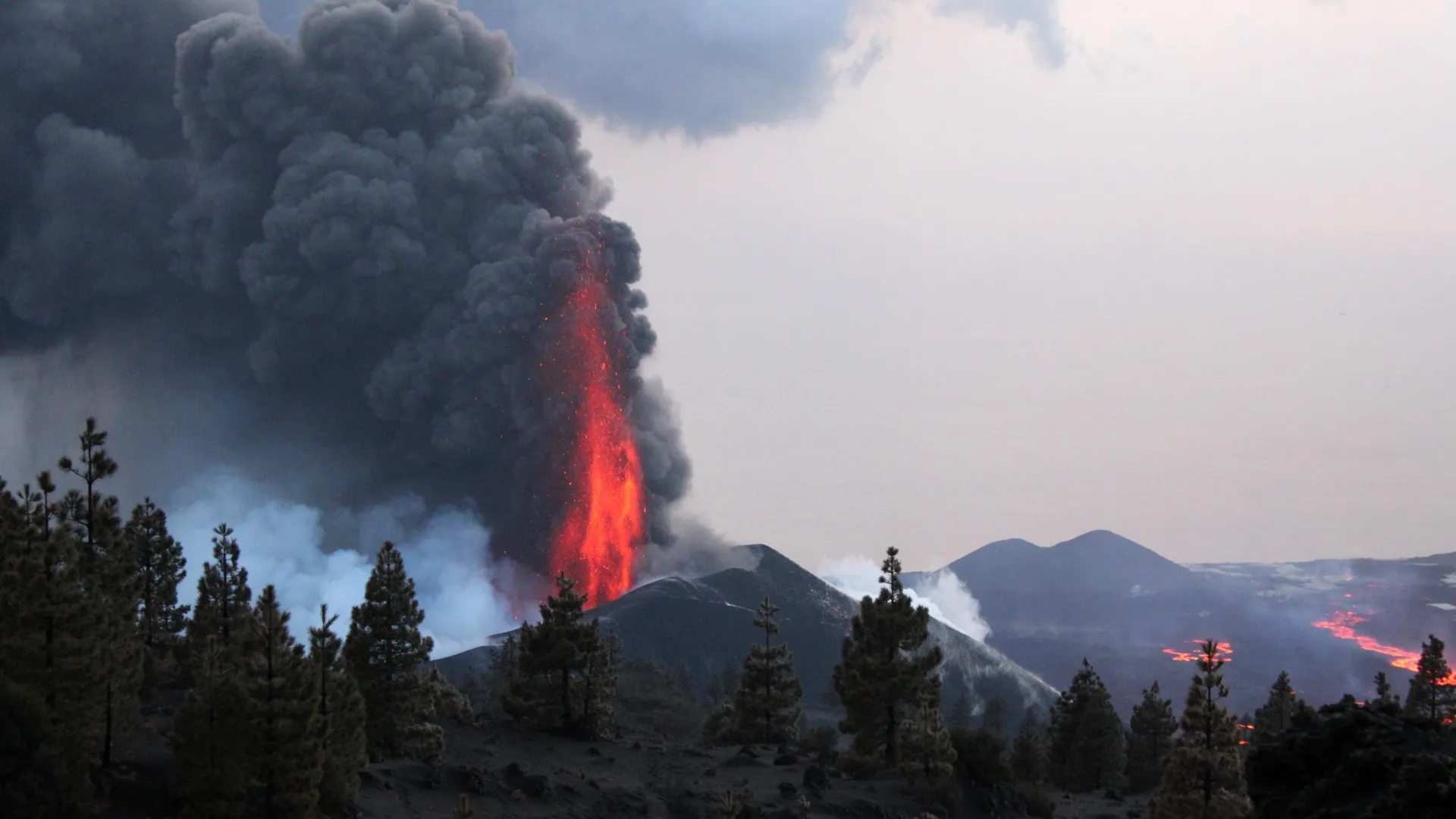
Researchers analyzing magma from La Palma's 2021 Tajogaite eruption have identified a mechanism that explains how volcanic fountains reach dramatic heights. The key lies in superheating, which dissolves the microscopic crystal seeds that typically initiate crystallization in rising magma.
Normally, as magma ascends toward the surface, tiny crystals form and grow, increasing viscosity and eventually slowing the eruption. But when magma becomes sufficiently superheated, these seed crystals dissolve entirely. The molten rock remains fluid and mobile for much longer, allowing gases trapped within to expand more freely. This sustained fluidity translates directly into more vigorous, towering lava fountains.
The discovery emerged from detailed analysis of crystalline structures in samples collected from the La Palma eruption, which lasted weeks and devastated the Canary Island. Scientists examined how crystal nucleation patterns differed from typical basaltic eruptions, revealing that extreme temperatures had fundamentally altered the magma's behavior during ascent.
This finding reshapes understanding of what controls fountain height and eruption style. The presence of superheated conditions means magma can travel further before solidifying, enabling higher fountains and potentially affecting how far lava flows extend. It also suggests that temperature variations within a magma body, even at small scales, exert outsized influence on eruption dynamics.
The research has practical implications for volcanic monitoring. If scientists can identify superheated conditions using seismic data or chemical signals, they might better predict whether an eruption will produce gentle lava flows or explosive fountains. This distinction matters enormously for hazard assessment and evacuation planning in volcanically active regions.
The work builds on decades of experimental volcanology examining how crystal nucleation affects magma behavior, but the direct observation of superheating effects in fresh volcanic samples provides rare field validation