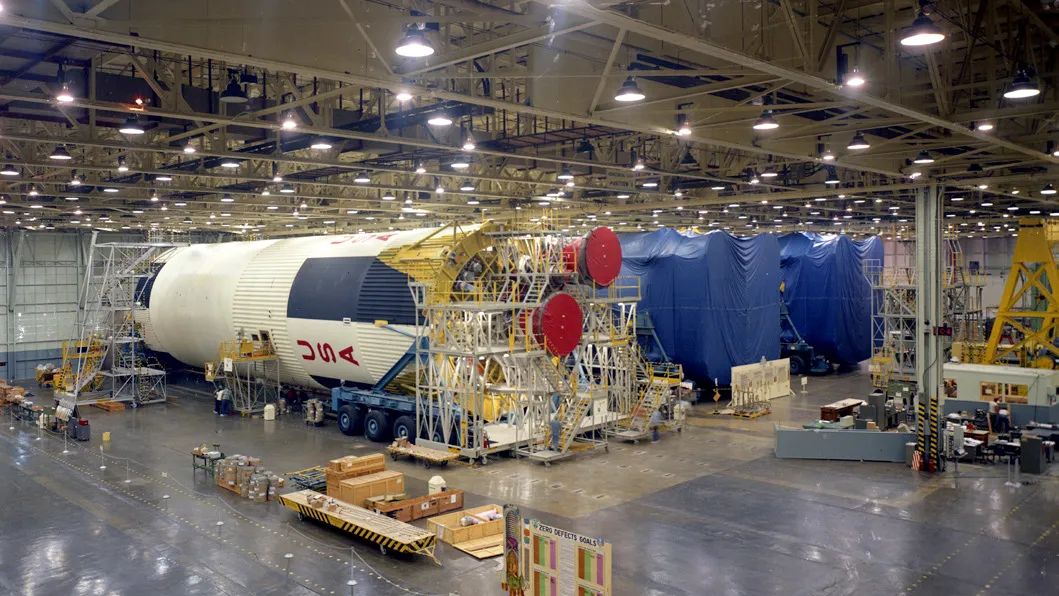
NASA halted production of the Saturn V rocket on August 1, 1968, just one year before Apollo 11 landed humans on the moon. The decision reflected budget pressures that would ultimately terminate the Apollo program.
The Saturn V represented the most powerful rocket ever built at that time. Standing 363 feet tall and weighing 6.2 million pounds, it generated 7.5 million pounds of thrust from its five F-1 engines, each burning kerosene and liquid oxygen. The rocket's three stages could deliver 130 tons to lunar orbit, making it the only launch vehicle capable of supporting the Apollo moon missions.
Congress had funded the Apollo program lavishly during the space race's peak in the mid-1960s, allocating roughly 4 percent of the federal budget to NASA at its height. By 1968, however, political priorities shifted. The Vietnam War consumed resources and public attention. The assassination of President John F. Kennedy in 1963, who had championed the moon goal, removed crucial executive support. Americans had grown accustomed to spaceflight achievements, reducing the novelty that once captivated lawmakers.
The decision to end Saturn V production before Apollo 11 flew appeared counterintuitive but proved strategically timed. NASA had already built 13 Saturn V rockets. Three remained in use for the remaining Apollo missions that would land 12 astronauts on the moon between 1969 and 1972. The agency ceased building the rocket because no additional vehicles would be needed after the final planned moon missions concluded.
The cancellation symbolized the end of an ambitious era. While Apollo 11 succeeded spectacularly in July 1969, subsequent moon missions attracted declining public interest. NASA completed the remaining scheduled lunar landings with its existing Saturn V inventory, then pivoted toward Earth orbit projects like Skylab and eventually the