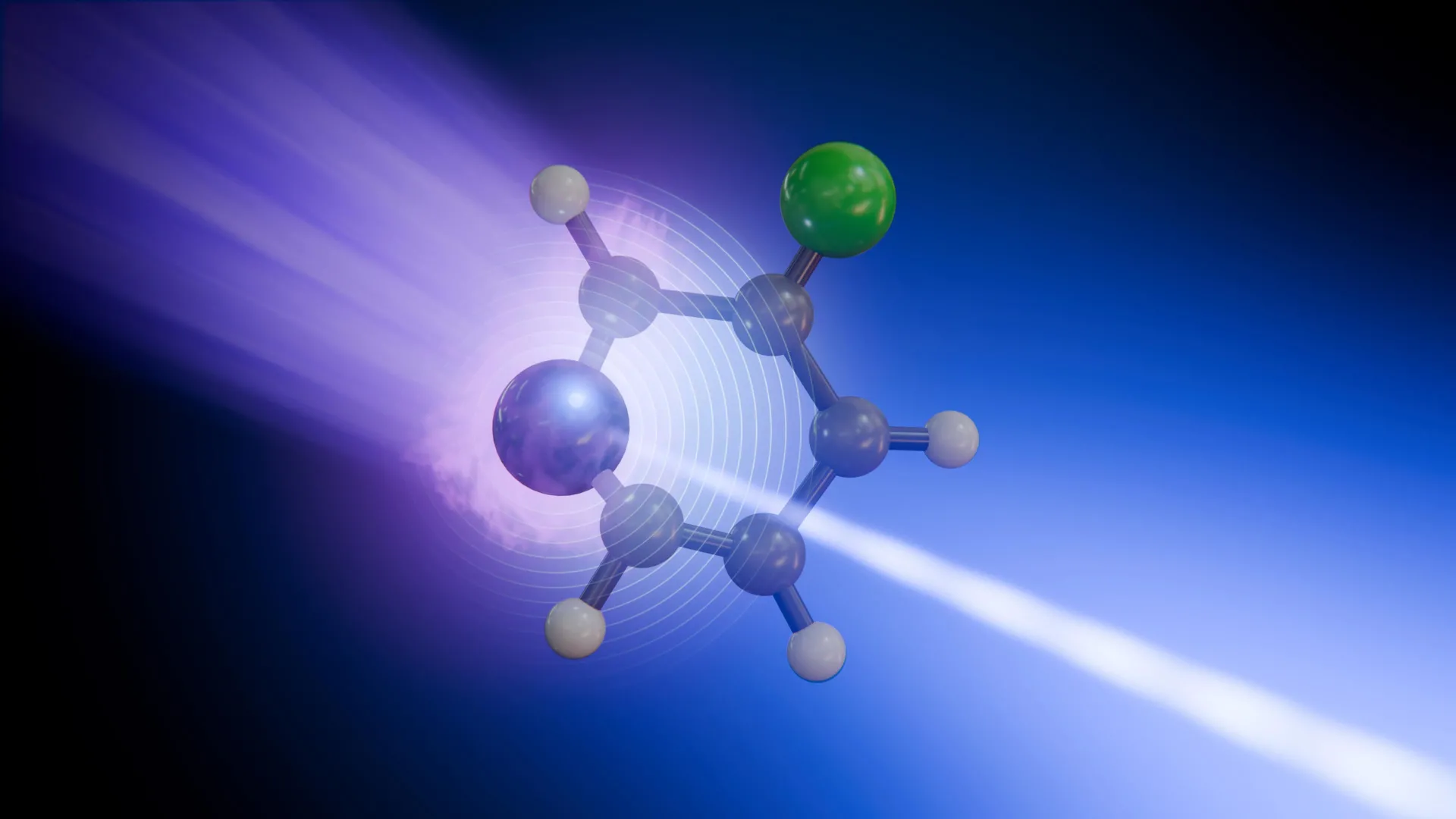
Researchers using ultrafast X-rays have captured the real-time dynamics of light-driven molecular motion, revealing atomic-level details of chemical transformation that occurs in femtoseconds. The technique tracks how molecules absorb photons and convert that energy into physical movement at unprecedented temporal resolution.
The work leverages X-ray pulses from advanced synchrotron facilities, which can freeze molecular motion on timescales of trillionths of a second. By analyzing how X-rays scatter off individual atoms as they shift positions, scientists map the precise choreography of atoms during photochemical reactions. This creates a frame-by-frame view of chemistry in action.
The approach addresses a longstanding challenge in chemistry. Traditional spectroscopy reveals final products and some intermediate states, but it struggles to capture the full sequence of atomic rearrangements during ultrafast processes. X-ray diffraction overcomes this by directly probing atomic coordinates rather than inferring structure from indirect measurements.
Understanding light-driven chemistry matters for multiple fields. Photosynthesis relies on these mechanisms to convert light into chemical energy. Photovoltaic devices and light-responsive materials depend on similar principles. Better knowledge of ultrafast photochemistry enables design of more efficient solar cells, light-activated drugs, and molecular switches.
The femtosecond time resolution proves critical here. Most molecular vibrations and electron redistributions complete within hundreds of femtoseconds. Conventional techniques miss these rapid transitions. Ultrafast X-rays provide sufficient temporal and spatial resolution to capture snapshots of atomic positions during each stage of the reaction.
Prior work demonstrated ultrafast X-ray capability on simpler systems. This new study extends the technique to reveal complete reaction pathways in more complex molecules, tracking all atoms simultaneously as they respond to photoexcitation.
Limitations remain. Synchrotron access restricts which research groups can perform these experiments