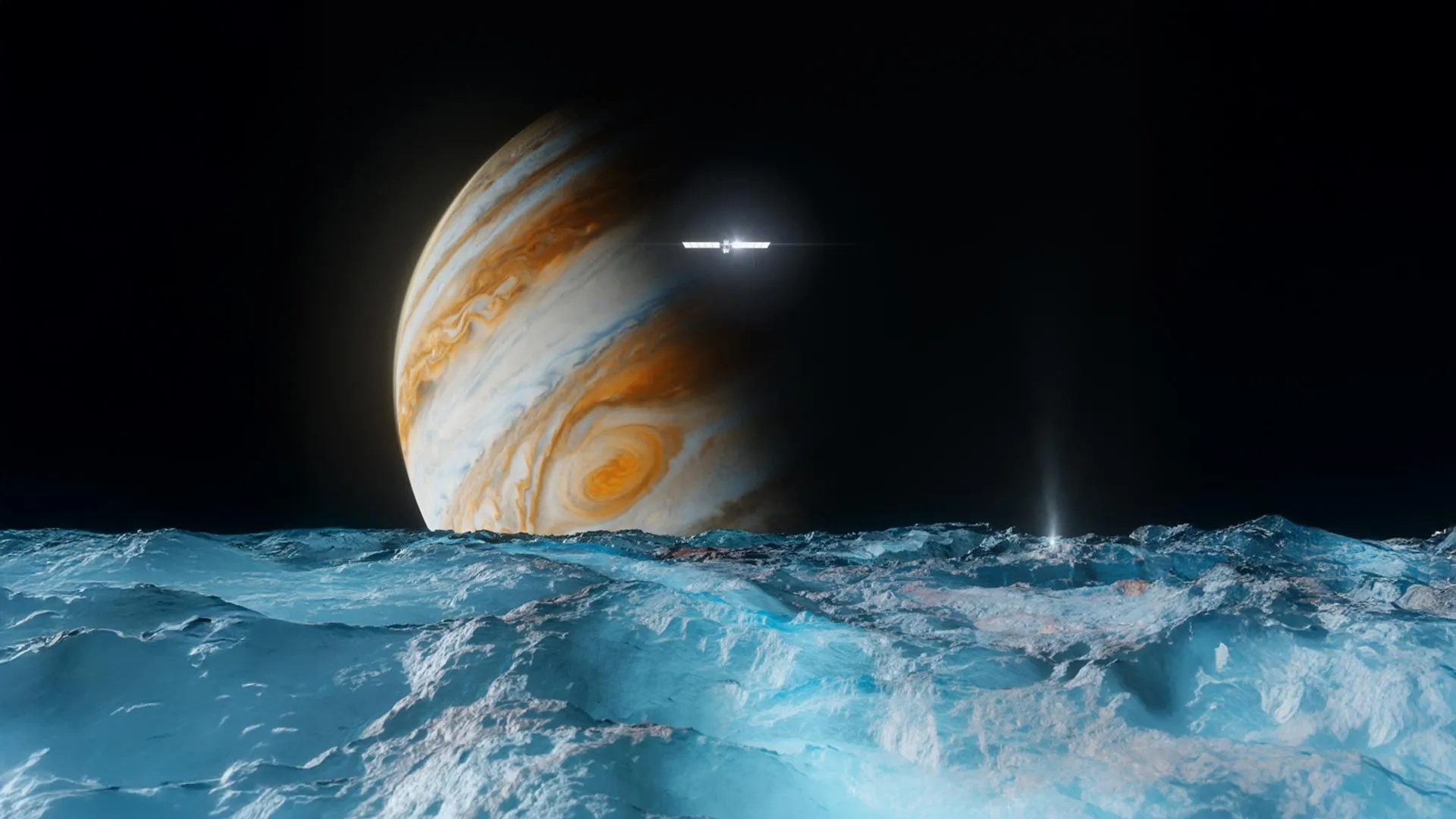
A new computational study reveals that Europa's subsurface ocean presents unexpected obstacles for astrobiologists hunting for signs of life.
Researchers modeled how water from Jupiter's moon's vast subsurface ocean might travel upward through cracks in the icy crust. Previous theories suggested that this water could accumulate in shallow reservoirs near the surface, creating accessible targets for future robotic explorers. The simulations indicate this scenario is far less likely than assumed.
According to the modeling, water ascending through fractures encounters rapid heat loss to the surrounding frigid ice. This process causes the water to freeze into ice crystals within hours, potentially clogging the pathways entirely. The turbulent motion of ascending water accelerates cooling, preventing sustained flow to shallow depths where instruments could detect organic compounds or other biosignatures.
The findings complicate the strategic planning for upcoming missions to Europa. NASA's Europa Clipper spacecraft launched in October 2024 and will conduct reconnaissance of the moon during its orbital survey. A lander mission, currently in development, would need to identify accessible water reservoirs to conduct subsurface sampling. The new simulations suggest such reservoirs may form far less frequently than mission planners hoped.
Europa remains a prime candidate for extraterrestrial habitability. The moon harbors more than twice Earth's volume of liquid water, protected from solar radiation by a kilometers-thick ice shell. Tidal heating from Jupiter's gravity continuously warms the subsurface ocean, potentially powering the chemical reactions necessary for microbial life.
However, the barriers to studying this ocean keep mounting. The ice crust may be thicker than previous estimates. Cryovolcanism, the eruption of water-ice mixtures, remains unconfirmed. And now these simulations suggest that convection pathways between the hidden ocean and the surface operate on timescales and mechanisms fundamentally different