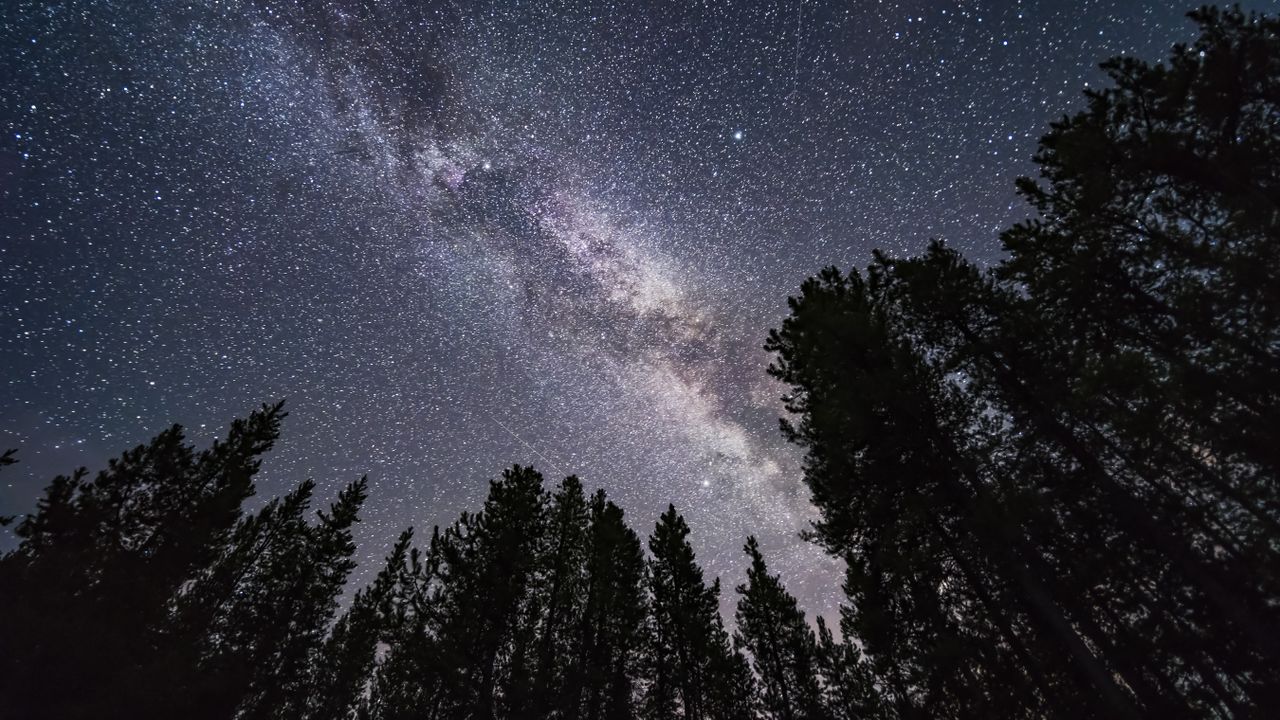
The Great Rift, a striking feature of our galaxy, runs as a continuous band of dark dust clouds stretching from the constellation Cygnus through Sagittarius, appearing to cleave the Milky Way in two. This feature remains largely invisible to casual stargazers, yet summer offers the optimal viewing window to observe it.
The Great Rift forms where dense clouds of cosmic dust block visible light from stars behind them, creating a silhouette against the brighter stellar background. These dust lanes contain gas and particles that absorb photons, making distant stars imperceptible to our eyes. Astronomers have long studied these structures as tracers of star formation regions and the galaxy's structure.
Observing the Great Rift requires minimal equipment. A dark sky location far from light pollution provides the best conditions, though the feature remains visible from moderately light-polluted areas during peak summer months when the Milky Way reaches its highest point in the night sky. Binoculars can enhance visibility, revealing the dust lanes' texture and depth. The feature stretches roughly 2,000 light-years across and represents one of the most accessible large-scale structures visible to the unaided eye.
The Great Rift's prominence during summer occurs because the galactic center region, where the rift is most pronounced, culminates highest overhead in the Northern Hemisphere during these months. This positioning maximizes contrast and minimizes atmospheric distortion from viewing angles closer to the horizon.
Understanding the Great Rift contributes to broader knowledge of galactic structure and dust distribution. Infrared observations penetrate these dust clouds, revealing hidden star-forming regions and stellar populations that visible-light telescopes cannot detect. The feature exemplifies how simple naked-eye observations connect to sophisticated astrophysical research.
The Great Rift demonstrates that major astronomical discoveries remain accessible without advanced technology. Summer