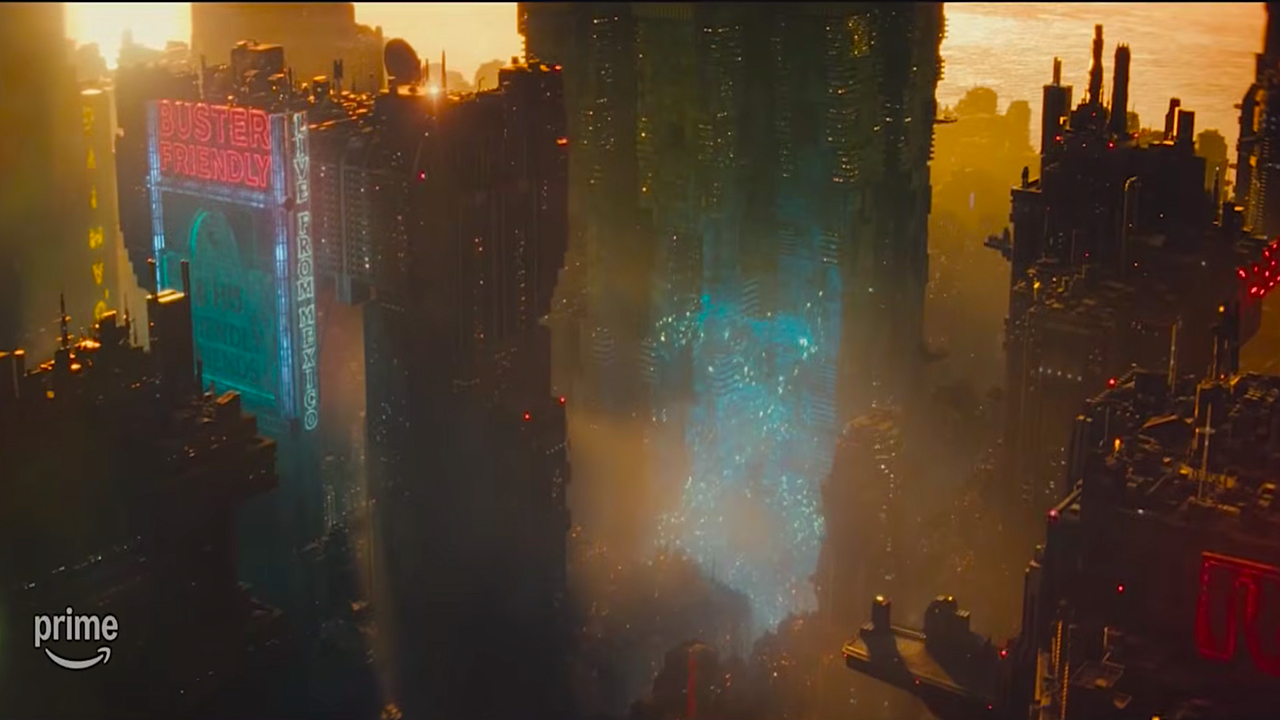
Prime Video's upcoming "Blade Runner 2099" series reimagines the franchise with replicants in control. The new show flips the power dynamic of the original films, depicting an uprising where synthetic beings have seized authority from humans in Los Angeles.
The series expands the world established by Ridley Scott's 1982 "Blade Runner" and Denis Villeneuve's 2017 "Blade Runner 2049." Instead of humans hunting down rogue replicants, the narrative centers on a society where replicants have successfully rebelled and now rule the city.
Amazon's streaming series represents a significant shift in franchise storytelling. Rather than exploring replicants as fugitives or threats, the show examines what happens when artificial beings achieve political dominance. The premise raises questions about consciousness, rights, and power that the original films touched on but never fully explored from the replicants' perspective.
The title card promises "It's our time now," signaling the replicants' victory and their transition from hunted to hunter, from subjects to rulers. This reversal offers new thematic territory for exploring what a replicant-controlled civilization looks like and how it differs from human governance.
Details about the cast, production timeline, and specific plot points remain limited. The project represents Alcon Entertainment's continued expansion of the Blade Runner universe through television, following the studio's work on the 2049 film.
The series lands as science fiction increasingly examines AI and synthetic life through different moral lenses. Rather than defaulting to narratives where artificial beings pose existential threats, "Blade Runner 2099" appears positioned to explore what posthuman society might actually value and prioritize.
The show capitalizes on decades of fan investment in the Blade Runner mythology while attempting to generate fresh narrative conflict. Whether the replicant-ruled Los Angeles represents utopia