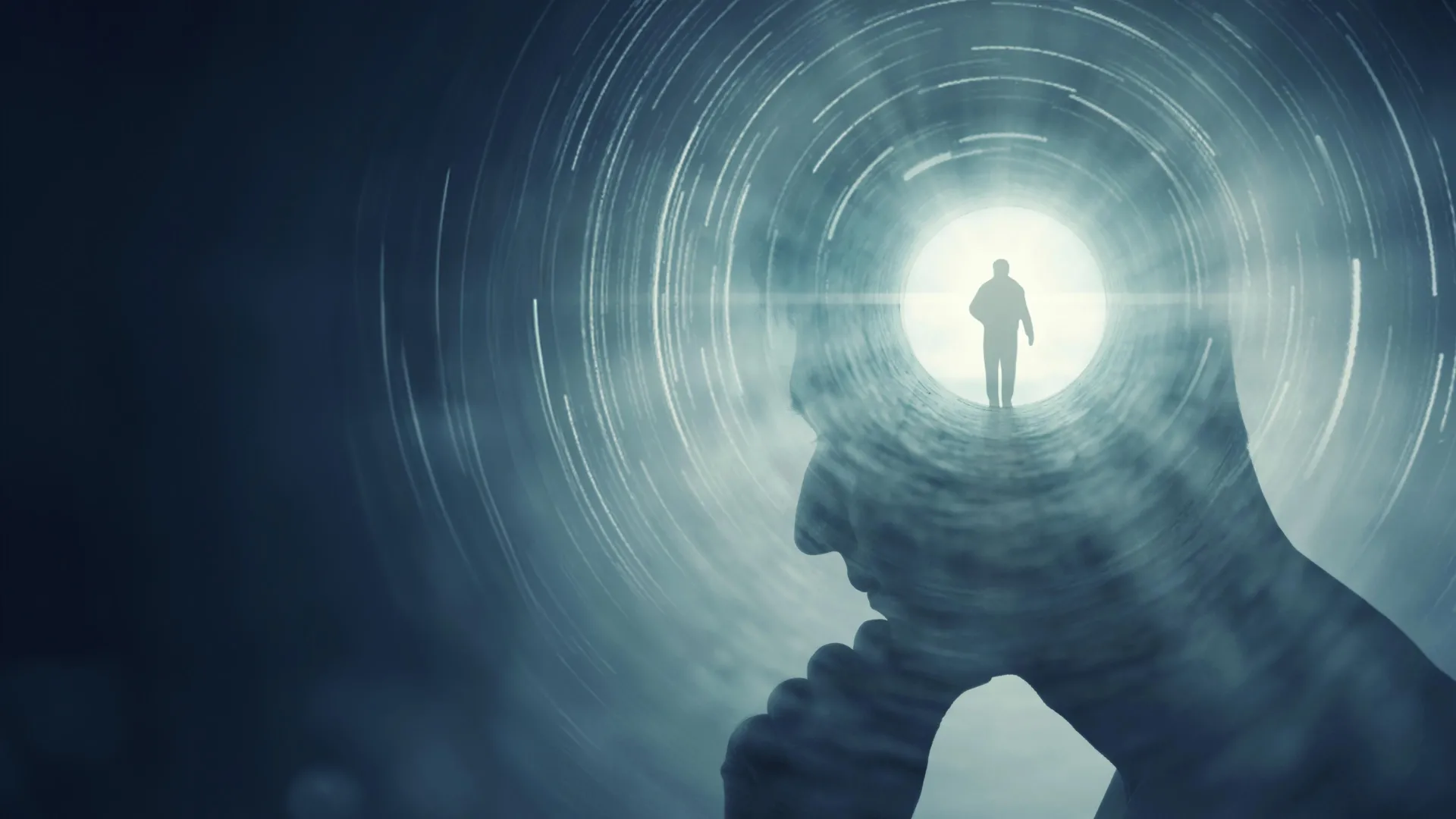
Christof Koch, a prominent neuroscientist, challenges the foundational assumption that the brain generates consciousness. Instead of accepting materialism—the view that physical matter alone explains all phenomena—Koch argues this framework has failed to solve what philosopher David Chalmers called the "hard problem of consciousness": why physical brain activity produces subjective experience at all.
Koch's research examines anomalies that standard neuroscience struggles to explain. Near-death experiences, where people report vivid awareness during brain shutdown, and terminal lucidity, when severely dementia patients suddenly regain clarity before death, both suggest consciousness may operate independently of normal neural function. These cases hint that subjective experience might not be exclusively generated by brain tissue.
Koch proposes an alternative: consciousness could be fundamental to the fabric of reality itself, woven throughout the universe like space and time. This perspective aligns with panpsychism, a philosophical view gaining traction among some physicists and philosophers. Rather than consciousness emerging from complex neural circuits, it would exist as a basic property of nature that brains somehow access or organize.
This represents a dramatic departure from neuroscience's dominant model. For decades, researchers mapped brain regions linked to conscious states, assuming they had identified consciousness's source. Koch's challenge forces scientists to reconsider whether correlation between brain activity and awareness truly demonstrates causation.
The implications extend beyond academia. If consciousness proves fundamental rather than emergent, neuroscience would need to reframe its entire investigative approach. Questions about artificial consciousness, animal awareness, and the nature of subjective experience take on entirely new dimensions.
Koch's work remains speculative and faces significant scrutiny. Critics argue that near-death experiences reflect brain chemistry under extreme conditions rather than evidence of non-physical consciousness. The hard problem itself remains contentious among philosophers. Yet Koch's willingness to question materialism opens intellectual space for perspectives previously dismissed as unscientific.