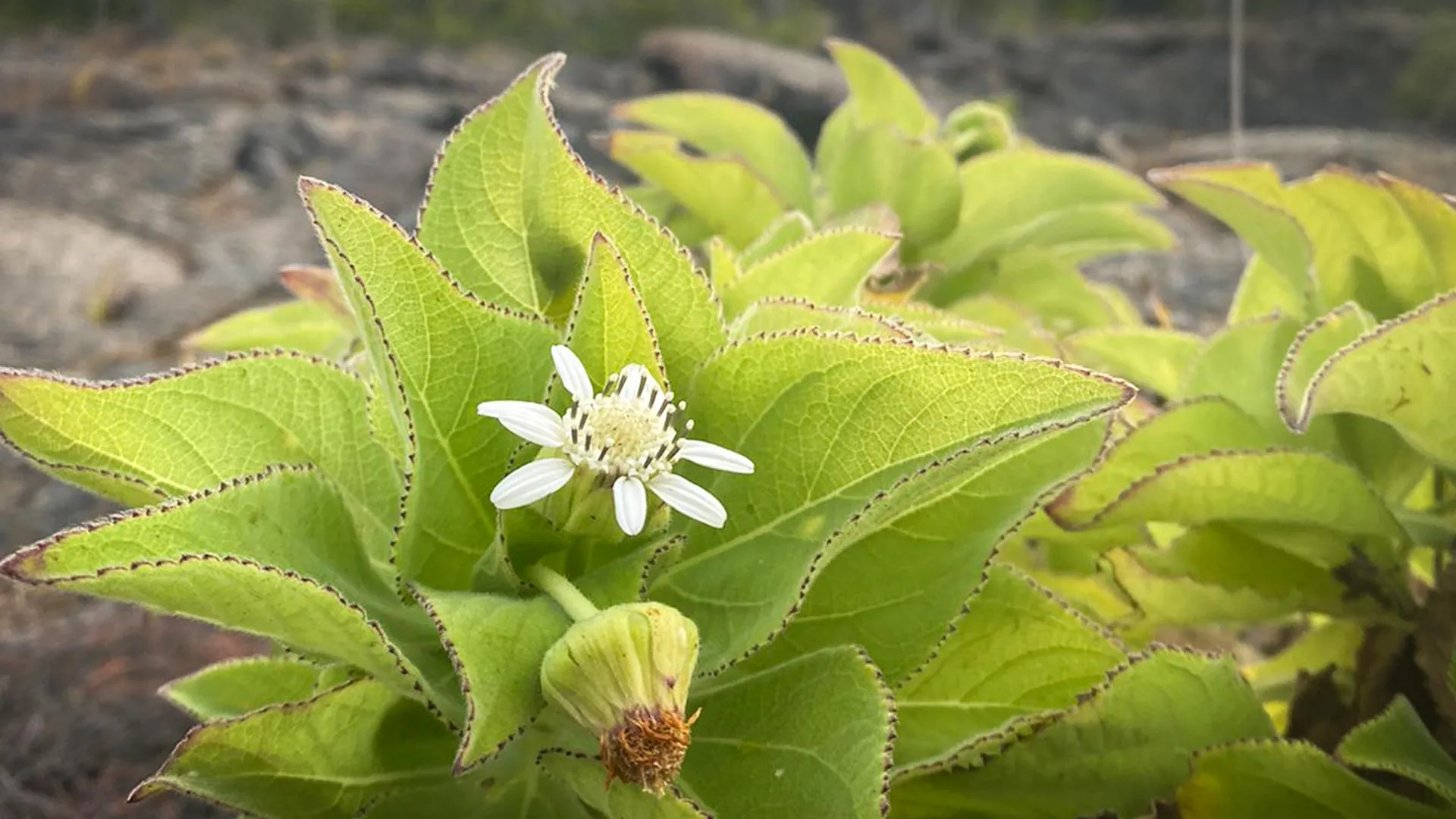
Researchers studying giant daisies on the Galápagos Islands have documented evolution repeating itself through fundamentally different genetic pathways. The plants independently evolved identical heat-tolerant leaf shapes multiple times across different lineages, yet each population achieved this convergent trait using distinct combinations of genes.
The discovery comes from an analysis of *Scalesia* daisy populations across the archipelago's volcanic islands. Scientists found that isolated plant communities facing similar environmental pressures—intense solar radiation and limited water—developed nearly identical leaf morphologies. However, genetic sequencing revealed that these visually similar adaptations emerged through different molecular mechanisms in each lineage.
This pattern of convergent evolution through divergent genetic solutions challenges assumptions about predictability in evolution. While natural selection consistently favors heat-tolerant leaf structures, the genes underlying these adaptations vary considerably between populations.
The research also identified substantial genetic differentiation among geographically isolated *Scalesia* populations. These divergences suggest speciation events may be occurring actively on the islands today, following the same processes Darwin observed in finch diversification more than a century and a half ago.
The findings demonstrate that evolution can reach similar solutions through multiple genetic routes when organisms face identical environmental demands. They also illustrate how geographic isolation drives populations toward reproductive incompatibility and eventual speciation.
The work updates our understanding of how organisms adapt to harsh conditions and confirms the Galápagos Islands remain a natural laboratory for evolutionary biology. The research validates Darwin's foundational observations while revealing the underlying complexity of genetic mechanisms that drive visible evolutionary change. Future studies tracking these populations could document speciation in real time, offering rare insight into how biodiversity actually originates.