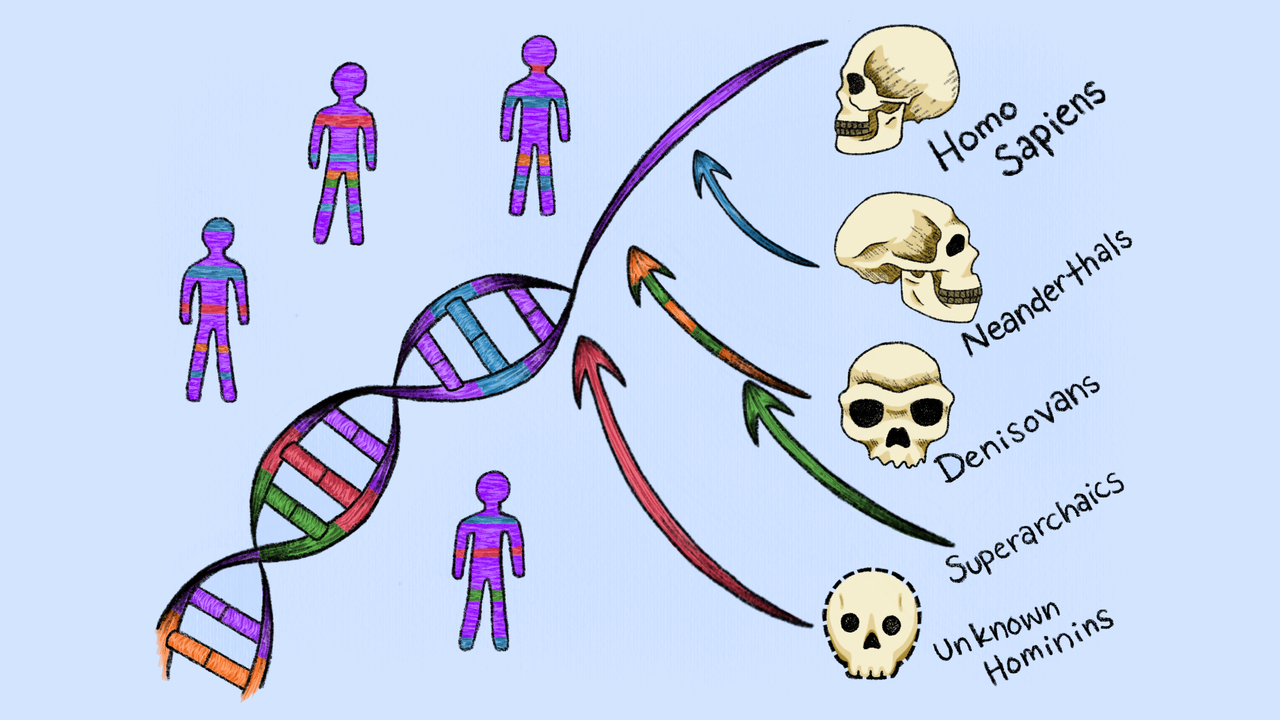
Researchers have identified two previously unknown ancient human lineages that interbred with our ancestors, according to a new analysis of modern human DNA. These "ghost" populations, which left no fossil record, contributed genetic material to people alive today.
The discovery comes from advanced computational methods that detect signatures of ancient DNA in present-day genomes. Scientists can now identify interbreeding events even when no physical remains of the extinct species survive. This approach reveals that modern humans inherited DNA from multiple waves of ancient encounters with now-vanished human relatives.
The two newly identified lineages represent distinct branches in human evolutionary history. One appears to have contributed to genetic diversity in African populations, while the other influenced ancestry in other regions. These ghost populations diverged from the main human lineage tens of thousands of years ago, yet their DNA persists in living humans today.
This work builds on previous discoveries of archaic DNA in modern genomes. Researchers already knew that non-African humans carry Neanderthal DNA and that some populations inherited genetic material from Denisovans. The new findings expand that picture considerably. Ancient humans likely interbred with numerous extinct relatives, creating a complex network of genetic exchange across continents and millennia.
The method works by examining patterns of genetic variation in large population samples. When ancient populations interbreed with modern lineages, they leave detectable imprints in DNA sequences. Advanced statistical techniques can pinpoint these signals even from populations that disappeared entirely before written history or extensive fossil records began.
The research demonstrates that human evolutionary history involved far more interaction between different groups than previously documented. These exchanges shaped modern genetic diversity and may have contributed adaptive traits that helped human populations survive in different environments. As DNA analysis techniques continue improving, scientists expect to uncover additional ghost lineages and refine the timeline of human encounters with extinct relatives.