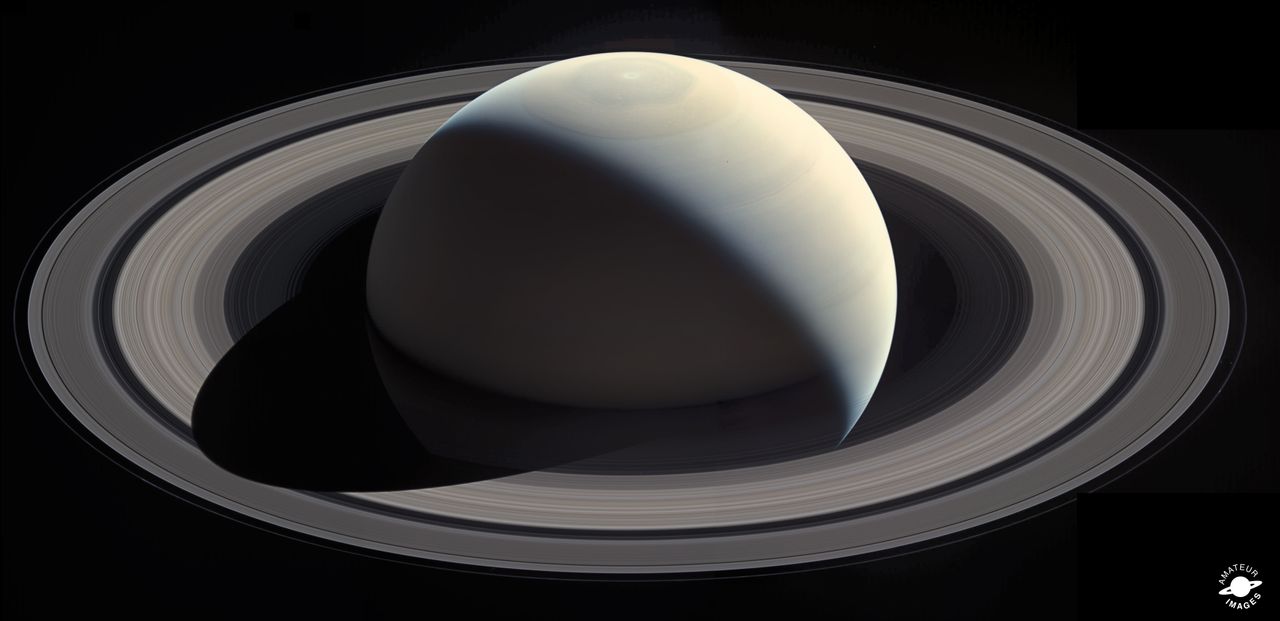
Galileo Galilei turned his telescope toward Saturn on July 30, 1610, and saw something no human had witnessed before: the planet's rings. The Italian astronomer couldn't identify exactly what he was looking at. His equipment couldn't resolve the structures clearly enough. He initially recorded the appearance as "ears" or handles protruding from the planet's sides in his notebooks.
This observation marked a watershed moment in astronomy. It demonstrated that Earth's moon wasn't the only celestial body with unusual features. Saturn's rings challenged prevailing assumptions about planetary structure and expanded what astronomers understood about the solar system's diversity.
Galileo's discovery arrived during an extraordinary period of telescopic observation. He had already observed Jupiter's moons months earlier, another finding that shattered the idea of a simple Earth-centered cosmos. The telescope itself, newly invented in the early 1600s, was revolutionizing astronomy by revealing details invisible to the naked eye.
The rings remained mysterious for decades. Astronomers debated their nature. Some thought they were moons. Others proposed they were solid bands. The mystery lasted until the late 1600s when Dutch astronomer Christiaan Huygens correctly identified them as a thin, flat ring system surrounding the planet.
Today, scientists know Saturn's rings consist of billions of particles ranging from dust-sized grains to house-sized boulders, all orbiting the planet in a plane. Spacecraft like Cassini-Huygens have provided unprecedented close-up views, revealing the rings' complex structure, gaps, and wave patterns.
Galileo's observation of Saturn's rings exemplifies how telescopic astronomy opened entirely new domains for investigation. A single observation launched centuries of inquiry into planetary rings, their formation, and their behavior. Saturn's rings have become one of astronomy's most visually distinctive features and a subject of ongoing scientific study into how