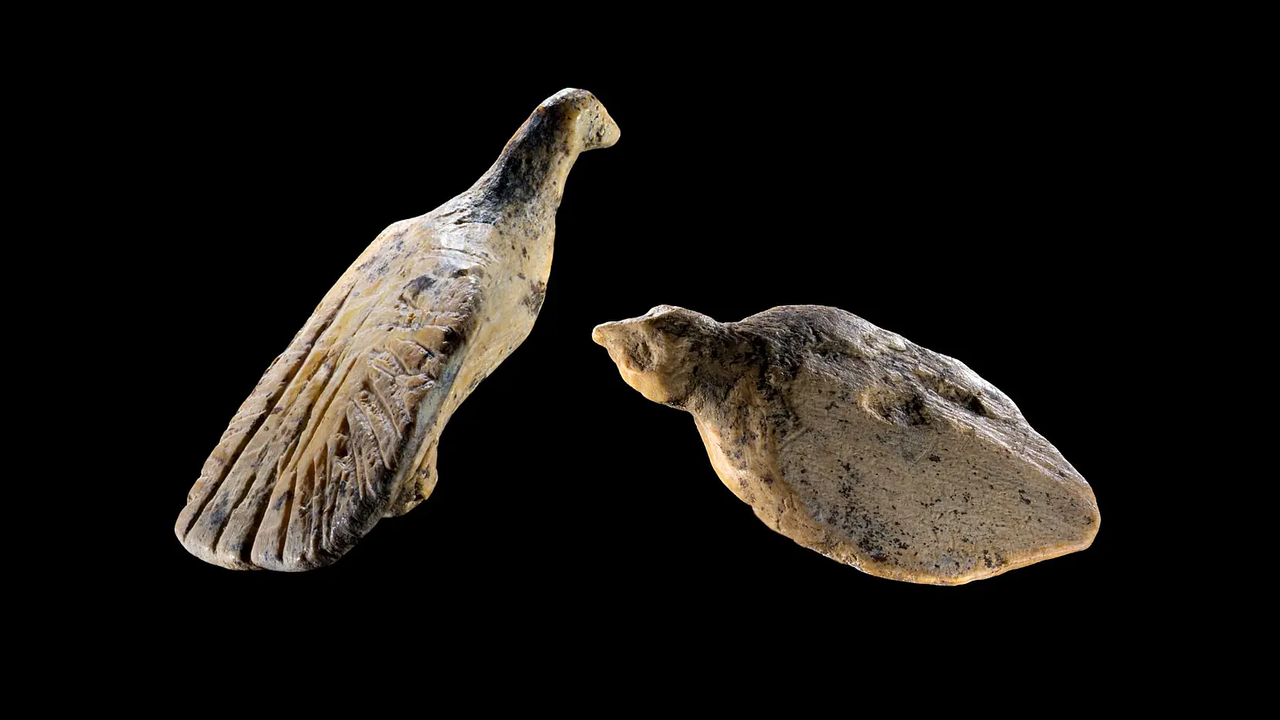
Archaeologists have uncovered two bird figurines carved from mammoth ivory in a German cave, dating back 40,000 years and revealing sophisticated artistic expression during the Ice Age. The thumbnail-sized sculptures were discovered at Vogelherd Cave in southwestern Germany, a site that has yielded earlier bird carvings from the same period.
The figurines demonstrate that early humans possessed remarkable observational skills and fine motor control. Each carving captures distinct anatomical details of different bird species, suggesting the artists studied avian subjects closely before translating their observations into ivory. The precision required to produce such small, detailed objects from mammoth ivory indicates considerable craftsmanship and patience.
This discovery adds to a growing body of evidence that early humans in Europe engaged in sophisticated artistic practices far earlier than previously documented. The Vogelherd Cave site has become increasingly important in understanding Aurignacian culture, the archaeological period associated with early modern humans in Europe between roughly 43,000 and 38,000 years ago.
The bird carvings likely held cultural or spiritual significance beyond mere decoration. Birds may have represented important symbols in these communities, possibly related to hunting, migration patterns, or cosmological beliefs. The choice of mammoth ivory as the medium suggests access to valued raw materials and the ability to preserve objects with intentional meaning.
The recovery of these figurines required meticulous excavation and documentation. Their small size means they could easily have been lost or overlooked in less careful archaeological work. The dating, conducted through radiocarbon analysis and stratigraphic analysis, places them securely within the early Upper Paleolithic period.
These artifacts challenge the narrative that Ice Age humans were preoccupied solely with survival. Instead, they invested time and skill in creating portable art objects that may have traveled with them as the climate shifted and hunting grounds changed. The bird figurines offer tangible evidence that aesthetic sensibility