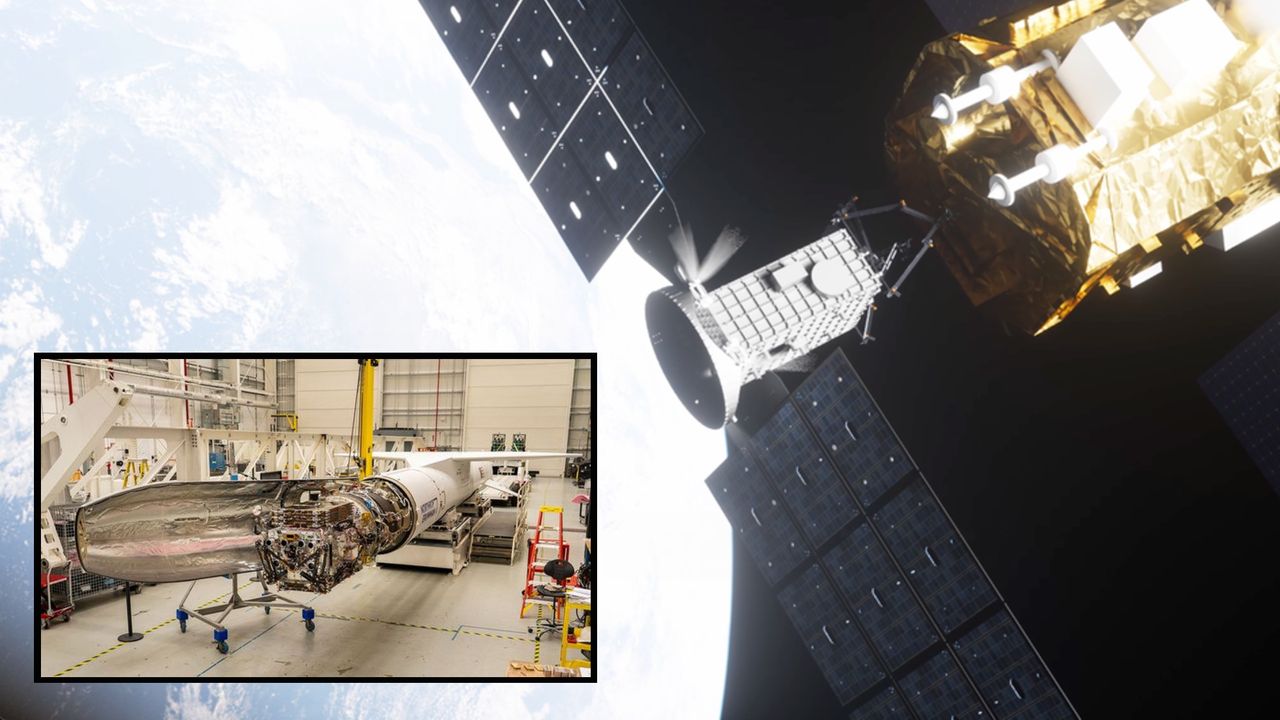
NASA's Swift Boost mission, launched this month to extend the life of the aging Swift gamma-ray observatory, has encountered unexpected problems. The rescue spacecraft itself now faces control difficulties, complicating the effort to save the satellite.
Swift, which has been observing gamma-ray bursts and other high-energy cosmic phenomena since 2004, has been gradually losing altitude due to atmospheric drag. The spacecraft was designed for a five-year mission but has far exceeded expectations, providing two decades of scientific data. Without intervention, Swift would eventually fall back to Earth.
Swift Boost was designed to provide a gentle push using a newly developed autonomous rendezvous and proximity operations system. The spacecraft would approach Swift and use its thrusters to nudge the aging observatory back into a higher orbit, potentially adding another decade to its operational life.
However, the rescue mission has hit a snag. Swift Boost is experiencing control issues that could jeopardize the delicate rendezvous procedure required to reach and assist Swift. The exact nature of the control problems remains unclear from available reports, but such issues could affect the spacecraft's ability to navigate, maintain proper orientation, or execute the precise maneuvers needed for the rescue operation.
NASA engineers are working to diagnose and resolve the issues affecting Swift Boost. The agency has not yet announced whether the technical problems will delay or prevent the rescue attempt.
This situation highlights the risks inherent in space-based rescue operations. While satellite servicing and orbital refueling represent promising technologies for extending mission lifespans and reducing space debris, executing these procedures requires flawless execution. Any malfunction in the rescue spacecraft itself can undermine the entire objective.
Swift remains a valuable observatory for studying transient high-energy phenomena across the cosmos. Losing it prematurely would eliminate an irreplaceable tool for astrophysics research, making the Swift Boost mission critical to the scientific