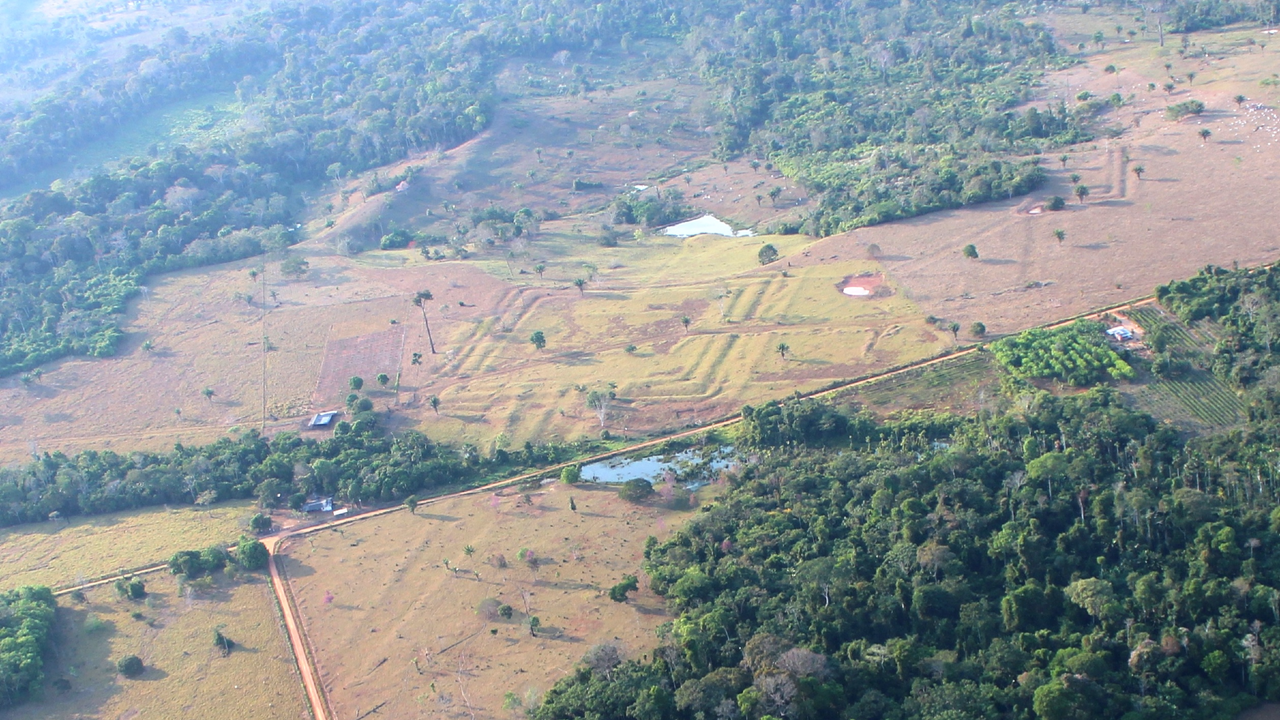
Researchers using lidar technology have discovered hundreds of previously unknown geoglyphs hidden beneath the Amazon rainforest canopy, revealing evidence of a sophisticated ancient civilization that flourished roughly 2,000 years ago.
The findings come from a lidar survey, a remote sensing technique that uses laser pulses to penetrate dense vegetation and map the ground beneath. By scanning the rainforest from above, scientists identified geometric earthworks—including squares, circles, and other shapes—that had remained invisible to ground-based archaeologists for centuries.
The scale of the discovery suggests the civilization possessed substantial organizational capacity and labor resources. These geoglyphs span across multiple locations in the Amazon basin, indicating a widespread culture that modified its landscape deliberately and extensively. The earthworks likely served ceremonial, defensive, or residential purposes, though researchers continue analyzing the findings to understand their exact function.
Lidar has become transformative for Amazon archaeology. The technology bypasses one of the region's greatest challenges: the dense tropical canopy that blocks aerial photography and ground surveys. In recent years, lidar surveys have repeatedly revealed lost cities, road networks, and agricultural systems throughout the Amazon, fundamentally reshaping our understanding of pre-Columbian population density and environmental engineering.
The discoveries challenge long-held assumptions that the Amazon remained sparsely populated before European contact. Instead, evidence points to complex societies that shaped their environment through infrastructure projects comparable to those of other ancient civilizations worldwide.
Researchers have not yet identified which specific culture created these geoglyphs or connected them definitively to known archaeological complexes. Dating and contextual analysis remain ongoing. The work underscores how much remains unknown about Amazonian prehistory and how technology continues to rewrite archaeological narratives. The rainforest's ability to conceal such extensive evidence for millennia highlights both the region's preservation qualities and the limitations of traditional field archaeology in tropical environments.
CATEGORY