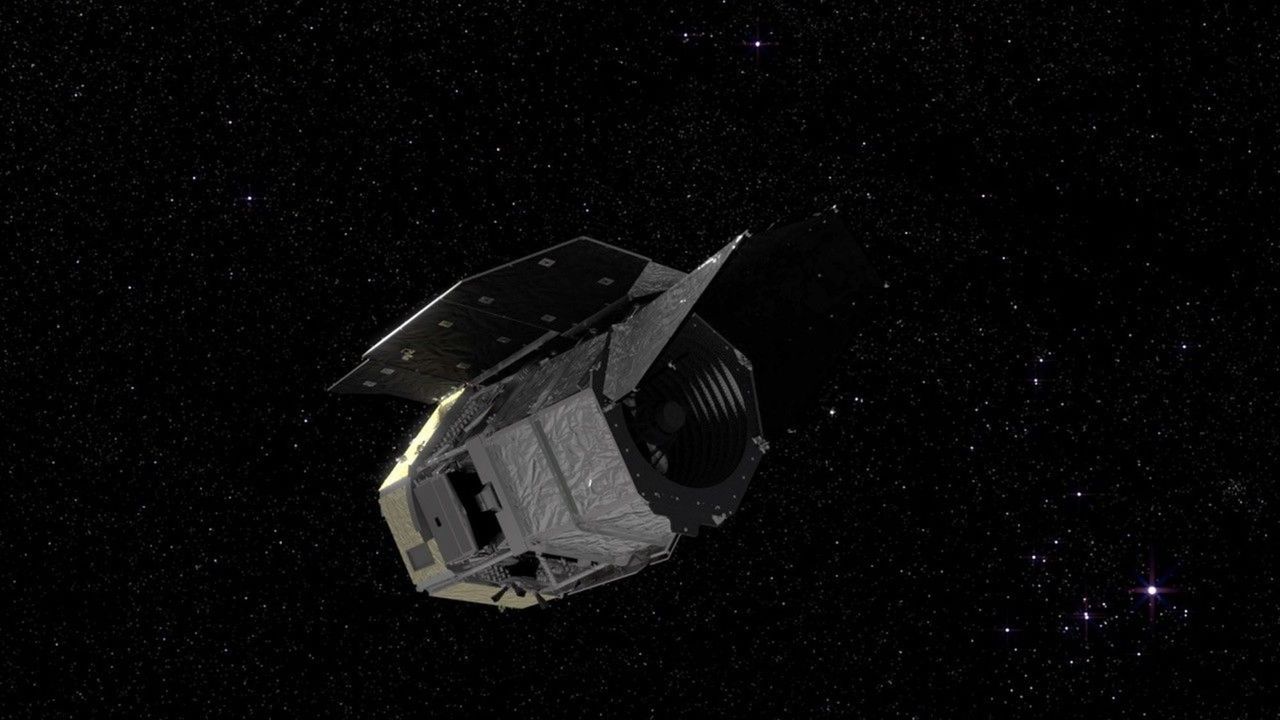
NASA is preparing to launch the Roman Space Telescope on August 30 aboard a SpaceX Falcon Heavy rocket, marking a major expansion of humanity's ability to observe the universe. The mission represents the agency's next flagship observatory after the James Webb Space Telescope.
The Roman Space Telescope will conduct an unprecedented all-sky survey with capabilities that current observatories cannot match. Named after Nancy Grace Roman, the pioneering NASA astrophysicist who established the agency's space telescope program, the instrument combines advanced imaging technology with infrared detection to map celestial objects across the entire sky.
The telescope addresses a gap in astronomical observation. While the James Webb Space Telescope provides exceptional depth and detail for specific targets, Roman offers breadth. Its wide field of view allows it to capture vast regions of space simultaneously, enabling scientists to detect objects and phenomena that narrower-focused instruments would miss entirely.
Key scientific objectives include studying dark energy and the expansion of the universe, searching for exoplanets through gravitational microlensing techniques, and observing distant galaxies and supernovae. The mission will generate data valuable for understanding cosmic structure and evolution on the largest scales.
The Falcon Heavy launch vehicle provides sufficient payload capacity to deliver Roman's approximately 7,600-pound instrument to its destination at the Sun-Earth L2 Lagrange point, the same orbital location where the James Webb Space Telescope operates. This position allows Roman to maintain a stable observation point while remaining relatively close to Earth for communications and servicing considerations.
NASA engineers and scientists have spent years developing and testing Roman's systems. The mission builds on decades of space telescope technology refinement while introducing new capabilities that respond to questions emerging from previous observations, particularly those from the Hubble Space Telescope and its successor.
The Roman Space Telescope launch follows the successful deployment of James Webb, which itself faced significant delays and cost overruns before becoming one