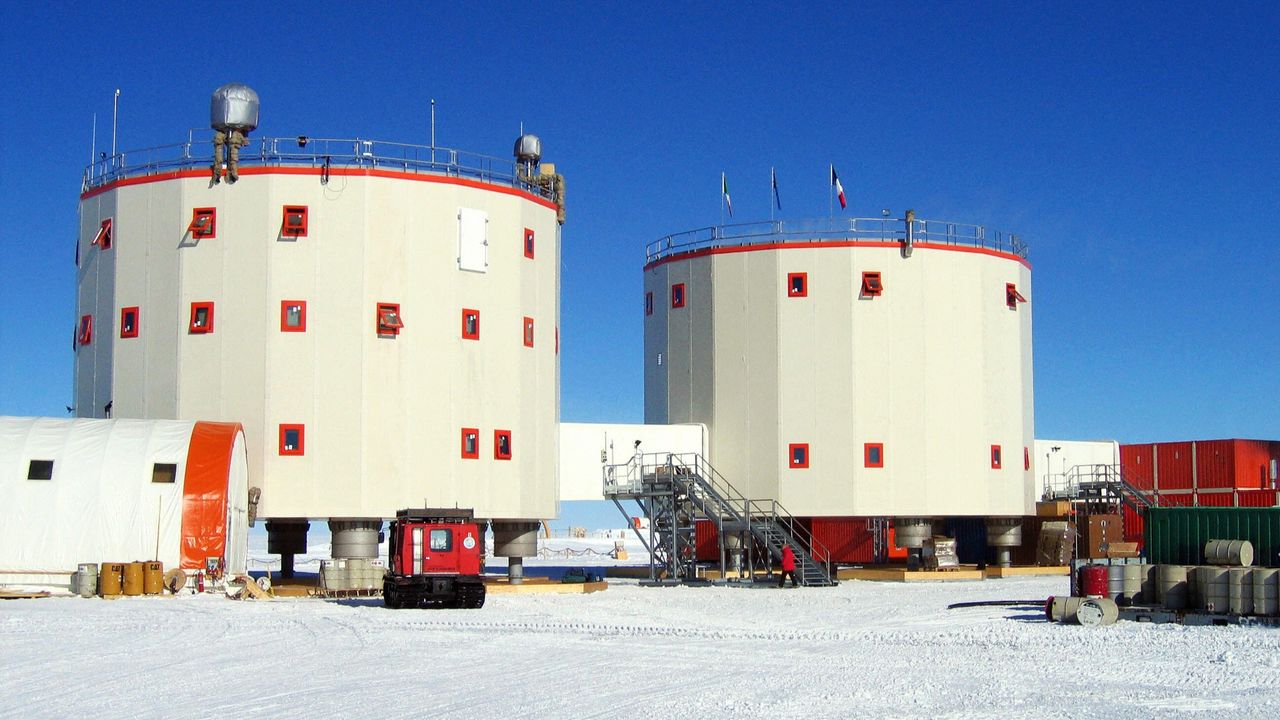
Antarctica's Concordia research station recorded a temperature of minus 119 degrees Fahrenheit (minus 88 degrees Celsius) recently, marking Earth's coldest temperature since 2012. Scientists at the facility, often called home to "astronauts of ice," documented this extreme cold reading during routine atmospheric monitoring.
The temperature ranks among the most severe ever measured on the planet's surface. The absolute coldest temperature ever recorded on Earth remains minus 128.6 degrees Fahrenheit (minus 89.2 degrees Celsius), documented at the Soviet Vostok station in 1983. The Concordia station reading demonstrates that Antarctica continues to experience some of the harshest conditions found anywhere on Earth.
Concordia serves as an international research facility operated jointly by France and Italy, positioned at the Antarctic Plateau's highest point. Scientists work there year-round studying climate, astronomy, and atmospheric phenomena under conditions that simulate extraterrestrial environments. The extreme cold results from Antarctica's geographic isolation, altitude, and the region's inability to retain solar radiation during winter months.
The cold reading carries implications for understanding Earth's climate system. Antarctica acts as a crucial indicator of global climate patterns, with temperature fluctuations there reflecting broader atmospheric and oceanic dynamics. Recent decades have shown warming trends in parts of Antarctica, though seasonal and regional variations remain pronounced.
The station's researchers face extraordinary challenges in their work. Equipment must function in conditions that test engineering limits, and human physiology operates at its boundaries. The data collected at Concordia helps scientists model climate change, understand ozone depletion, and study cosmic radiation.
This temperature record underscores why Antarctica remains one of Earth's final frontiers for scientific exploration. The extreme conditions that make the continent inhospitable also make it invaluable for research that cannot occur elsewhere on the planet. Continued monitoring at stations like Concordia provides essential baseline