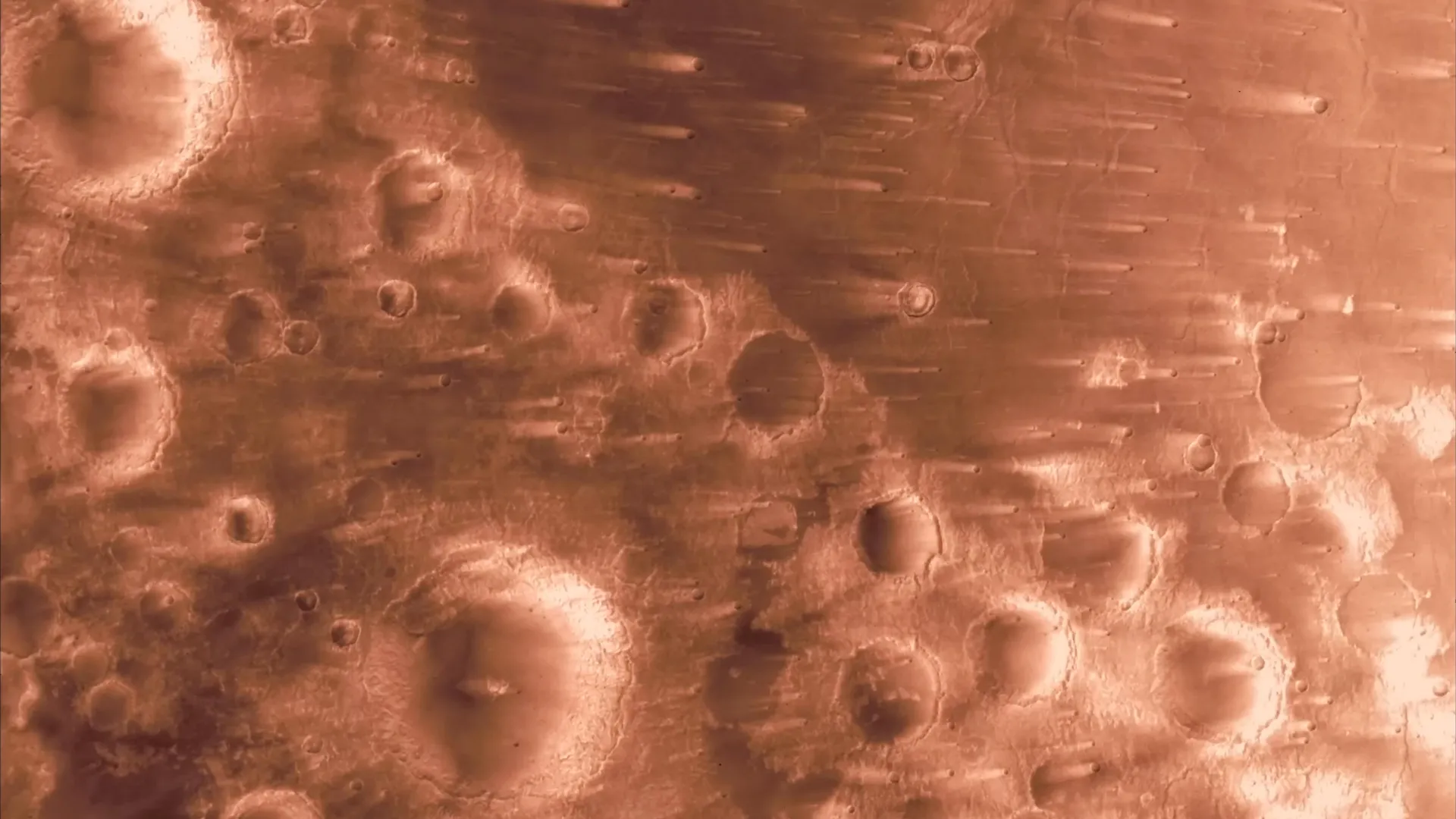
NASA's Psyche spacecraft successfully executed a Mars gravity assist maneuver on November 13, 2024, accelerating itself toward its destination asteroid while conducting valuable instrument tests. The flyby allowed the spacecraft to gather science data and validate its operational systems ahead of its 2029 arrival at Psyche, a metal-rich asteroid in the main asteroid belt between Mars and Jupiter.
During the close approach, Psyche's cameras captured timelapse footage of Mars and its thin atmosphere. The spacecraft's magnetometer measured the planet's magnetic field environment, while particle detectors registered neutrons emanating from the Martian surface. Scientists also used the encounter to spot Mars' two small moons, Phobos and Deimos, which orbit at different distances from the planet.
The gravity assist maneuver represents a common trajectory technique in deep space exploration. By passing through Mars' gravitational field, Psyche gained velocity without expending fuel, allowing NASA to send the spacecraft on a more efficient path to the asteroid. Such flybys serve dual purposes: mission planners achieve orbital adjustments while science teams test instruments in live conditions before encountering their primary targets.
Psyche itself holds unique scientific interest. The asteroid appears to be the exposed iron core of a planetary body that lost its rocky outer layers during solar system formation. Understanding its composition could reveal how Earth and other terrestrial planets developed their layered interiors. The 2029 encounter will mark humanity's first detailed examination of such a metal-rich body.
The successful Mars flyby demonstrated that Psyche's instruments function properly after launch and the long journey through space. Magnetometer readings, camera imagery, and neutron detections all performed as expected. These successful tests provide confidence that the spacecraft will reliably collect data when it reaches the asteroid in five years.