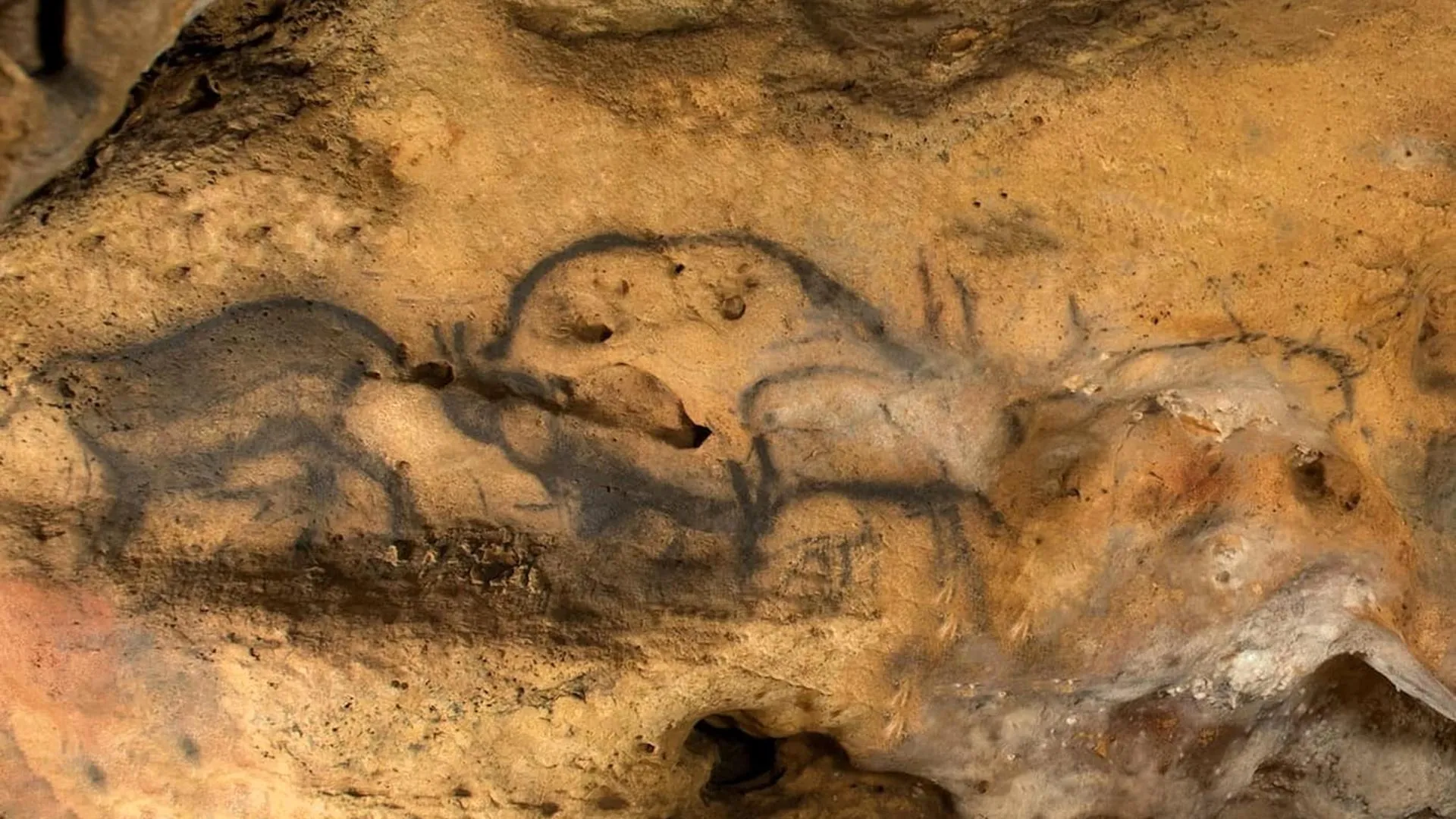
Scientists have precisely dated ancient cave paintings in France's Font-de-Gaume cave using charcoal hidden within black pigments, revealing artwork spanning thousands of years. Researchers discovered that charcoal particles, previously undetected in the black paint, enabled radiocarbon dating of the pigments themselves rather than relying on indirect dating methods.
A bison painting dates to approximately 13,000 years ago, placing it firmly within the Upper Paleolithic period. More intriguingly, a mask-like figure shows evidence of multiple painting episodes separated by substantial time gaps, suggesting that ancient artists revisited and modified the same image across different generations.
The finding challenges previous assumptions about cave painting composition. Scientists had believed the black pigments consisted solely of minerals like manganese oxide. The presence of charcoal opens new possibilities for dating other cave art directly, a longstanding challenge in archaeology. Traditional radiocarbon dating requires organic material, which pigments alone often lack. By identifying charcoal particles within the paint itself, researchers can now apply this technique to previously undatable artwork.
This technique carries implications beyond Font-de-Gaume. Charcoal-based black pigments appear common in Paleolithic art across Europe, suggesting widespread applicability. The discovery demonstrates that ancient artists deliberately mixed charcoal with other materials, not accidentally. The practice likely enhanced pigment durability and application properties.
The layered painting of the mask-like figure raises questions about artistic intent and cultural continuity. Did artists recognize their predecessors' work and deliberately enhance it, or was the repainting coincidental? The wide temporal separation between painting episodes suggests intentional revisiting rather than accidental overlap, indicating respect for or connection to earlier artistic traditions.
These findings advance understanding of Paleolithic creative practices and timelines. Previously, archaeologists could only estimate cave painting ages through stylistic analysis or dating charcoal from hear