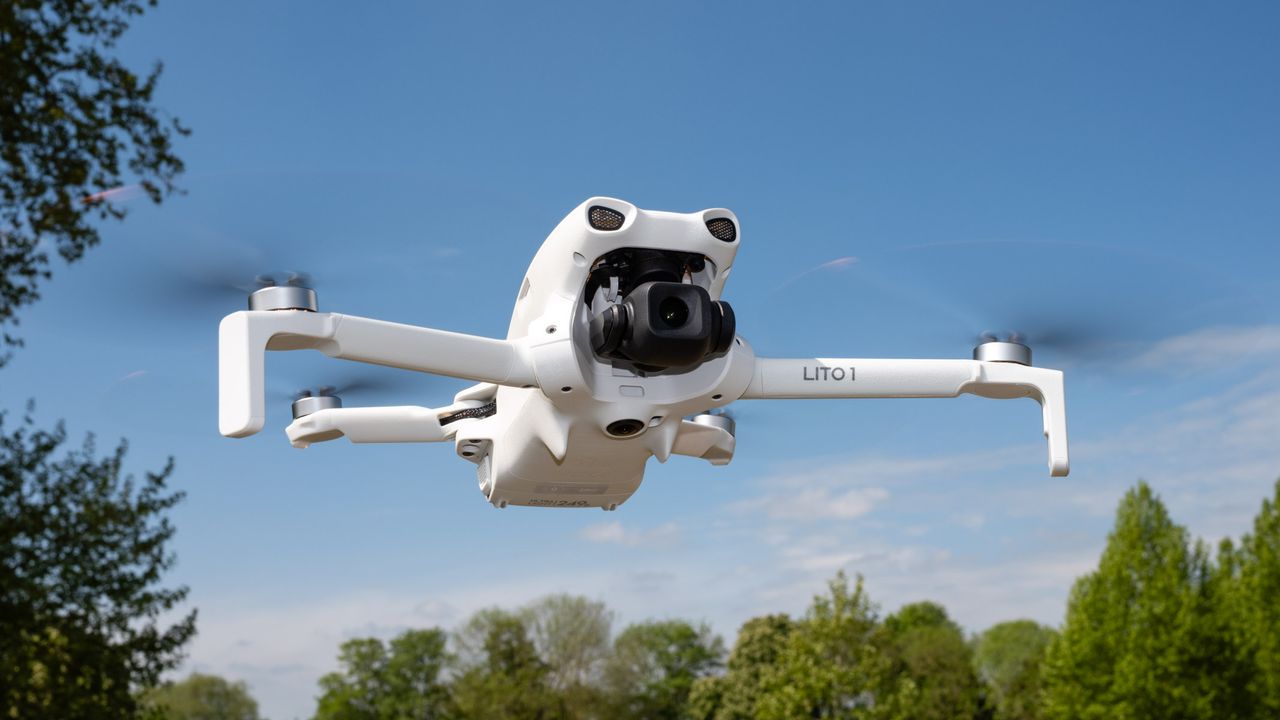
DJI has released the Lito 1, an entry-level drone that combines affordability with features typically found in more expensive models. The aircraft incorporates omnidirectional obstacle sensing, allowing it to detect and avoid barriers in all directions during flight. This safety technology reduces collision risk for new pilots unfamiliar with manual obstacle avoidance.
The drone delivers respectable image quality through its integrated camera system, suitable for casual photography and video recording. Entry-level drones traditionally sacrifice camera performance for price, but the Lito 1 appears to challenge that convention. The omnidirectional sensing represents a notable advancement for the budget segment, where most competitors offer limited obstacle detection or none at all.
DJI dominates the consumer drone market, commanding approximately 77 percent global market share. The company routinely releases tiered product lines targeting different skill levels and budgets. The Lito 1 positions itself between ultra-compact folding drones and mid-range prosumer models, filling a specific market niche for users seeking balanced capabilities without premium pricing.
The omnidirectional obstacle avoidance system enhances flight safety by monitoring the drone's surroundings continuously. This feature matters for beginners who may misjudge distances or fly in cluttered environments. Combined with respectable camera output, the Lito 1 appeals to users wanting to explore aerial photography without steep learning curves or equipment costs.
Specific technical specifications, flight time, maximum range, and pricing details remain relevant factors for potential buyers comparing entry-level options. The drone's actual performance in real-world conditions will determine its market reception against competing models from manufacturers like Autel, Skydio, and Parrot. Early reviews suggest DJI successfully delivered practical features that reduce barriers for drone newcomers while maintaining functional image capture capabilities.