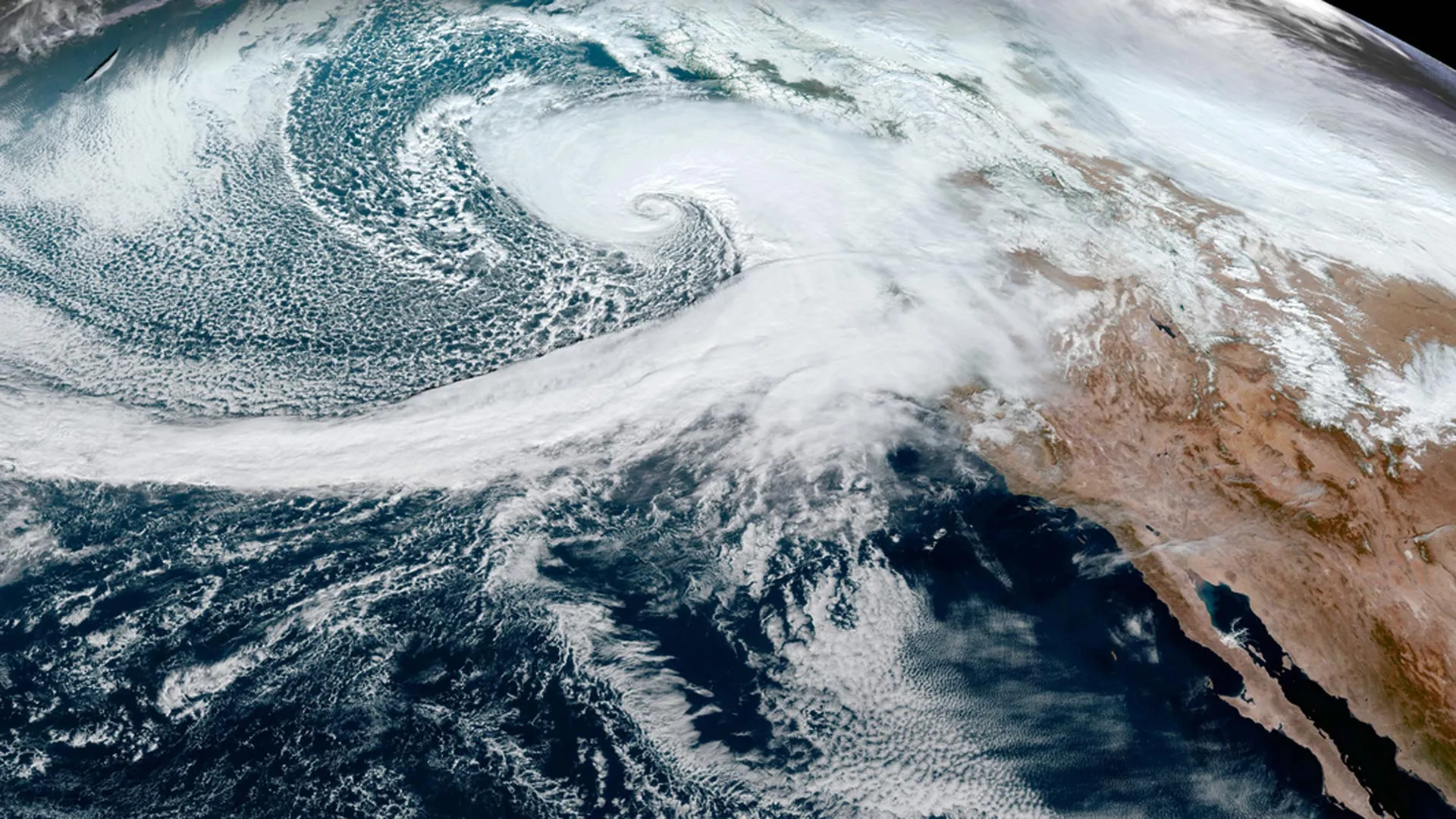
A weakening Atlantic Meridional Overturning Circulation, which includes the Gulf Stream, could fundamentally alter storm patterns across the Northern Hemisphere. Researchers have identified that as this current slows, atmospheric rivers targeting California intensify while precipitation decreases over Greenland.
The Atlantic Meridional Overturning Circulation (AMOC) transports warm water northward and cold water southward, influencing ocean temperatures and regional climates. Climate models show that as AMOC weakens due to warming oceans and freshwater input from melting ice sheets, it redistributes moisture patterns in ways that amplify atmospheric rivers along the California coast.
Atmospheric rivers are narrow bands of concentrated water vapor that dump intense precipitation when they strike land. Stronger California storms would increase flood hazards, stress already vulnerable water infrastructure, and complicate water management for a state that depends heavily on reliable precipitation. The shift could shift seasonal flooding patterns and overwhelm drainage systems designed for historical precipitation levels.
Simultaneously, reduced snowfall over Greenland could accelerate ice sheet loss, creating a feedback loop that further weakens AMOC. Less snow coverage means darker ice absorbs more solar radiation, melting faster and releasing additional freshwater that inhibits the circulation.
The study reveals how ocean circulation changes ripple across continents. Changes originating in the Atlantic directly shape hydrology thousands of miles away in California. Water supplies for agriculture, cities, and ecosystems that depend on predictable precipitation patterns face disruption.
The research underscores that climate change operates through interconnected systems rather than isolated regional effects. One current's decline cascades into infrastructure stress, ecological shifts, and resource scarcity across multiple continents. Understanding these teleconnections matters for long-term water planning and climate adaptation strategies as AMOC continues to slow.