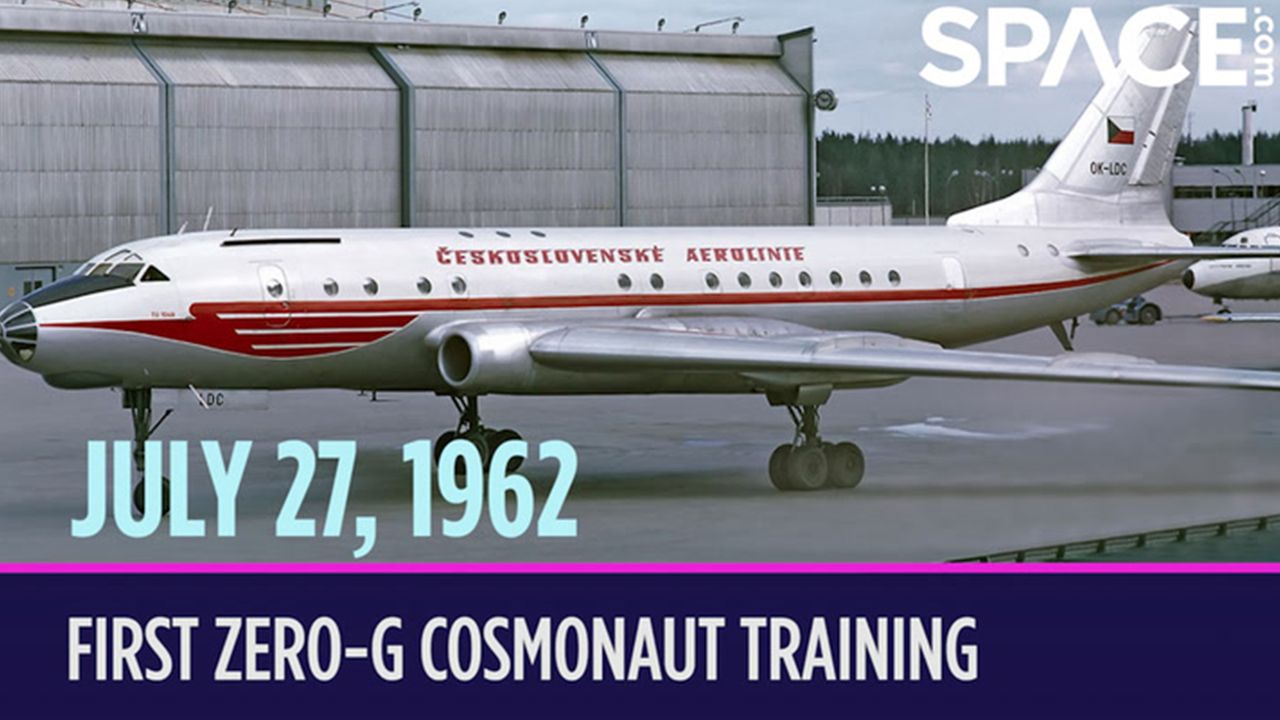
On July 27, 1962, Soviet cosmonauts achieved weightlessness for the first time without leaving Earth's atmosphere. Two Russian cosmonauts boarded a specially modified Soviet jetliner that performed parabolic flights, creating brief periods of zero gravity inside the aircraft's cabin.
The technique works through physics rather than altitude. A jet climbs steeply, then noses over into a controlled dive. During this arc, everything inside falls at the same rate as the aircraft itself, producing the sensation and physics of weightlessness. Each parabolic maneuver lasts roughly 30 to 40 seconds, enough time for training but far shorter than orbital flight.
This first Soviet zero-gravity training flight represented a practical breakthrough for human spaceflight preparation. Cosmonauts needed to experience weightlessness before launching into orbit, yet orbital missions were expensive and dangerous for training alone. Parabolic aircraft flights offered a safer, repeatable alternative. Cosmonauts could practice eating, working, and moving in microgravity without the risks of actual spaceflight.
The Soviet program recognized this need early. The modified jetliner allowed cosmonauts to rehearse critical tasks repeatedly. They could test equipment responses to weightlessness and train their bodies to handle the disorientation of zero gravity.
This training method became standard across space programs worldwide. NASA adopted parabolic flight training for its Mercury, Gemini, and Apollo astronauts. The approach persists today. Modern parabolic aircraft continue flying researchers and astronauts who conduct experiments and prepare for space missions.
The 1962 Soviet flight exemplified how space programs solved practical problems through innovation. Rather than waiting for expensive orbital opportunities, engineers created a reusable training platform. A simple modification of existing aircraft delivered the essential experience astronauts and cosmonauts needed.
This training method fundamentally shaped human spac