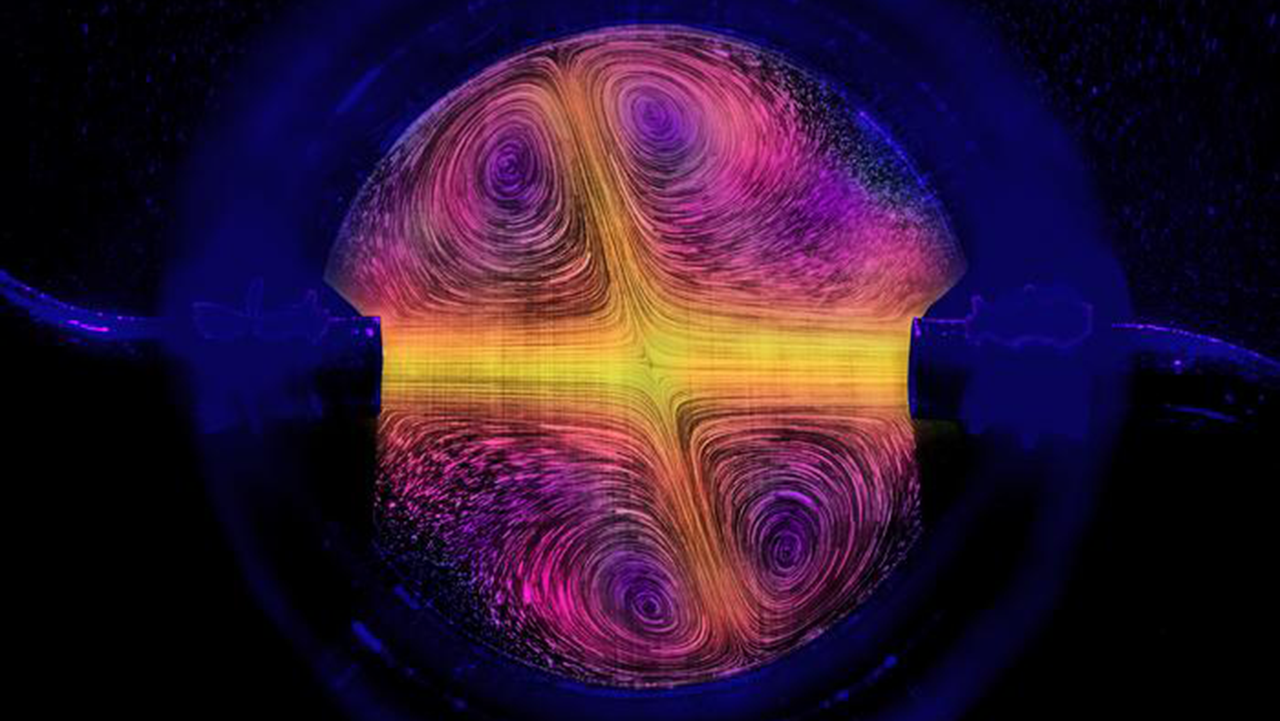
Physicists have settled a decades-long debate about reverse sprinklers, proving wrong a theoretical framework developed by Nobel Prize winner Richard Feynman. The finding resolves a puzzle that has divided the physics community since the 1920s.
When water flows into a sprinkler's rotating arms rather than spraying outward, the device spins in the opposite direction from normal operation. Feynman proposed an explanation based on momentum conservation, but his theory generated persistent disagreement among researchers about whether the effect was real and what caused it.
A new study definitively demonstrates that Feynman's approach misses the mark. Researchers conducted experiments with precision-engineered sprinklers and fluid dynamics simulations to reveal the true mechanism. The actual physics involves subtle effects from pressure differences and fluid acceleration within the rotating system, not the straightforward momentum arguments Feynman advanced.
The work validates experimental observations that had challenged Feynman's theoretical predictions. Graduate students and researchers working with rotating fluid systems observed the reverse sprinkler effect repeatedly, but lacked a satisfactory explanation that aligned with conventional momentum-based analysis. This gap between theory and observation created confusion that persisted for nearly a century.
The resolution carries broader implications for understanding rotating machinery and fluid dynamics. Engineers designing pumps, turbines, and industrial sprinkler systems rely on accurate physical principles. Misconceptions about how momentum transfers in rotating systems can lead to design errors or inefficient operations.
Feynman himself acknowledged puzzlement over the phenomenon, famously calling it "silly." His intellectual honesty in flagging the inconsistency actually highlighted an important blind spot in how physicists understood rotating fluid systems. Rather than diminishing his legacy, the disproof of his specific explanation on this problem illustrates how science advances through testing established frameworks against experimental reality.
The findings appear in peer-reviewed physics literature and represent the collaboration of multiple research