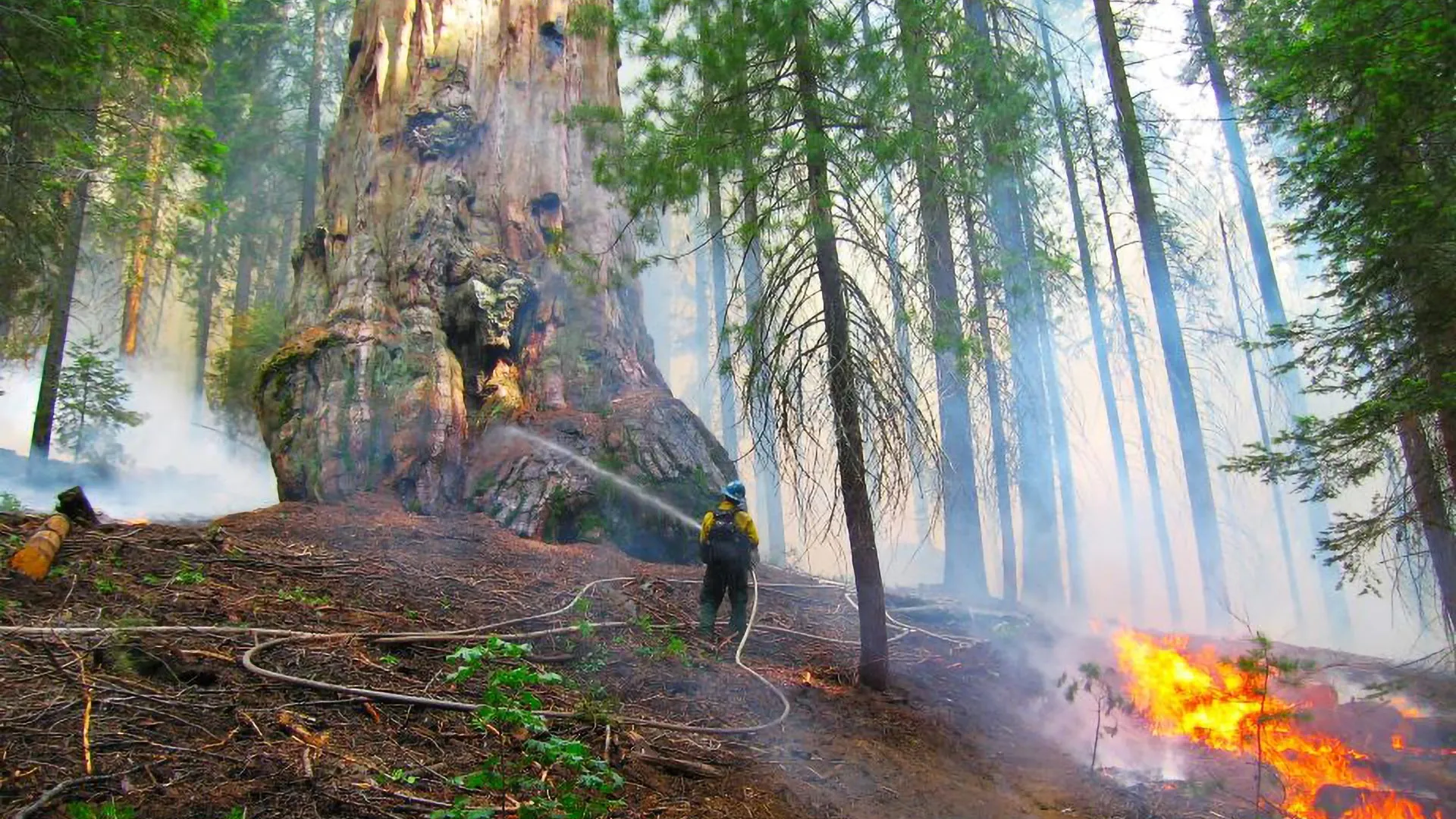
A new analysis reveals controlled burns offer the most effective protection for giant sequoias facing increasingly severe wildfires. Researchers examined approximately 26,400 sequoias across multiple groves and found that trees in areas treated with prescribed burns survived at nearly four times the rate of untreated trees.
Recent catastrophic wildfires have killed thousands of giant sequoias, including ancient trees that had endured centuries or millennia of natural fires. Giant sequoias evolved with fire, their massive trunks resistant to ordinary flames. But the extreme heat and intensity of modern megafires have overwhelmed this natural defense, leaving groves devastated.
The study quantifies prescribed burn effectiveness with precision. In treated areas, survival rates climbed dramatically compared to groves left untreated before wildfire struck. Researchers estimate the controlled fires prevented approximately 1,900 sequoia deaths in the areas studied. If prescribed burning had been implemented across every sequoia grove, thousands more trees would have likely survived.
Prescribed burns work by reducing fuel loads—the accumulated dead wood, undergrowth, and debris that feed intense wildfires. Lower fuel density limits flame intensity and allows fires to move through faster, sparing larger trees. The approach mirrors fire regimes that shaped giant sequoia ecosystems for millennia before fire suppression policies dominated the 20th century.
The finding carries urgent implications. Climate change extends fire seasons and increases drought stress, creating conditions for hotter, faster-spreading fires. Giant sequoias face an existential threat without intervention. Prescribed burning requires careful planning, trained personnel, air quality management during burning seasons, and coordination across public and private lands.
Implementing this strategy across all sequoia groves presents logistical and financial challenges. Some groves sit in remote terrain. Air quality concerns limit burning windows in populated regions. But the analysis provides clear evidence that the investment pays immediate, measurable