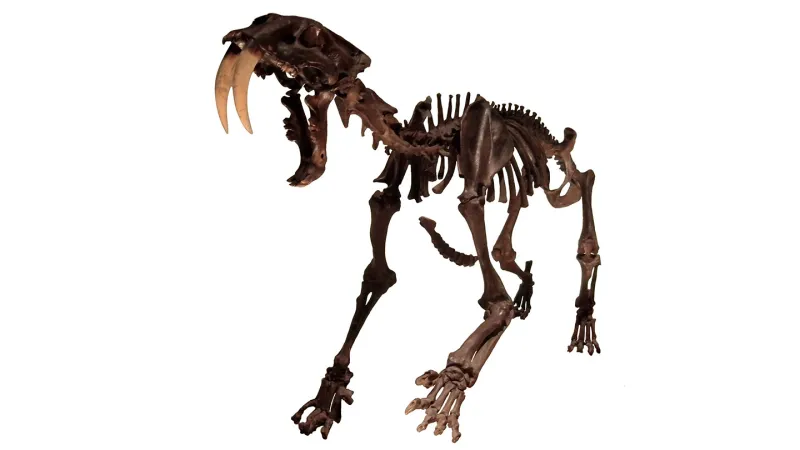
Paleontologists analyzing skeletal remains from the La Brea Tar Pits have uncovered evidence that saber-toothed cats suffered from genetic problems before their extinction. The team identified deformed vertebrae and unusually rare tumors in spinal bones from multiple specimens, suggesting the species faced severe inbreeding during its final years.
The La Brea Tar Pits, located near Los Angeles, preserved thousands of animal remains over the past 40,000 years. When megafauna became trapped in the viscous asphalt, predators followed their prey and became ensnared themselves, creating a concentrated fossil record. Saber-toothed cats, or Smilodon, dominated this ecosystem before vanishing roughly 10,000 years ago.
The spinal abnormalities discovered in Smilodon remains point to reduced genetic diversity within the population. Inbreeding concentrates harmful mutations and increases susceptibility to developmental disorders. The presence of benign and malignant spinal tumors across different specimens suggests a population-wide vulnerability rather than isolated cases. These pathologies rarely appear in wild populations with healthy genetic variation.
Researchers examined multiple Smilodon skeletons and compared them to other carnivores from the same deposit. The higher prevalence of vertebral deformities in Smilodon specimens strengthened the connection to genetic stress. As ice ages ended and climate shifted around 13,000 years ago, prey populations declined dramatically. This environmental squeeze forced surviving saber-toothed cats into smaller breeding groups, intensifying inbreeding effects.
The findings align with previous genetic studies showing Smilodon populations had low diversity. DNA analysis revealed these cats had extremely limited genetic variation by the end of the Pleistocene. The combination of environmental pressure and genetic bottleneck created an inescapable