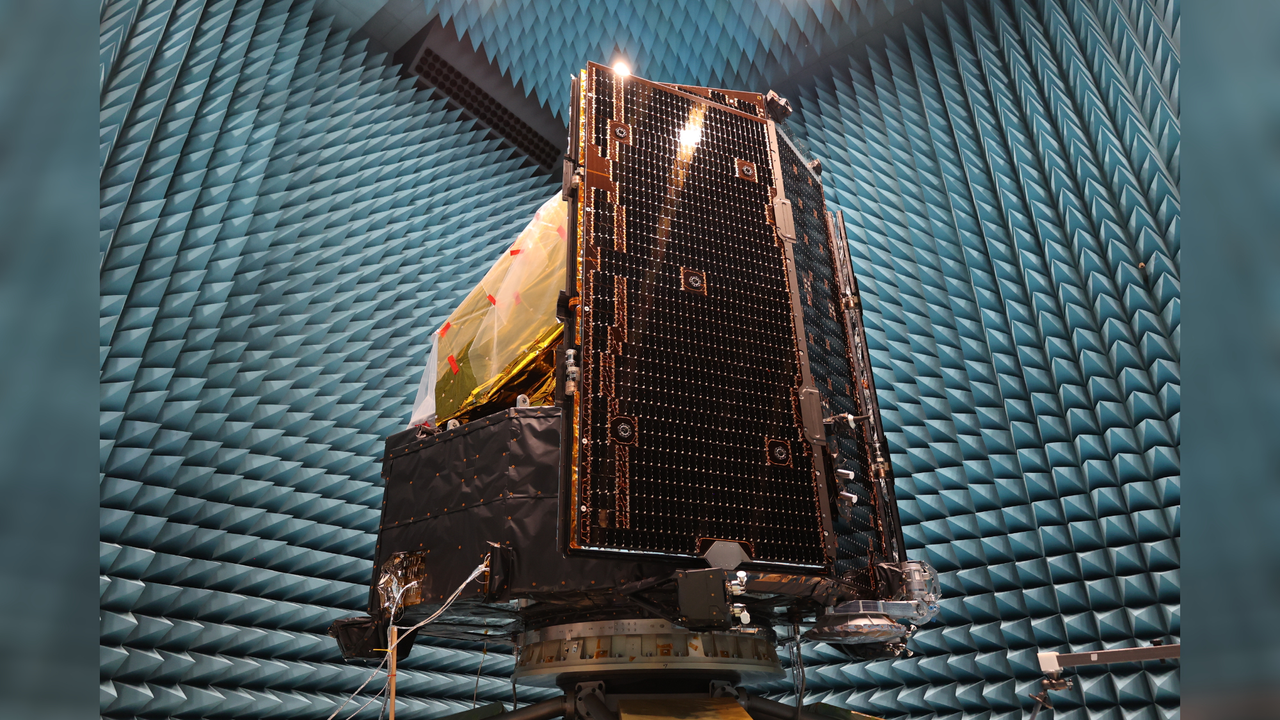
The European Space Agency's Plato spacecraft has completed crucial testing protocols in preparation for launch, according to Space.com. Plato, an acronym for PLAnetary Transits and Oscillations, represents a major mission designed to discover and characterize Earth-sized exoplanets orbiting distant stars.
The spacecraft passed rigorous validation procedures that confirmed its systems can withstand the extreme conditions of spaceflight and operate reliably in orbit. These tests included thermal cycling, vibration stress, and electromagnetic compatibility checks that simulate the harsh environment of space. ESA engineers verified that all components, from the telescope's optical systems to data transmission equipment, function as designed.
Plato's primary goal focuses on identifying rocky planets in habitable zones around sun-like stars. The mission deploys 26 small telescopes working in concert to detect minute changes in stellar brightness caused by planets passing in front of their host stars. This transit method allows astronomers to determine planetary size, mass, orbital period, and potentially assess atmospheric composition.
The spacecraft name references two types of stellar oscillations that scientists monitor. Asteroseismology measurements reveal internal structures of stars, enabling more precise calculations of planetary characteristics. This dual approach distinguishes Plato from other exoplanet hunting missions.
Launch is targeted for 2026, positioning the mission to expand humanity's catalog of potentially habitable worlds. Plato will examine approximately 500,000 stars across roughly half the sky during its operational lifetime. The mission builds on discoveries from earlier planet-hunting telescopes like Kepler and TESS by focusing specifically on planets similar to Earth orbiting stars resembling our Sun.
ESA estimates the mission will identify hundreds of new exoplanets suitable for future biosignature studies. These discoveries will provide targets for next-generation telescopes designed to analyze atmospheric chemistry for signs of life. Plato's characterization work fills