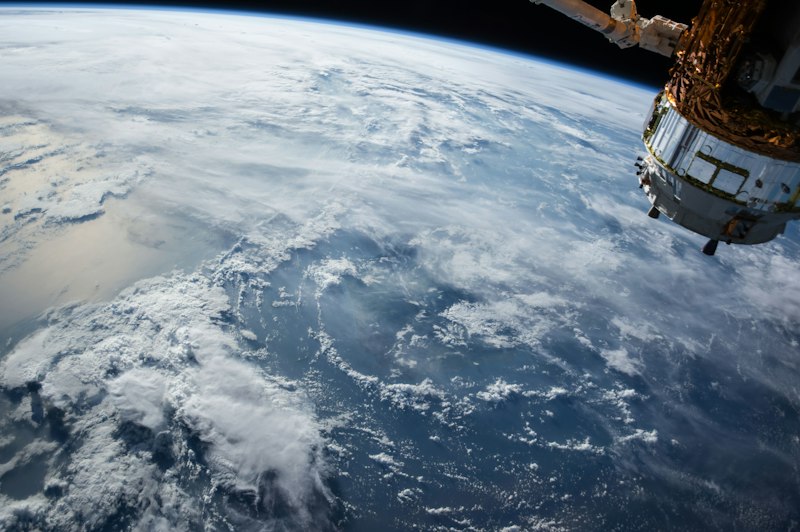
The space tourism industry is drowning in its own complexity, and nobody wants to admit it.
We've all seen the headlines. Billionaires launching themselves into suborbital arcs. Companies offering "astronaut experiences" that range from genuine weightlessness to elaborate simulator rides on Earth. The messaging is everywhere, the hype machine never stops, and yet something feels fundamentally broken about the whole operation.
The problem isn't that space tourism is dangerous, though that's the easy narrative. The problem is that we've created an ecosystem where success requires navigating a maze of operators, subcontractors, partnerships, and licensing agreements that would make a Byzantine bureaucrat weep. Every company wants a cut. Every stakeholder needs validation. The result is a product that costs more than it should, reaches fewer people than it could, and leaves everyone confused about what they're actually buying.
Consider the current state of affairs. You want to experience weightlessness or see the curve of Earth from above. Fine. But first, determine which company you're trusting. Then figure out what their experience actually includes versus what's marketing fluff. Then navigate training requirements, insurance, medical clearances, and legal disclaimers that read like someone's worst fever dream. By the time you've completed the paperwork, you're exhausted before you leave the ground.
This is the opposite of how transformative industries actually work.
The winners in space tourism won't be the operators who add another layer of exclusivity, another partnership, another premium tier for people with six figures burning a hole in their pocket. The winners will be the ones ruthless enough to strip away everything unnecessary and ask the fundamental question: What does someone actually need to safely and affordably experience space, and how do we provide exactly that?
Some companies are beginning to understand this. The ones rethinking vehicle design for reusability, streamlining training, questioning whether certain safety protocols are actually required or just traditionally mandated. They're not the ones making the biggest headlines. They're not the ones with celebrity backers or billion-dollar valuations built on vaporware. They're the ones quietly asking whether five middlemen really need to be involved in a single suborbital flight.
The space industry has a long history of this problem. We've created incredibly complex solutions to real challenges, which is sometimes necessary. But we've also created complexity for its own sake, because it sounds impressive and protects incumbent interests. The Apollo program was expensive partly because the problem was genuinely hard. It remains expensive because that's what expensive means to us now.
Tourism, though, should be different. Tourism succeeds through volume and accessibility. You don't make money on space tourism by serving three hundred ultra-wealthy people annually at half a million dollars each. You make money by eventually serving thousands at a fraction of the cost. That requires simplification, not elaboration.
The irony is that the technology is becoming more reliable and less expensive every year. Launch costs are dropping. Reusable vehicles are improving. The hard engineering work is mostly solved. What remains is organizational inertia and the fact that too many stakeholders profit from the current complicated mess.
Watch which companies actually reduce the operational overhead. Which ones consolidate services instead of expanding them. Which ones ask "why" when they're about to add complexity instead of accepting it as inevitable. Those are the operators who will still be launching tourists in ten years while the hype-driven ventures are interesting footnotes in aerospace history.
The future of space tourism isn't more exclusive experiences wrapped in corporate partnerships. It's simpler, cheaper experiences that anyone with serious interest can actually access. Someone's going to figure that out and do it without asking permission. They'll be insufficiently glamorous for headlines, but wealthy enough to actually transform the industry.