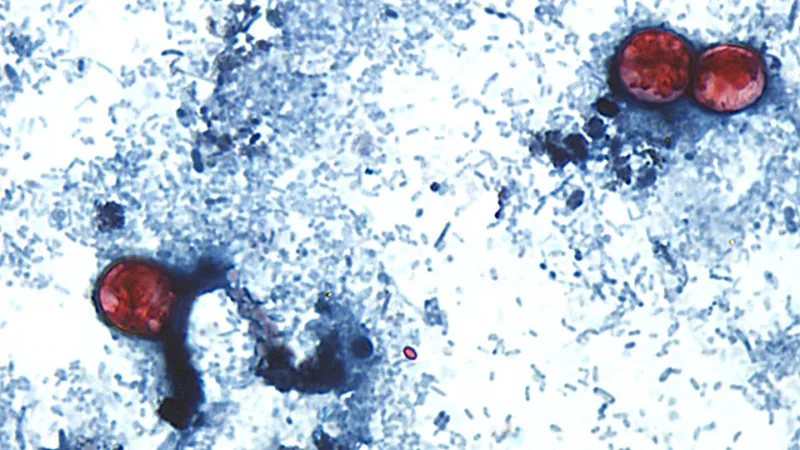
Cyclospora parasites are causing widespread diarrhea outbreaks across the United States, and public health officials face serious obstacles in controlling the spread.
The parasite Cyclospora cayetanensis infects the small intestine and triggers severe, watery diarrhea that can last weeks. Infected individuals shed oocysts (parasite eggs) in their stool that require days to become infectious in the environment. This delay complicates outbreak detection because people often cannot pinpoint when and where they contracted the infection by the time symptoms emerge.
Most U.S. cyclospora cases trace back to contaminated imported produce, particularly cilantro, berries, and lettuce from Central and South America. The parasite thrives in warm, humid climates where water sanitation remains inadequate. Once produce becomes contaminated during growing or processing, standard washing does not reliably remove the hardy oocysts.
Tracking cyclospora outbreaks requires detective work. The CDC and state health departments must interview patients about food consumption from weeks prior, reconstruct supply chains for produce, and identify common sources. This laborious process means outbreaks often go undetected until dozens or hundreds of cases accumulate.
Unlike bacterial pathogens, no rapid diagnostic test exists for cyclospora. Identification requires laboratory examination of stool samples under a microscope, a time-consuming process that varies in sensitivity depending on technician expertise. This diagnostic gap leaves many cases unconfirmed and unreported.
Treatment with trimethoprim-sulfamethoxazole (TMP-SMX) works for most patients, but the infection resolves on its own in immunocompetent individuals within several weeks. Immunocompromised patients face prolonged illness and potential complications.
Prevention depends largely on produce safety measures at farms and processing facilities in source countries. The United States has limited