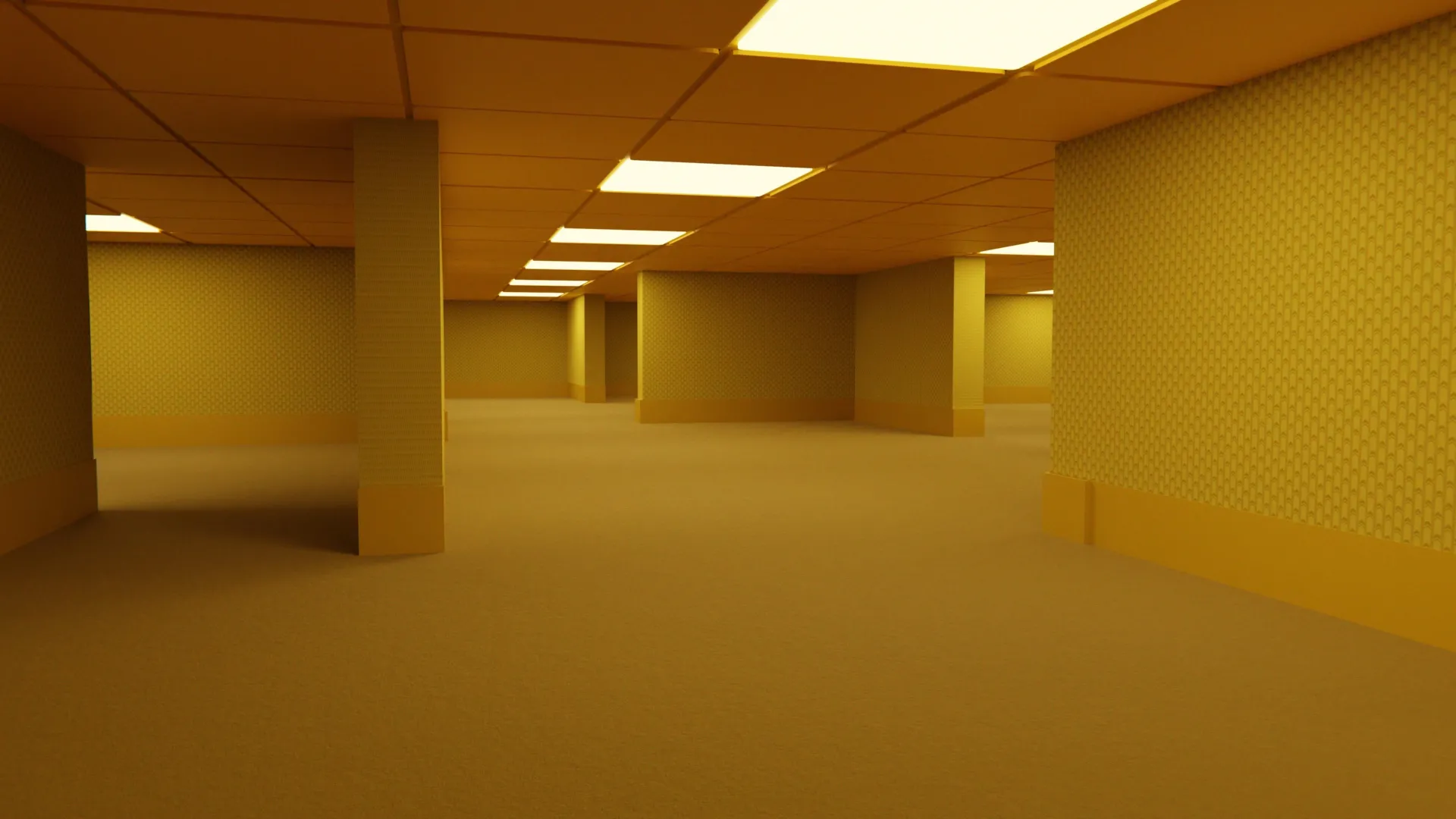
The Backrooms, a collaborative internet horror universe born from a single creepy image of endless yellow corridors, has evolved into a sprawling fictional world that audiences actively construct and explore together. What began as unsettling imagery has expanded through user-generated videos, games, detailed maps, survival guides and social media narratives into something that feels authentically disturbing despite being entirely fictional.
Researchers studying this phenomenon identify it as a novel form of digital tourism. Rather than passively consuming horror content, internet users emotionally immerse themselves in these imaginary spaces, contributing their own stories and interpretations to build an increasingly complex world. The Backrooms' appeal taps into multiple psychological drivers: the mystery of exploring unknown spaces, nostalgia for familiar-yet-wrong environments like abandoned buildings or office corridors, and the unease that comes from constrained, liminal spaces.
This collaborative world-building represents a shift in how online communities engage with fiction. The Backrooms lacks traditional authorship or central canonical authority. Instead, participants across platforms create interconnected lore, establishing rules, entities and mythology through decentralized storytelling. The yellow walls and fluorescent lighting evoke real locations stripped of purpose and people, making the fictional feel plausibly within reach.
The phenomenon reflects broader internet culture trends where audiences blur the line between consumption and creation. Similar to alternate reality games and creepypasta communities, the Backrooms invites participation rather than mere observation. Social media enables rapid dissemination of user content, while game engines allow people to build and share their own Backrooms experiences.
Researchers note the community's emotional investment in these imaginary spaces speaks to how digital environments can trigger genuine psychological responses. The appeal lies partly in collective world-building itself, where participants feel part of something larger than individual creativity. The Backrooms demonstrates how internet culture transforms horror from a spectator experience into participatory exploration, where