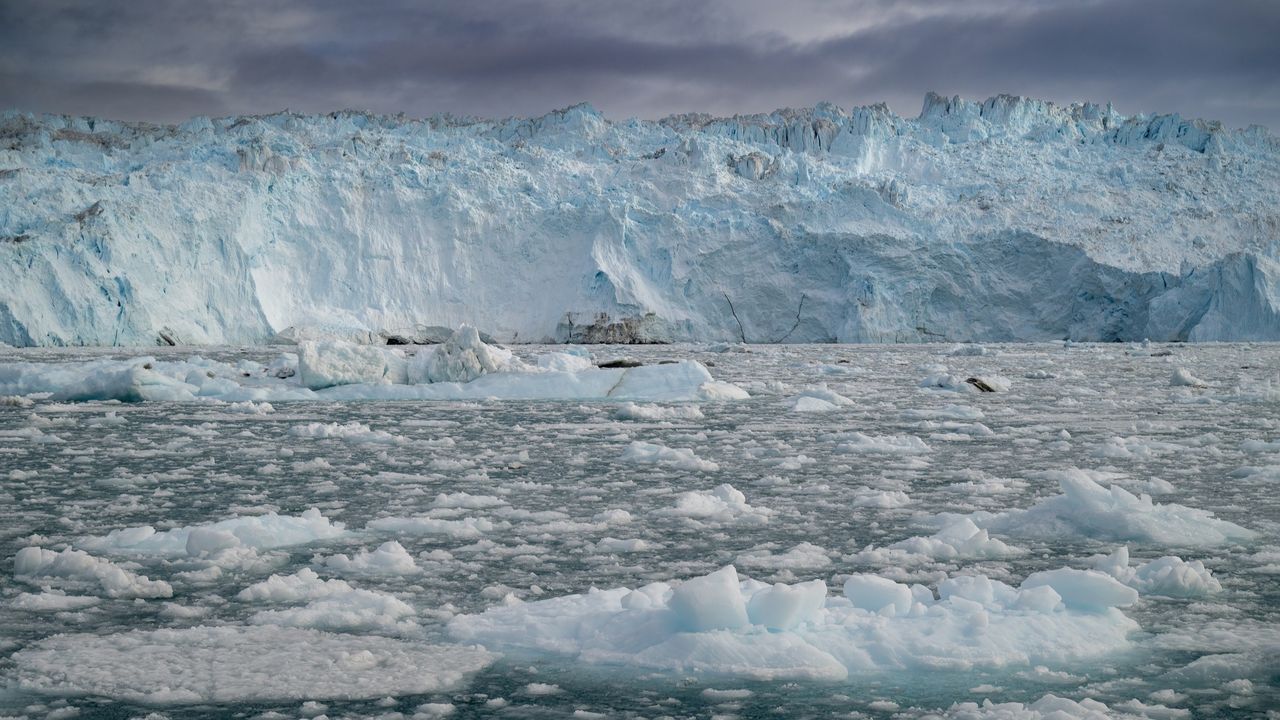
Greenland's melting ice sheet will severely weaken the Atlantic Meridional Overturning Circulation, the system of ocean currents that includes the Gulf Stream, but will not trigger a complete shutdown, according to new climate modeling research.
Scientists ran simulations incorporating freshwater input from Greenland meltwater to project how the circulation responds under different warming scenarios. The models show the currents will experience substantial weakening, potentially reducing their strength by 30 to 50 percent by the end of the century under high-emission pathways. This weakening qualifies as "strong," the researchers found, with cascading effects on regional temperatures and weather patterns in Europe and North America.
However, the modeling indicates the circulation maintains enough resilience to avoid total collapse. The Gulf Stream and related Atlantic currents will continue functioning, albeit at diminished capacity. This distinction matters because a complete shutdown would represent an irreversible tipping point that could trigger abrupt climate shifts, while a weakened circulation, though disruptive, allows for potential recovery if emissions decline.
The research addresses a longstanding question in climate science. The injection of freshwater from melting Greenland ice disrupts the sinking of dense, salty water that normally drives the Atlantic meridional overturning. Scientists have debated whether this freshwater forcing could push the system past a critical threshold. The new modeling suggests we have more buffer than some previous studies indicated, though the distinction between "strong weakening" and "shutdown" offers limited comfort.
The practical implications remain serious. Even without complete collapse, a substantially weakened Atlantic circulation would alter ocean heat transport, cool much of Europe while warming parts of North America, and affect fish populations and weather predictability across the Atlantic basin. Regional impacts on precipitation patterns would ripple through agricultural systems.
The findings depend on model assumptions and parameterizations. Real-world ocean behavior contains complexities that models