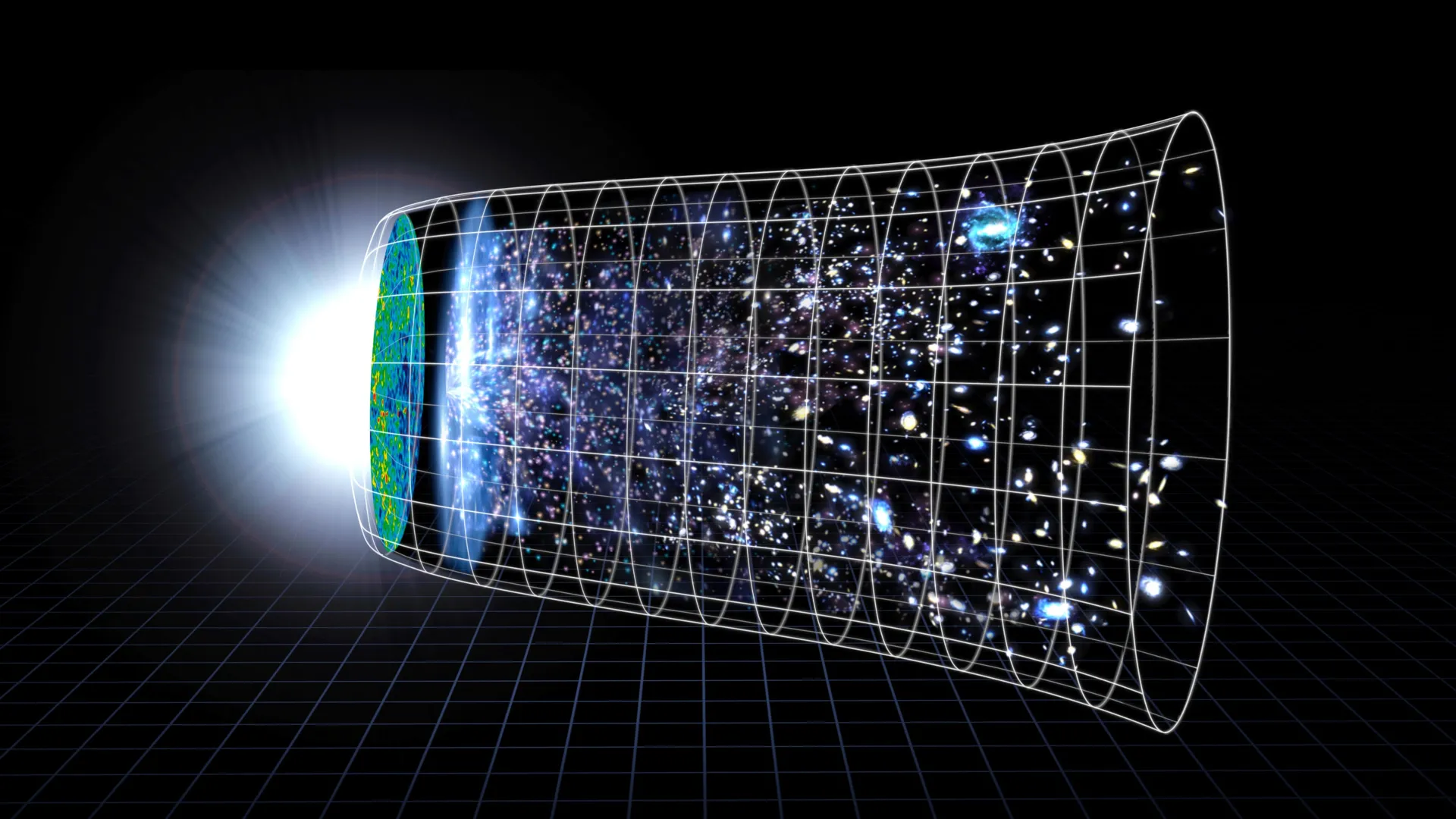
The expanding universe permits distant galaxies to recede faster than the speed of light without violating Einstein's theory of relativity. This counterintuitive phenomenon works because the galaxies themselves do not move through space faster than light. Rather, space itself expands between us and those distant objects, carrying them away at velocities that can exceed light's speed.
When we observe ancient light from distant galaxies today, we see photons emitted when those galaxies were much closer to us. The light traveled through expanding space to reach Earth, arriving after billions of years of journey. During that transit time, cosmic expansion continued pushing the galaxies further away. This explains how we can view light from objects now receding faster than light could travel.
The universe's expansion rate accelerates due to dark energy, a mysterious force physicists do not fully understand. Current observations suggest that as cosmic expansion continues, nearly every galaxy outside our Local Group will eventually move beyond the edge of our cosmic horizon. Once galaxies cross this boundary, their light can no longer reach us, regardless of how far back in time we look. The observable universe will appear progressively emptier.
This expansion presents a profound shift in our cosmic perspective. Observers billions of years in the future will see fewer distant galaxies than astronomers observe today. They may struggle to detect evidence of the cosmic microwave background radiation, the afterglow of the Big Bang that currently provides crucial data about the universe's early history.
Einstein's relativity remains intact because nothing travels faster than light through space itself. The expansion of space represents something different from motion within space. General relativity explicitly permits this kind of metric expansion, which Einstein's field equations describe mathematically.
The eventual dimming of the distant universe underscores how temporary our cosmic perspective truly is. Present-day astronomy benefits from a fleeting epoch when the universe remains transparent enough to observe its deep history. Future civilizations will inherit a