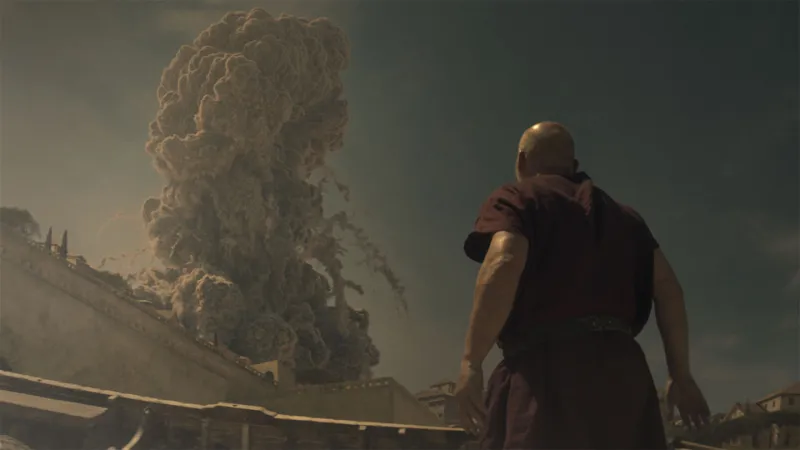
Actor Tom Hiddleston hosts a new documentary series that reconstructs the lives of three real residents of Pompeii in the moments before Mount Vesuvius erupted in 79 AD. "Pompeii: Out of Time" blends historical evidence with dramatization to personalize the catastrophe that buried the Roman city.
The series uses archaeological findings, including skeletal remains and artifacts preserved in volcanic ash, to build narratives around three individuals whose stories survived the disaster. Rather than presenting Pompeii solely through the lens of archaeological data, the filmmakers create character-driven accounts that humanize the eruption's victims and survivors.
The approach follows a growing trend in documentary filmmaking: using scientific evidence as scaffolding for narrative drama. By anchoring fictional dialogue and reconstructed scenes to real archaeological context, producers attempt to make historical events more emotionally resonant for audiences. Hiddleston's narration guides viewers through both the factual record and the imagined experiences of these ancient Romans.
The series raises questions about how we represent history. Mixing documented facts with creative storytelling serves engagement but risks blurring what researchers actually know from what creators imagine. Pompeii offers a unique opportunity for this hybrid approach because the ash preserved an unusually detailed snapshot of daily life. Plaster casts of victims, carbonized food, and architectural remains provide genuine archaeological anchors.
However, the internal thoughts, conversations, and motivations attributed to the three individuals remain interpretive. Archaeologists can infer social status, occupation, and family relationships from physical evidence, but personal agency and emotional states require speculation. The series appears to acknowledge this balance by framing itself as a blend of fact and fiction rather than pure documentary.
"Pompeii: Out of Time" targets audiences seeking accessible ancient history without academic formality. For viewers, the production offers an entry point into Pom