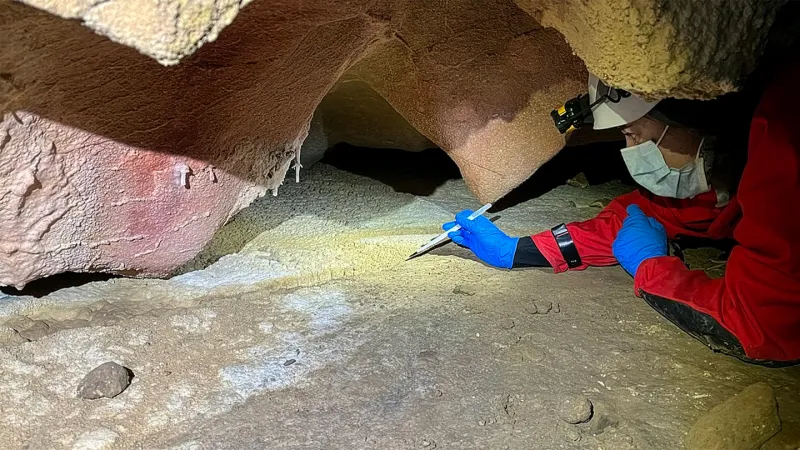
Scientists have extracted ancient human DNA directly from cave walls, a breakthrough that could reveal who created prehistoric paintings thousands of years ago.
Researchers recovered DNA fragments from sediment and mineral deposits on cave surfaces in Europe, according to work reported in Science News. The technique targets microscopic traces of skin cells, sweat, and other biological material that accumulated on walls as people painted, touched stone, and moved through caves over millennia.
The method works by analyzing the thin layers of cave deposits that built up over time. These layers preserve DNA alongside cave art, creating a biological record of human activity. Scientists can then sequence the recovered DNA to identify the individuals or populations responsible for specific paintings and engravings.
This approach addresses a long-standing puzzle in archaeology. Prehistoric cave art, including the famous hand stencils and animal paintings at sites like Chaucer Cave and El Castillo in Spain, has fascinated researchers for over a century. Yet determining who created these artworks proved difficult because paintings themselves rarely preserve DNA. By extracting genetic material from the surrounding walls, researchers bypass this limitation.
The refinement of this technique opens new avenues for understanding human creativity and behavior in the Paleolithic era. Researchers can now potentially match DNA from cave walls to skeletal remains found elsewhere, establishing connections between artistic populations and their descendants. The method might also reveal whether multiple groups painted the same caves or if individual artists worked alone.
Limitations exist. DNA degrades over time, and cave environments vary widely in their preservation qualities. Not all caves will yield usable samples. Additionally, the presence of DNA on a wall does not definitively prove someone created the art there, only that they were present in the cave.
Despite these constraints, the technique represents a fundamental shift in how archaeologists approach prehistoric human behavior. Future applications could extend beyond cave art to other stone structures and archaeological sites where human contact left molecular traces. This genetic approach complements