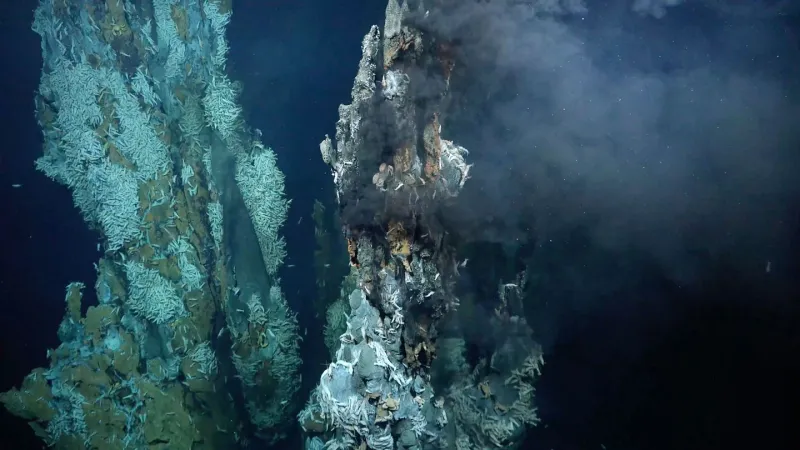
Researchers tracking deep-sea snails have discovered an unexpected dispersal strategy that connects isolated hydrothermal vent ecosystems across vast ocean distances. The snails, which live in the extreme conditions around underwater vents on the seafloor, appear to hitch rides on ocean surface currents during their larval stage before settling on new vent sites.
This discovery reveals a previously unknown link between deep-sea vent communities and the surface ocean. Hydrothermal vents, located thousands of meters below the surface, support unique ecosystems fueled by chemical energy rather than sunlight. Scientists had puzzled over how organisms colonize new vents when suitable habitat appears only sporadically across the seafloor.
The research demonstrates that vent-dwelling species release planktonic larvae that drift upward into surface currents, traveling hundreds or thousands of kilometers before sinking back to the seafloor where they settle on new vents. This mechanism allows genetically similar populations to establish themselves across multiple vent sites separated by vast stretches of unsuitable seafloor.
The study underscores how deep-sea communities depend on processes occurring far above them in the sunlit ocean. While vent ecosystems appear isolated, they remain fundamentally connected to surface ocean circulation patterns. This connection has implications for understanding how deep-sea life responds to environmental changes, since disruptions to surface currents could eventually affect vent colonization rates and population connectivity.
The findings also highlight the vulnerability of vent ecosystems to climate change and human activities that alter ocean circulation. As researchers continue mapping these hidden connections, they gain insight into how life persists in Earth's most extreme environments and how those systems sustain themselves across generations and geographic distances.