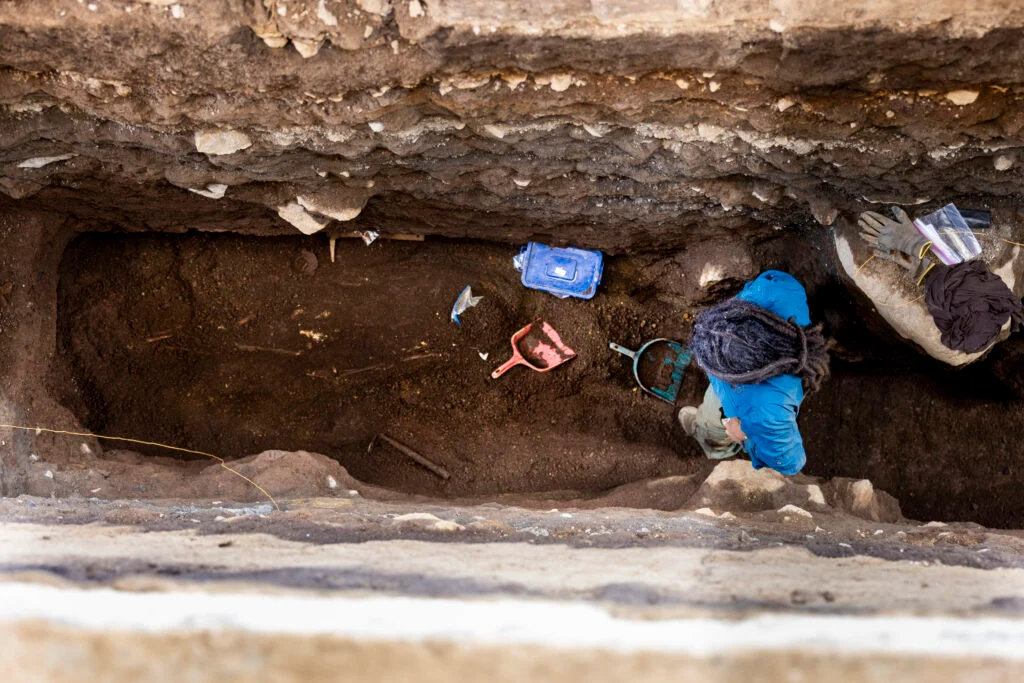
Archaeologists excavating in El Salvador have discovered an unusual 2,800-year-old burial containing a skeleton in a face-down position gripping a ceramic vessel shaped like a sea turtle. The find offers fresh insights into Mesoamerican funeral practices and ritual beliefs during the Early Formative period.
The skeleton's prone positioning and its grasp on the turtle-shaped vessel suggest deliberate placement rather than accidental positioning. Sea turtles held symbolic weight in ancient Mesoamerican cultures, often representing water, fertility, and cosmological significance. The ceramic vessel itself demonstrates the sophisticated artisanal skills of Early Formative communities in Central America.
The burial's context matters considerably. El Salvador sits at a crossroads of Mesoamerican cultural exchange, with influences flowing from both north and south. Finding intact burials from this era remains rare, making this discovery valuable for understanding settlement patterns, social hierarchies, and spiritual worldviews between roughly 1000 and 500 BCE.
The face-down positioning diverges from typical burial orientations documented at other Mesoamerican sites. This variation hints at either regional ritual practices specific to El Salvador's early communities or specialized treatment reserved for particular individuals. Archaeologists must determine whether the positioning reflects punishment, honor, or another purpose entirely.
Dating the burial relied on stratigraphic analysis and possibly ceramic typology, the standard methods for Early Formative deposits. Without radiocarbon dates mentioned in the report, the 2,800-year age estimate depends on associated artifacts and soil layers.
This discovery contributes to the fragmentary archaeological record of Central America's earliest complex societies. Most major Mesoamerican research concentrates on Mexico's Maya and Aztec civilizations, leaving regions like El Salvador relatively understudied. Each burial like this one adds texture to understanding how diverse Formative communities organized themselves spiritually