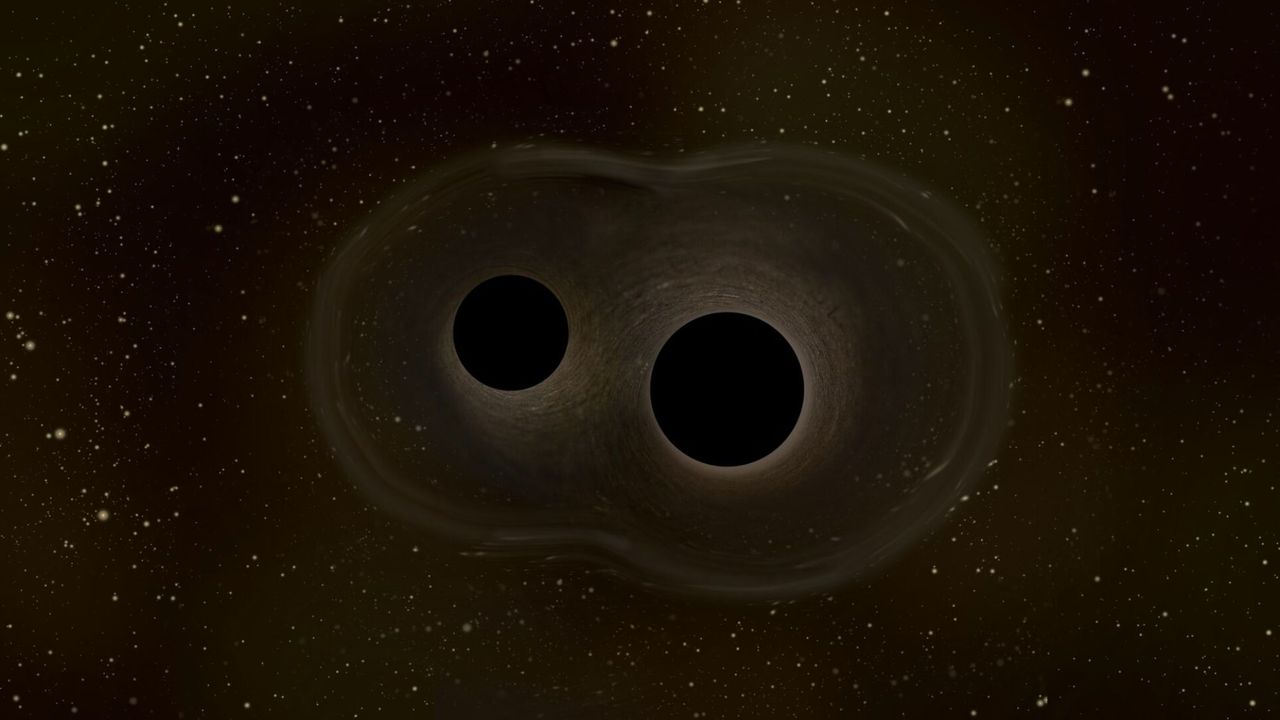
Researchers have identified a straightforward path to improve detection of merging black holes using equipment that already exists on shelves. The advancement centers on upgrading Laser Interferometer Gravitational-Wave Observatory (LIGO) instruments with a standard camera, a departure from the complex custom engineering typically required for such detector enhancements.
LIGO scientists discovered that incorporating an off-the-shelf imaging sensor could boost the observatory's sensitivity to gravitational waves generated by colliding black holes. The detector currently relies on laser interferometry to measure spacetime ripples produced by these cataclysmic events. Adding a conventional camera would refine how researchers analyze and filter incoming data, improving signal clarity without demanding novel technology development.
The simplicity of this solution marks an unusual achievement in LIGO instrumentation. Most upgrades to gravitational-wave detectors require years of specialized engineering and custom component design. This camera-based enhancement sidesteps that burden entirely, allowing researchers to implement improvements more rapidly and cost-effectively.
The approach leverages existing commercial imaging technology rather than building proprietary systems from scratch. By integrating standard cameras into LIGO's data processing pipeline, scientists can better distinguish authentic gravitational-wave signals from noise and instrumental artifacts. This filtering capability translates directly into detecting more black hole mergers and potentially observing fainter or more distant events.
LIGO has already detected dozens of black hole collisions since its first confirmed gravitational-wave observation in 2015. Each detection provides insights into black hole masses, spins, and formation mechanisms. Improving detection rates through accessible upgrades could accelerate this research trajectory without straining budgets.
The discovery emerged from collaboration among LIGO's detector science teams who recognized that commercial camera sensors matched the performance requirements for their specific application. This pragmatic engineering choice reflects how gravitational-wave astronomy continues maturing as a field. As detectors grow more