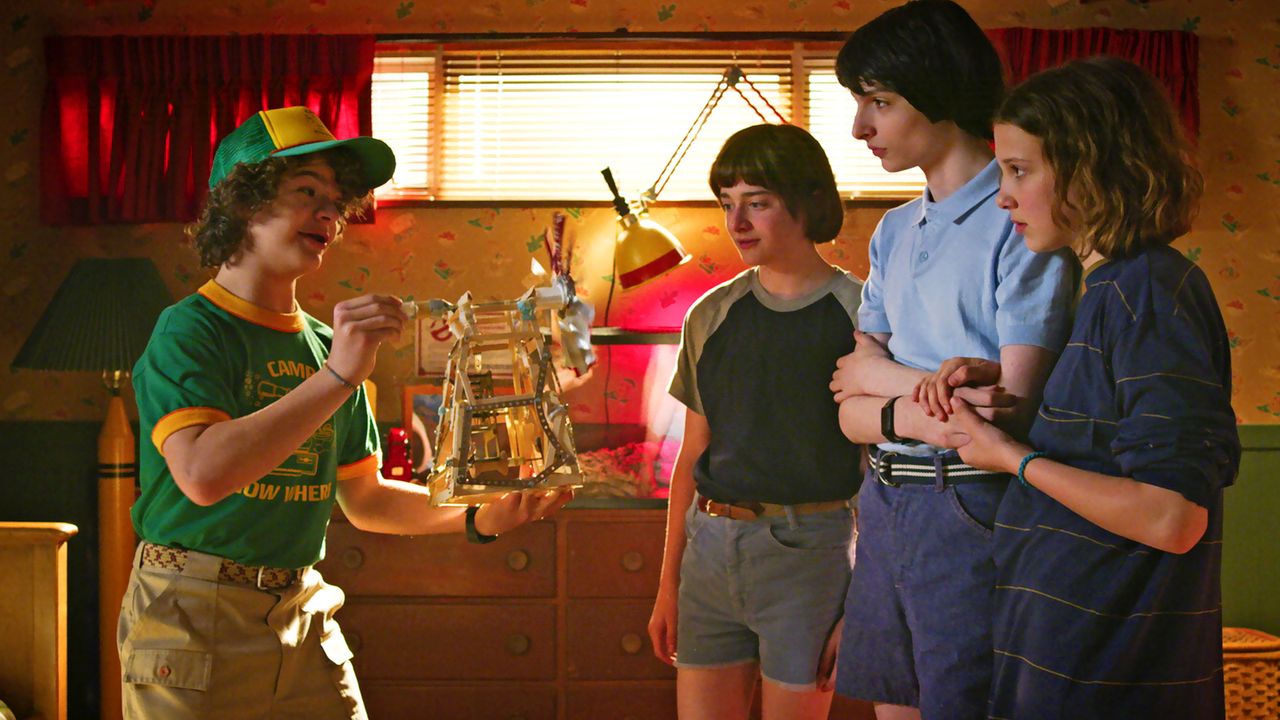
Stranger Things, Netflix's sci-fi horror series that premiered a decade ago, reshaped how audiences consume television and reignited public enthusiasm for science among younger viewers. The show's blend of 1980s nostalgia, supernatural mystery, and scientific concepts created a cultural phenomenon that extended beyond entertainment into education.
The series centers on a small Indiana town where children uncover evidence of parallel dimensions, government experiments, and interdimensional creatures. By grounding fantastical elements in pseudo-scientific explanations involving particles, electromagnetic fields, and quantum mechanics, the show made complex physics accessible to teenage audiences who might otherwise dismiss STEM subjects as dry or irrelevant.
The cultural impact proved measurable. Schools reported increased student interest in physics and biology courses following the show's release. Science museums capitalized on the trend with Stranger Things-themed exhibits. The show's portrayal of young protagonists solving problems through observation, experimentation, and logical reasoning presented science as an adventure rather than classroom drudgery.
Stranger Things also demonstrated that serialized storytelling on streaming platforms could compete with traditional television's narrative complexity and production value. Netflix invested heavily in the show's cinematography, special effects, and writing quality, establishing that streaming services could deliver prestige entertainment. This shifted industry investment toward streaming originals and fundamentally altered how the entertainment ecosystem operates.
The series features actual scientific consultants who ensured references to real physics remained grounded in reality, even as the story ventures into fantasy. The Hawkins National Laboratory fictional facility draws parallels to real government research institutions, creating a verisimilitude that enhanced believability.
Ten years after its debut, Stranger Things remains relevant because it addressed a broader cultural moment. A generation growing up with smartphones and internet access had become increasingly disconnected from outdoor play and hands-on scientific exploration. The show tapped into nostalgia for analog-era wonder while speaking to contemporary