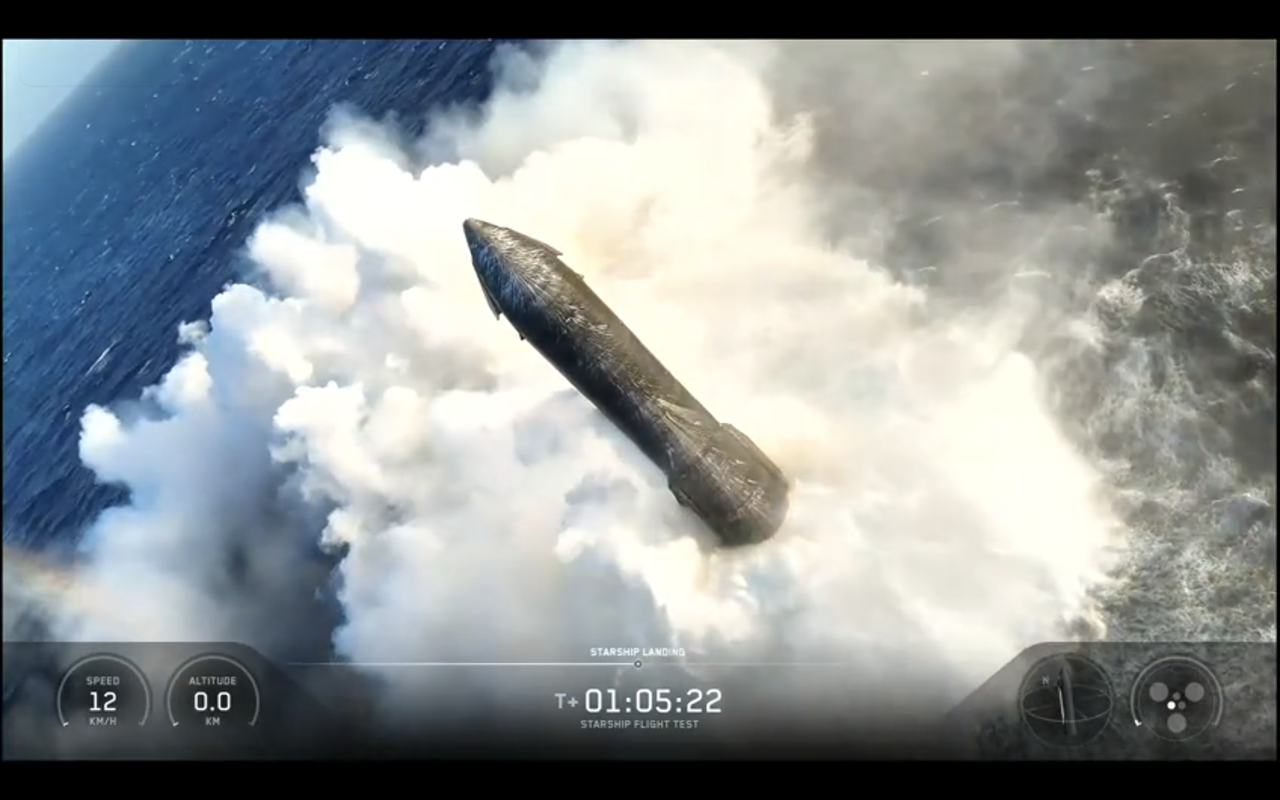
SpaceX successfully completed Flight 13 of its Starship megarocket on July 24, achieving a major milestone in the development of the world's most powerful launch vehicle. The test flight deployed next-generation Starlink satellites into orbit while executing what the company described as the "softest splashdown" ever recorded.
The July 24 mission represented a dramatic step forward for SpaceX's fully reusable rocket system. Starship, which stands 120 meters tall and generates 33 million pounds of thrust at launch, completed its primary objective of delivering advanced Starlink internet satellites to orbit. The megarocket then demonstrated unprecedented control during its ocean landing.
Rather than crashing into the Gulf of Mexico as in previous test flights, Starship's super heavy booster stage achieved a controlled descent and splashdown with minimal impact. This represents a departure from SpaceX's earlier test flights, where the vehicle either exploded during reentry or impacted the water with significant force. The softer landing suggests SpaceX has made substantial progress in mastering the propulsive landing techniques necessary for full reusability.
Flight 13 built directly on lessons from the previous 12 test flights, which progressively expanded Starship's capabilities. Earlier tests had focused on basic flight dynamics, booster separation, and reentry procedures. This mission layered operational objectives like satellite deployment onto that foundation while continuing to push the boundaries of the landing sequence.
The success carries implications for SpaceX's broader ambitions. The company plans to use Starship for lunar missions under NASA's Artemis program, deep-space cargo delivery, and eventually Mars colonization. Each test flight generates data that refines the vehicle's design and operational procedures. The softer splashdown demonstrates that SpaceX engineers can now manipulate the vehicle's descent rate with precision, a prerequisite for landing on