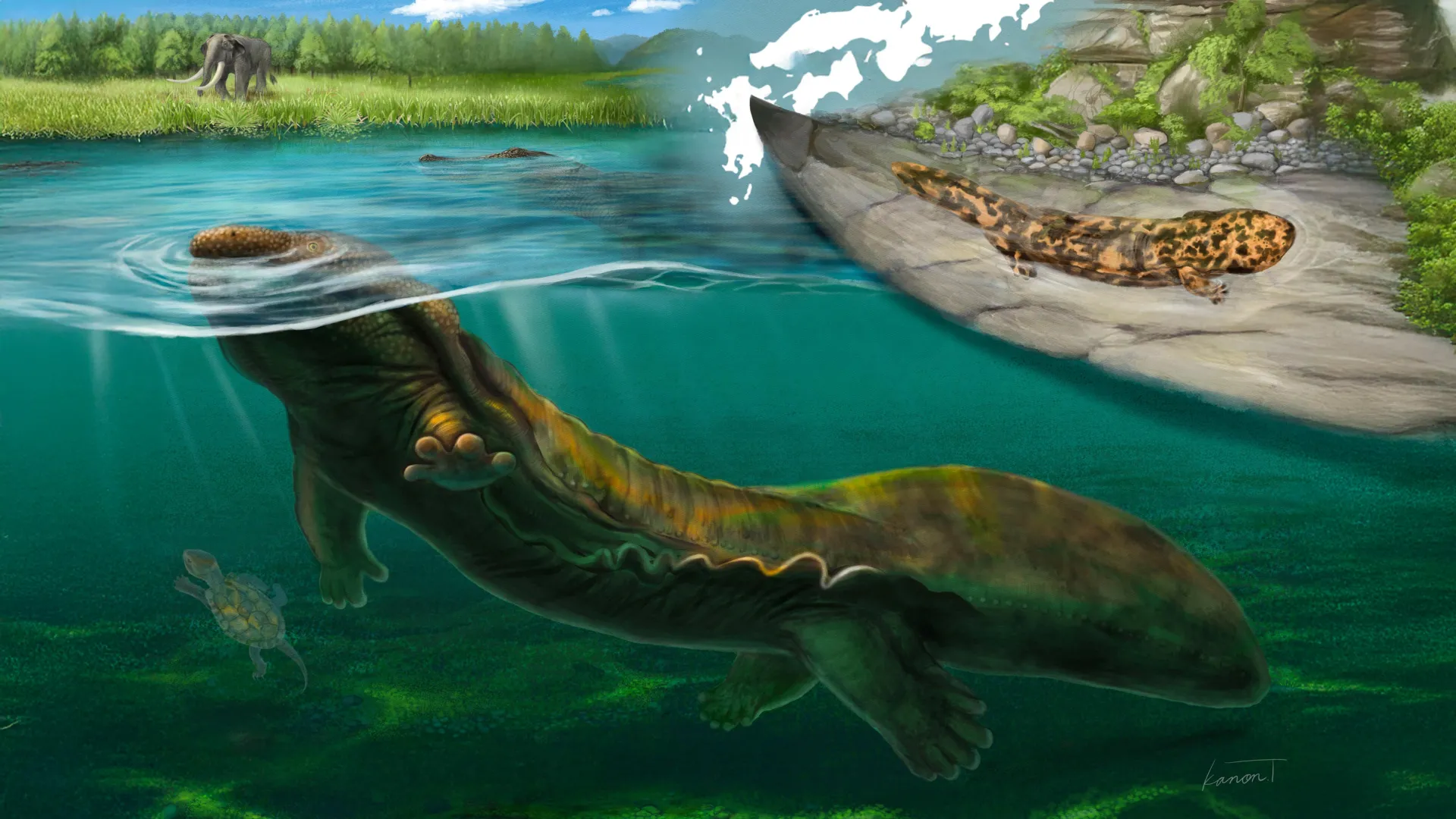
Paleontologists have identified a new genus and species of giant salamander from fossils discovered in Japan over 20 years ago. The creature, named Limnospondylus ajimuensis, lived approximately 3.5 million years ago during the Pliocene epoch when Kyushu was warmer and wetter than today. The animal likely reached 1.1 meters in length, making it a formidable aquatic predator of its time.
The fossils sat in collections for decades before researchers properly classified them as a distinct species rather than assigning them to existing known genera. This misidentification highlights a broader problem in paleontology: many fossil specimens languishing in museums and research institutions may represent undiscovered species but remain locked under incorrect taxonomic labels.
The discovery suggests giant salamanders were more diverse than previously documented. Modern giant salamanders, including the Chinese giant salamander (Andrias davidianus) and Japanese giant salamander (Andrias japonicus), represent surviving lineages from an ancient family. Limnospondylus ajimuensis occupied a different ecological role in its ancient ecosystem, filling niches that contemporary species no longer inhabit.
The research demonstrates the value of revisiting older collections with fresh analytical approaches and updated taxonomic frameworks. Museums worldwide house thousands of fossils never formally described in scientific literature or potentially misclassified based on outdated interpretations. Systematic reviews of these holdings could uncover numerous new species without requiring expensive new excavations.
The warmer climate that Limnospondylus inhabited contrasts sharply with modern Japan's cooler temperatures. This environmental change likely shaped the evolution and geographic range of salamander populations over millions of years. Understanding ancient amphibian diversity provides context for studying modern species' adaptation to contemporary climate change.
The find underscores amphibians' deep evolutionary history in East Asia and their vulnerability to