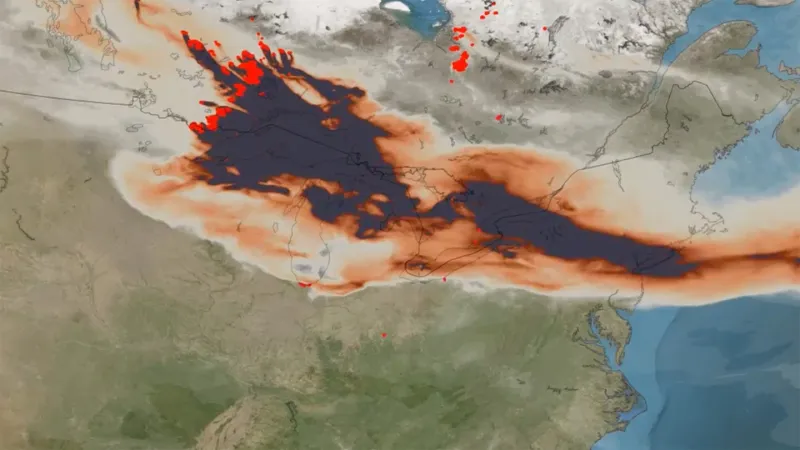
Canada's unprecedented wildfire season in 2023 sent smoke across the United States, triggering air quality alerts from Maine to California. Scientists attribute the surge to a combination of climate change, prolonged drought, and record-breaking temperatures that created ideal conditions for fire spread.
The fires burned an estimated 18 million hectares across Canada, more than double the previous record. Researchers from the University of British Columbia and Environment Canada found that human-caused climate change increased the likelihood of extreme fire weather by roughly 40 percent. Higher temperatures dry vegetation faster, while shifting precipitation patterns leave forests parched for extended periods.
Beyond the physical science, Canadian officials face a secondary crisis. Misinformation about wildfire causes circulates widely on social media, complicating public understanding and policy response. Some false claims blame controlled burns or environmental regulations, when evidence points to warming temperatures as the dominant factor.
Derek MacKay, a fire scientist at the Canadian Forest Service, emphasizes that while lightning and human activity ignite individual fires, climate conditions determine whether those fires become catastrophic. The 2023 season demonstrated how warming temperatures amplify fire risk across entire regions simultaneously.
Experts project more severe fire seasons ahead. The Canadian Climate Institute warns that without aggressive emissions reductions, wildfire smoke will increasingly affect both Canadian and U.S. air quality. The health impacts extend beyond respiratory issues, with cardiovascular hospitalizations rising during high-smoke periods.
Officials are expanding fire monitoring systems and investing in early warning infrastructure. However, scientists stress that addressing the root cause requires reducing greenhouse gas emissions globally. Local adaptation measures, while necessary, cannot fully offset climate-driven increases in fire risk without parallel progress on emissions.
The transboundary nature of smoke means wildfire management in Canada directly affects American public health and vice versa, necessitating coordinated regional responses.