Archaeologists have identified multiple contenders for the world's oldest weapon, with the strongest candidate dating back over 400,000 years. This discovery reshapes our understanding of when humans first developed tools specifically designed to harm or kill.
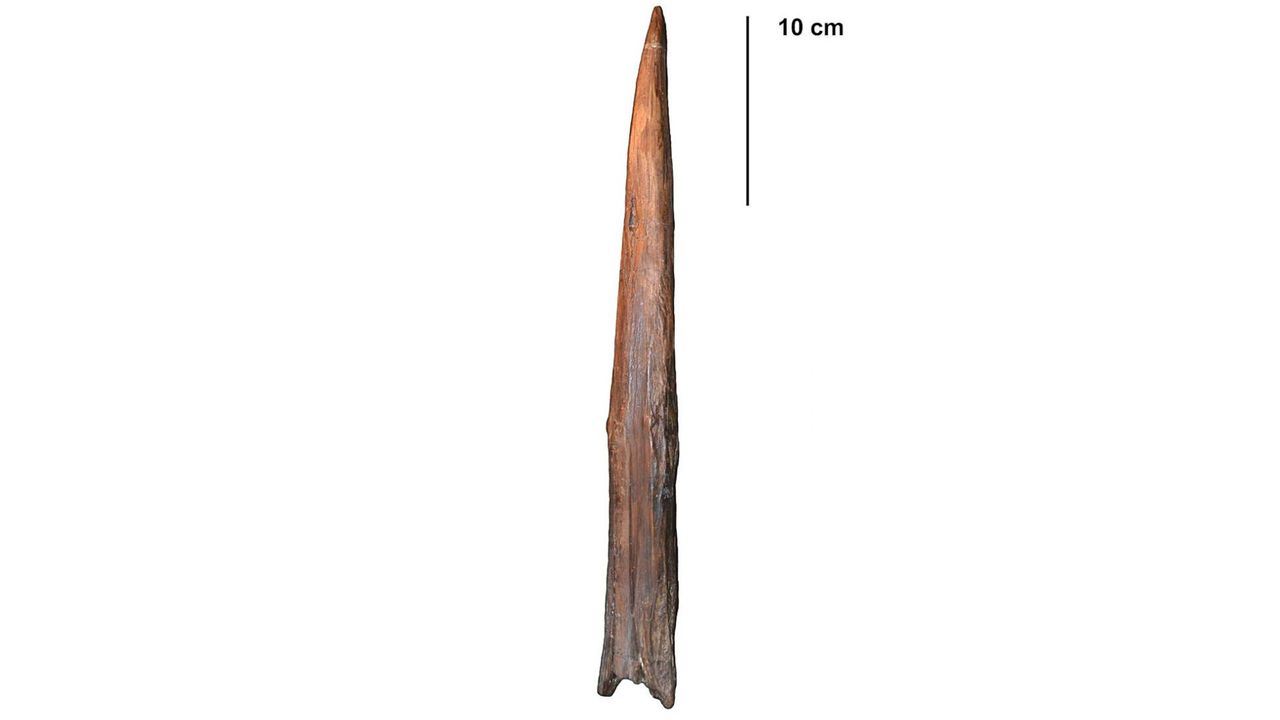
The leading contender is the wooden spear from Schöningen, Germany, discovered in 1995. Researchers dated the spear to approximately 400,000 years ago using radiocarbon analysis and stratigraphic methods. The spear measures about 2.2 meters long and shows clear signs of careful crafting, with a tapered point and balanced proportions suited for throwing. Its discovery at a site containing fossilized horse bones suggests early humans used it for hunting.
Other ancient weapons compete for this title. Hand axes, which emerged around 1.4 million years ago, served multiple purposes including cutting and striking. However, experts debate whether these tools were primarily weapons or multi-purpose implements. Pointed stone projectile tips discovered in South Africa date to roughly 64,000 years ago and show clear evidence of being hafted onto wooden shafts specifically for hunting.
The distinction between tool and weapon matters to researchers studying human evolution. A weapon typically targets living prey or threats with lethal intent, while a general tool serves broader functions. The Schöningen spears cross this threshold clearly, displaying design features optimized for hunting specific prey.
Finding the oldest weapon reveals insights into human cognition and cooperation. Creating an effective spear required planning, material selection, and technical skill. Early humans who made these weapons likely hunted in coordinated groups, suggesting complex social organization emerged hundreds of thousands of years ago.
The evidence also shows that weaponry developed long before writing or complex settlements. This technological achievement accompanied human migration out of Africa and adaptation to new environments. Understanding these ancient weapons helps researchers trace how human ingenuity and strategic thinking shaped our species' survival