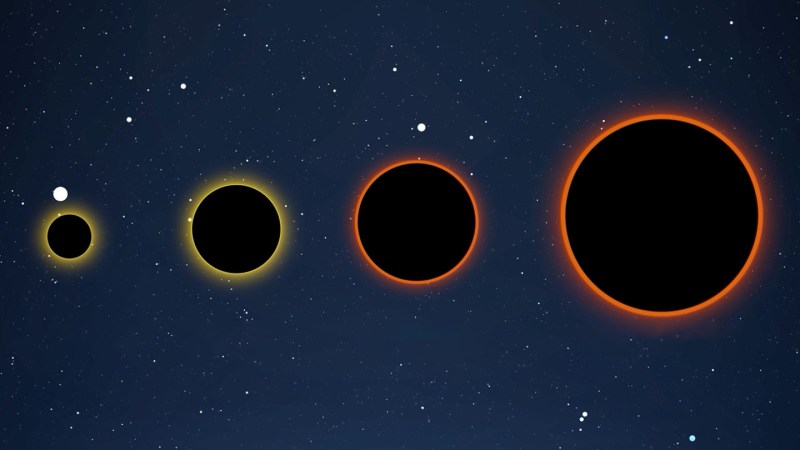
Black holes come in four distinct categories, classified primarily by mass, though scientists continue uncovering properties that challenge existing theories about these cosmic objects.
Stellar black holes form when massive stars collapse at the end of their lives. They typically range from 5 to 20 solar masses and represent the most common type. Intermediate black holes, with masses between 100 and 100,000 solar masses, remained theoretical until recent detections confirmed their existence. Scientists discovered these objects through gravitational wave observations and X-ray emissions from accretion disks.
Supermassive black holes anchor the centers of most galaxies, including the Milky Way. These titans contain millions to billions of solar masses. Astronomers have detected supermassive black holes in surprisingly young galaxies, raising questions about how such enormous objects formed so rapidly in the early universe.
A fourth category, primordial black holes, originated in the Big Bang itself rather than from stellar collapse. These hypothetical objects would have vastly different masses and properties than their stellar counterparts. While never directly observed, some researchers propose primordial black holes constitute dark matter, the invisible substance comprising 85 percent of the universe's matter.
The classification system remains incomplete. Black holes continue revealing unexpected behaviors. Their event horizons, the boundary beyond which nothing escapes, follow predictable physics. Yet their cores, where density becomes infinite, present mathematical infinities that current physics cannot resolve.
Recent gravitational wave observations from merged black holes have provided unprecedented data. The LIGO and Virgo detectors have identified dozens of collisions, offering new constraints on how black holes form and evolve. These measurements sometimes contradict predictions, suggesting gaps in existing models.
Questions persist about information paradoxes. When matter falls into a black hole, does information vanish permanently, or does it somehow remain encoded in the event horizon. Stephen Hawking