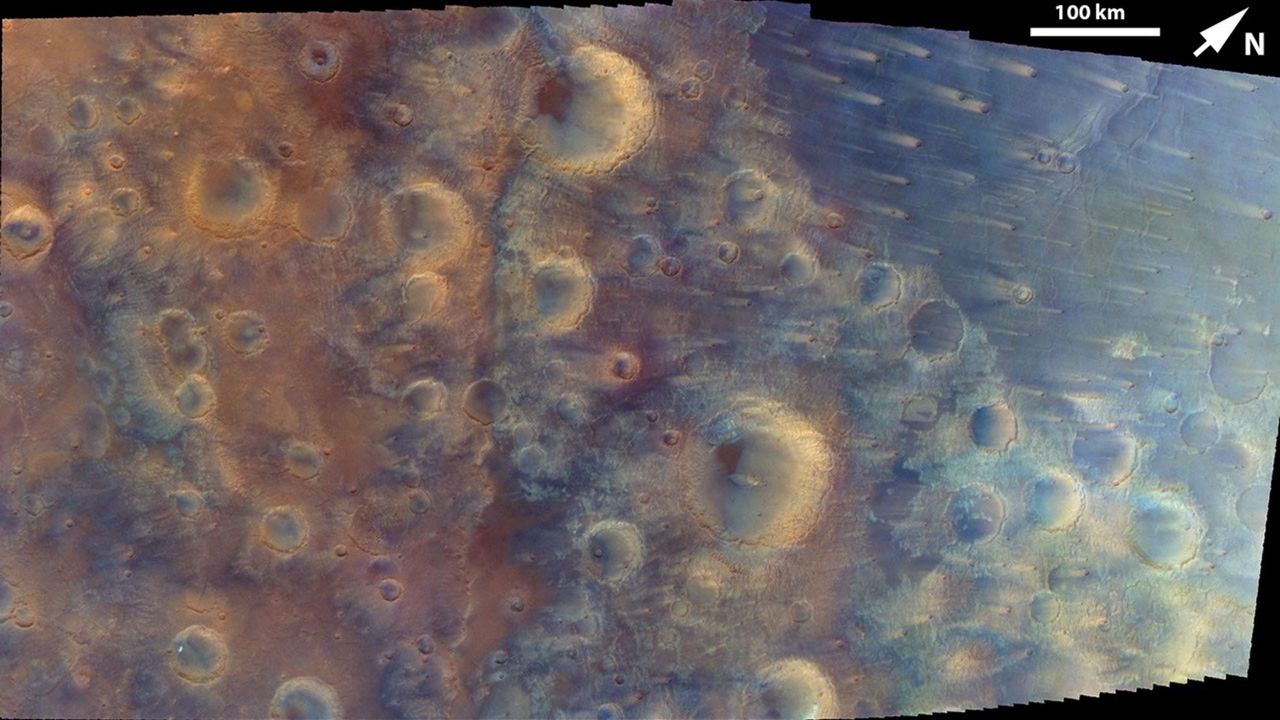
NASA's Psyche spacecraft captured timelapse video during a gravity assist flyby of Mars in November 2024, providing fresh observational data of the planet despite Mars being among the most thoroughly studied worlds in our solar system. The spacecraft, en route to the metal-rich asteroid 16 Psyche in the asteroid belt, passed within 1,644 kilometers of the Martian surface while accelerating for its primary mission.
The timelapse footage documents the spacecraft's rapid passage over Martian terrain, offering a dynamic perspective that complements decades of orbital imagery collected by rovers and stationary probes. Scientists acknowledged they expected few major revelations given how extensively Mars has been explored by multiple nations and private entities. However, the Psyche spacecraft's unique vantage point and instrumentation yielded supplementary data valuable to Mars research.
The gravity assist maneuver was essential for the mission's trajectory adjustment. By leveraging Mars's gravitational pull, the spacecraft gained the velocity needed to reach 16 Psyche, a 226-kilometer-wide metallic asteroid scientists believe may represent the exposed iron core of a protoplanet. This celestial body holds potential insights into planetary formation and the composition of rocky worlds' internal structures.
Psyche's cameras and scientific instruments observed Mars across different wavelengths during the encounter, capturing data that fills gaps in existing Martian datasets despite the planet's well-documented surface features and atmospheric conditions. NASA's mission team processed and released the timelapse to the public, allowing citizen scientists and researchers to examine the footage alongside traditional mission data.
The spacecraft launched in October 2023 and will arrive at asteroid 16 Psyche in 2029. The flyby served dual purposes: advancing the primary asteroid mission while contributing incrementally to Mars science. Such gravity assist flybys have become routine engineering solutions for deep space exploration, but they simultaneously