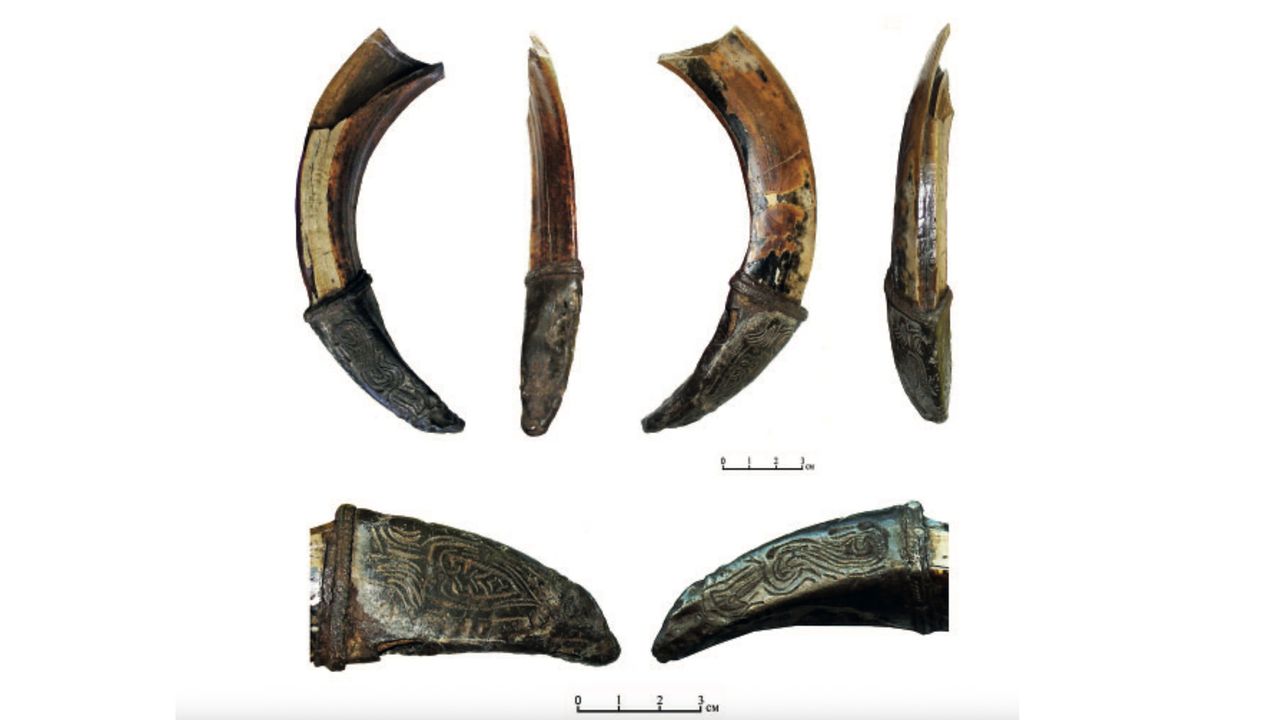
A decorated wild-boar tusk unearthed in Russia offers rare insight into medieval warrior culture and spiritual practices. The artifact, dating to the 12th century, bears intricate carvings and may have functioned as a good-luck charm or amulet for combat.
The tusk was discovered during archaeological work in Russia, though the exact site details remain limited in available reports. Researchers examining the artifact noted the deliberate decorations carved into its surface, distinguishing it from a simple animal remain. The craftsmanship suggests the tusk held cultural or personal significance to its original owner.
Medieval warriors across Europe and Asia frequently carried amulets and talismans believed to provide supernatural protection in battle. The wild boar held particular symbolic weight in many cultures, associated with strength, ferocity, and martial prowess. A decorated tusk would have served both practical and spiritual purposes. Warriors might wear or carry such objects to invoke the animal's fighting qualities or seek divine protection during combat.
The 12th-century timing places this artifact in the High Middle Ages, a period of significant military activity across Russia and Eastern Europe. Archaeological evidence of personal warrior items like amulets remains scarce, making this discovery notable for understanding medieval mentality and battlefield preparation.
Experts studying the tusk have analyzed the decoration patterns and material composition to verify its age and origin. Such analysis helps distinguish genuine medieval artifacts from later imitations. The tusk's preservation and artistic elements provide data points about craftsmanship standards and available materials in 12th-century Russia.
This find contributes to broader scholarly understanding of how medieval warriors integrated spiritual beliefs into combat preparation. Rather than viewing such objects as superstition, researchers recognize amulets as legitimate components of warrior identity and psychological preparation. The tusk represents a tangible connection between material culture and the inner lives of medieval people whose written records often survive in limited form.