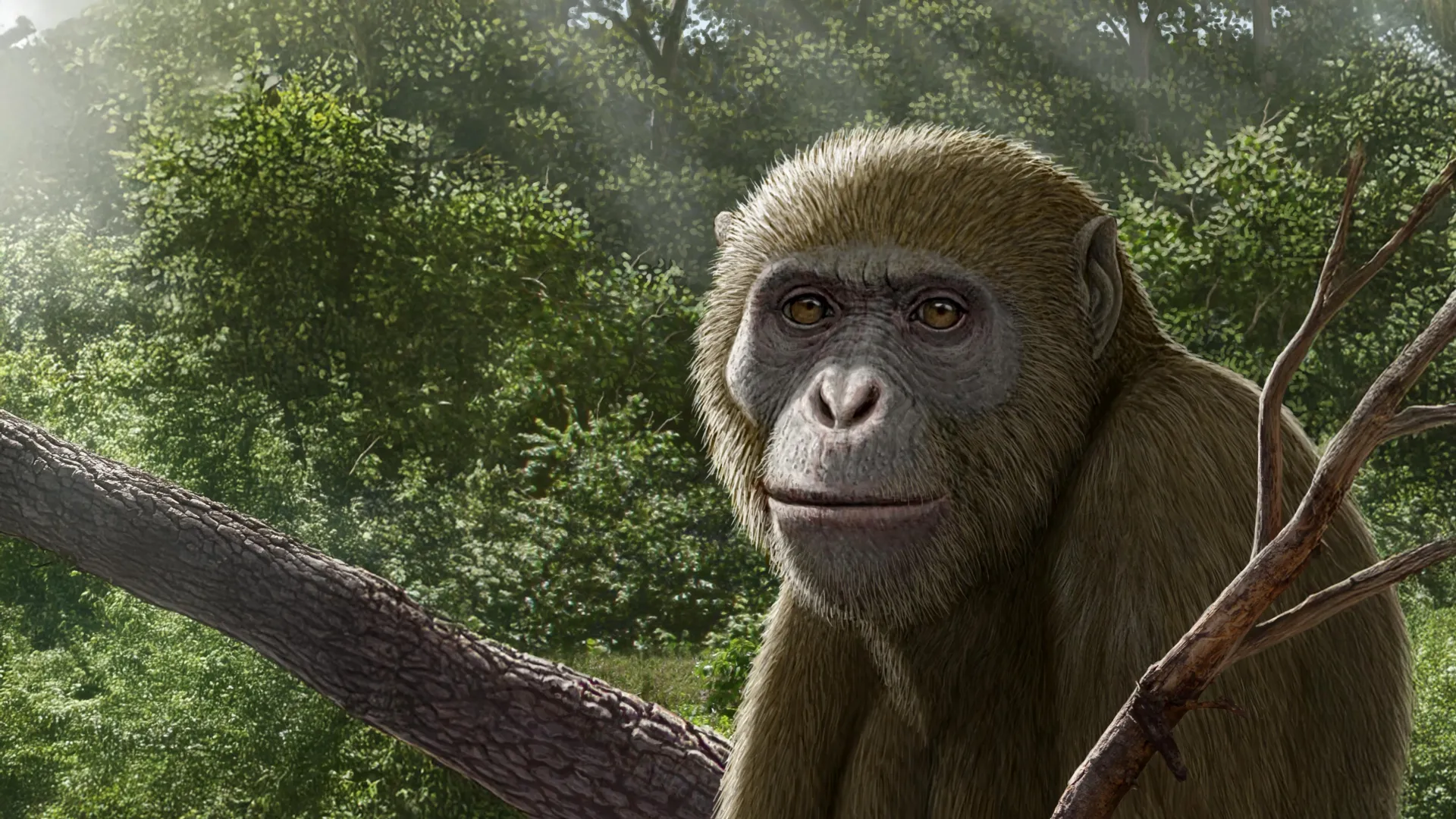
Researchers have identified a newly discovered fossil ape from northern Egypt that fundamentally challenges prevailing assumptions about ape evolution and human origins. The fossil places ancestral apes in North Africa rather than exclusively in East Africa, where paleontologists have long concentrated their search efforts.
The specimen exhibits characteristics placing it closer to living apes than any known East African species from the same time period. This discovery expands the geographic range where scientists believe the common ancestor of modern apes first emerged and diversified. The finding suggests North Africa and the Middle East functioned as a critical crossroads and birthplace for the ape lineage that eventually produced gibbons, orangutans, gorillas, chimpanzees, and humans.
The implications reach far beyond simple geographic relocation. If apes originated and diversified across a broader region than previously thought, it reframes how paleontologists understand primate evolution and migration patterns. The traditional narrative centered on East African rift valleys as the singular cradle of ape diversity now requires revision to account for fossils from northern populations.
This discovery highlights a persistent bias in paleontological research. East African sites have received intensive study and funding for decades, producing a wealth of hominin and ape fossils. North African deposits remain comparatively underexplored, meaning the fossil record there remains incomplete. The Egyptian specimen suggests that systematic investigation of northern African sites could uncover additional evidence fundamentally altering current models of ape evolution.
The research underscores how fossil discoveries in unexpected locations can overturn established scientific narratives. A single well-preserved specimen with clear anatomical features can shift decades of accumulated theory. Future excavations in North Africa and the Middle East will test whether this Egyptian fossil represents an isolated population or evidence of widespread ape distribution across Africa and Eurasia during the fossil's time period.
The work demonstrates that understanding human origins requires looking beyond traditionally productive research areas and recon