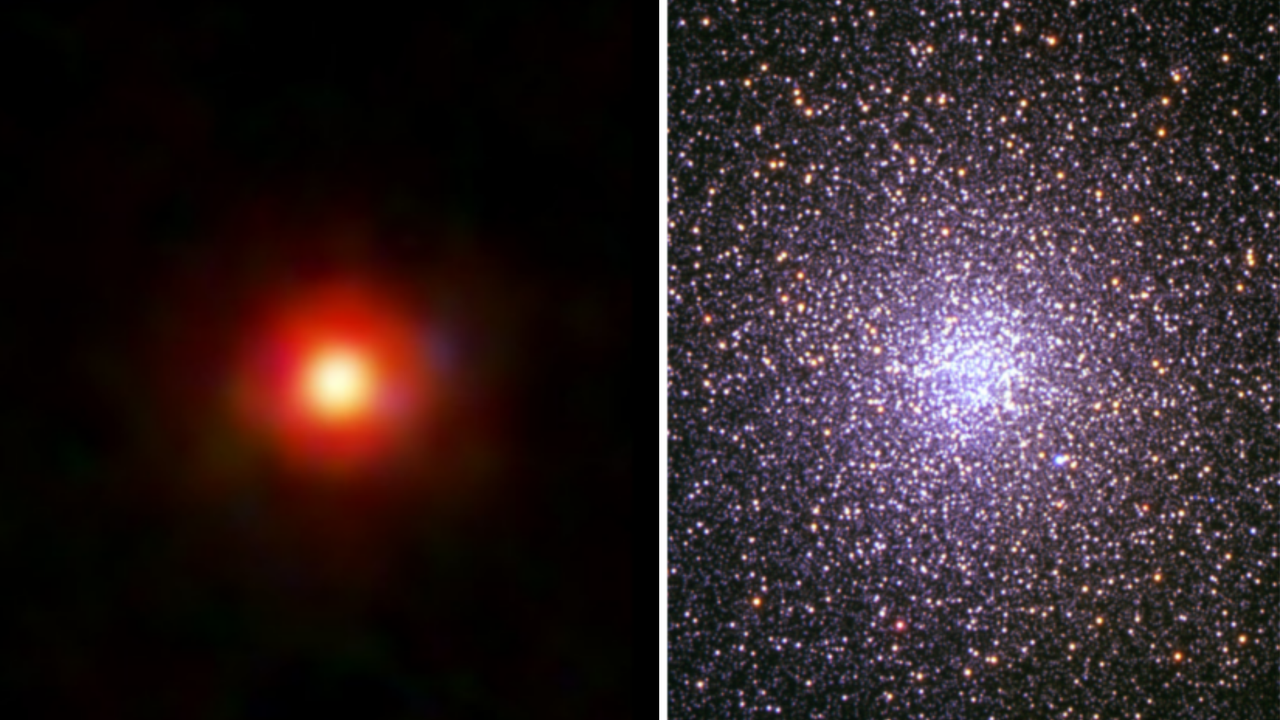
The James Webb Space Telescope has detected galaxies so remote and massive they shouldn't exist in the early universe, earning the nickname "Little Red Dots" because of their infrared signature and compact appearance. These observations challenged conventional models of galaxy formation, suggesting galaxies grew far faster than theories predicted.
New analysis indicates these anomalous objects may not represent a permanent puzzle. Researchers examining JWST data propose that the Little Red Dots could be heavily dust-obscured galaxies, meaning cosmic dust masks their true nature and makes them appear redder and more compact than they actually are. As observations improve and telescopes gather more light from these distant sources, the apparent mystery dissolves.
The comparison to dinosaurs proves apt. The Little Red Dots haven't vanished from the universe, only from the category of unexplained phenomena. Better understanding their dust content and internal structure reveals they fit within existing galaxy formation models more neatly than initial observations suggested.
This development reflects how science progresses. Early JWST observations sparked genuine debate about whether astrophysicists needed to revise their understanding of early galaxy development. The telescope's extraordinary sensitivity detected objects that ground-based or older space telescopes missed entirely. However, as researchers applied more sophisticated analysis techniques and gathered additional data, simpler explanations emerged.
The Little Red Dots remain scientifically valuable. Studying their dust composition, star formation rates, and structural properties advances understanding of how galaxies assembled in the universe's first billion years. The objects themselves don't change, only the context shifts.
This pattern repeats throughout astronomy. Unusual observations spark theoretical revision, then further study clarifies the phenomenon within established frameworks. The Little Red Dots illustrated JWST's power to surprise, but their partial resolution demonstrates that surprising observations require careful interpretation before upending fundamental physics.