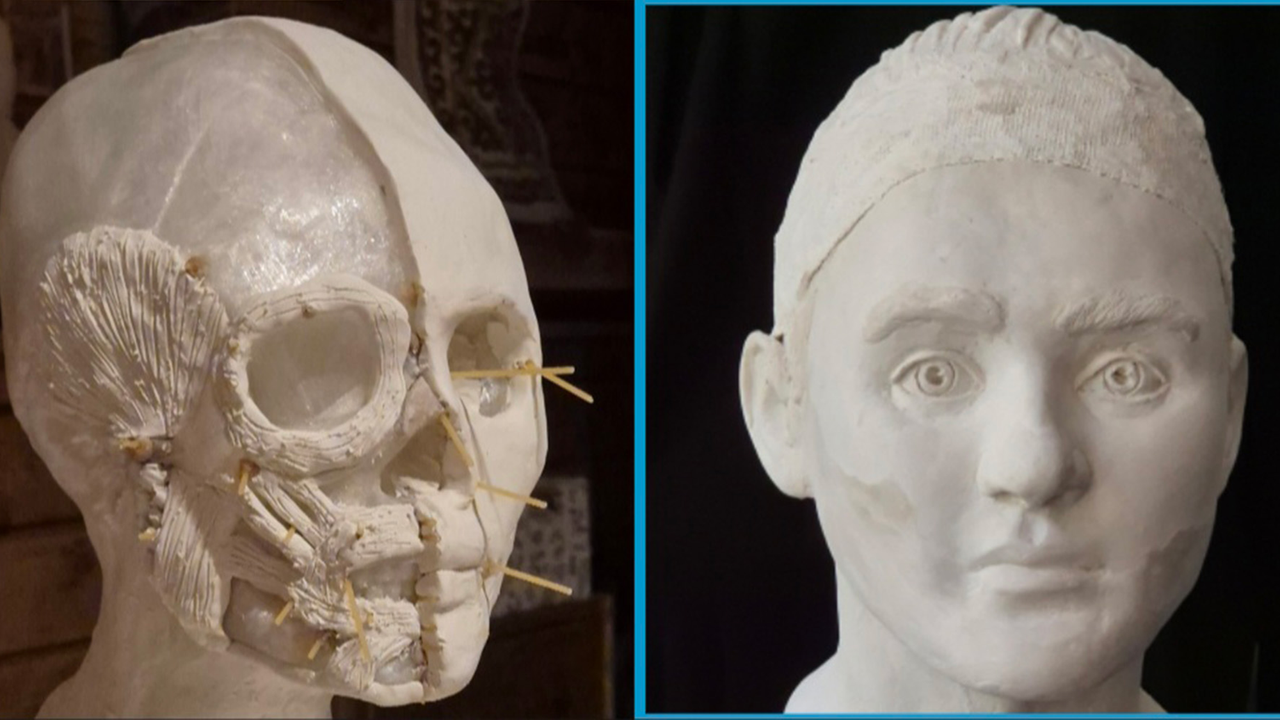
Researchers have reconstructed the faces of 16 people who lived near Aquincum, an ancient Roman frontier settlement in what is now Budapest, Hungary, using DNA analysis, 3D-printed skulls, and forensic sculpture techniques. The remains date to roughly 1,700 years ago, placing them in the Roman period.
The project combined multiple disciplines to bring these historical figures back to visual life. Forensic sculptors built clay faces onto 3D-printed replicas of the original skulls, a method that relies on anatomical knowledge of tissue depth across different facial regions. DNA analysis informed researchers about the ancestry and origins of the individuals, helping contextualize who these people were within the complex multicultural society of Roman Hungary.
Aquincum sat along the Danube River frontier zone where Rome maintained military and civilian presence for centuries. The region experienced considerable population movement and mixing, with local populations, Roman settlers, and migrants from across the empire interacting regularly. The reconstructed faces capture this diversity, representing different ethnic backgrounds and life experiences.
The reconstructions serve purposes beyond visual spectacle. They humanize archaeological remains and help museums and researchers engage public audiences with ancient history. Seeing a face makes historical people feel more immediate and relatable than skulls or pottery fragments alone.
The methodology has limitations. Forensic facial reconstruction introduces variables that cannot be fully controlled, including estimates of soft tissue thickness and variations in individual facial structure. Skin tone, eye color, and hair characteristics often require inference from limited evidence. These reconstructions represent educated approximations rather than photographic accuracy.
The project reflects growing interest in applying forensic and genetic techniques to archaeological questions. Similar work has reconstructed faces from Neolithic specimens, Roman soldiers, and medieval populations. As DNA sequencing becomes cheaper and more routine, combined with improved 3D imaging technology, facial reconstruction from ancient remains will likely become more common in archaeological