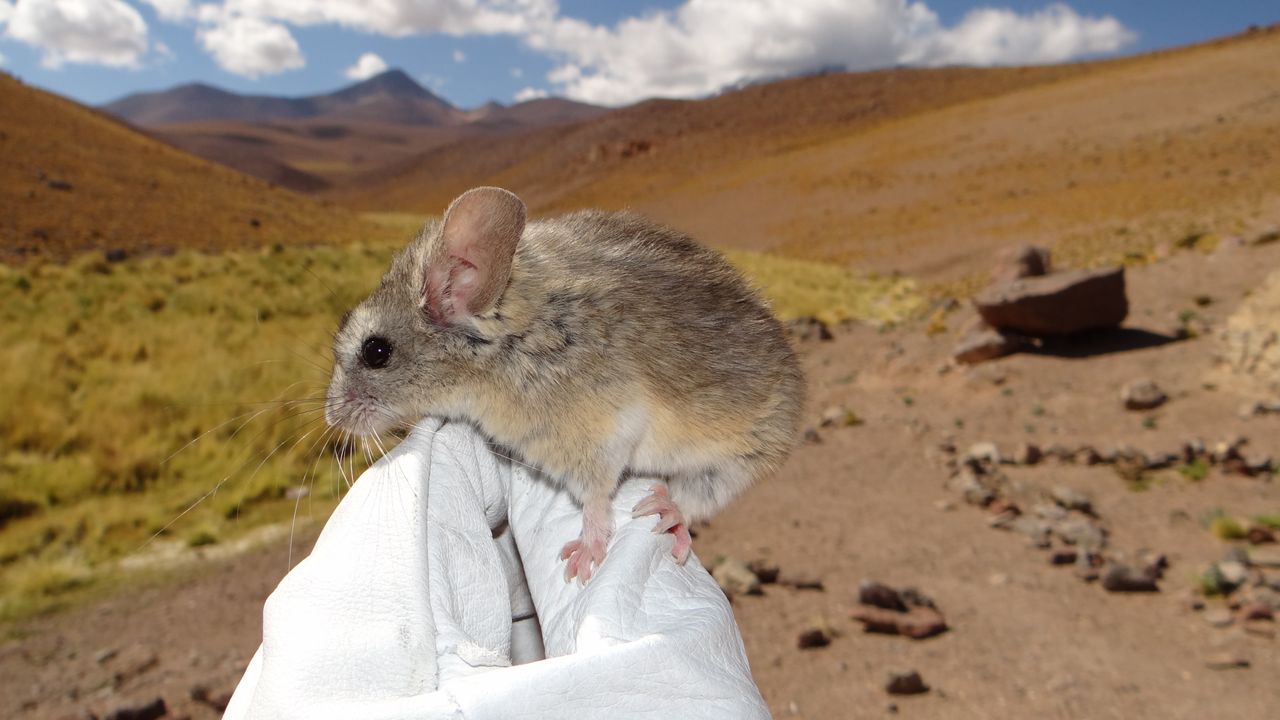
Researchers braved extreme conditions on frozen Andean volcanoes to document how leaf-eared mice survive in one of Earth's most hostile environments. Scientists studied populations of Phyllotis vacata on the peaks of the Puna de Atacama volcanic region in Chile, where temperatures plummet far below freezing and oxygen levels drop to less than half of sea-level concentrations.
The mice have adapted to consume toxic plants that would poison most other animals, allowing them to survive where few other mammals can feed. This dietary adaptation represents a remarkable evolutionary response to resource scarcity in an environment described by researchers as "not remotely compatible with long-term human survival."
The Puna de Atacama sits at elevations exceeding 4,000 meters, creating conditions of extreme cold, intense UV radiation, and severe hypoxia. The volcanic peaks present additional hazards beyond climate. Researchers undertook significant personal risk to collect field data on mouse behavior and physiology at these altitudes.
The study reveals how evolution shapes survival strategies in Earth's most extreme terrestrial habitats. The leaf-eared mice's ability to detoxify poisonous vegetation demonstrates metabolic flexibility that allows animals to exploit food sources unavailable to competitors. This specialization, while enabling survival in the volcanoes' harsh ecosystem, comes with tradeoffs in energy efficiency and reproductive capacity.
Understanding how organisms adapt to extreme environments has implications for astrobiology and the limits of life on other planets. The mice's physiological tolerance to hypoxia and toxin metabolism provide models for studying how organisms respond to multiple simultaneous environmental stressors.
The research adds to growing evidence that life finds pathways to survive in seemingly uninhabitable places. The leaf-eared mice occupy an ecological niche so extreme that few other vertebrates attempt colonization. Their presence on these frozen volcanoes demonstrates that evolution can