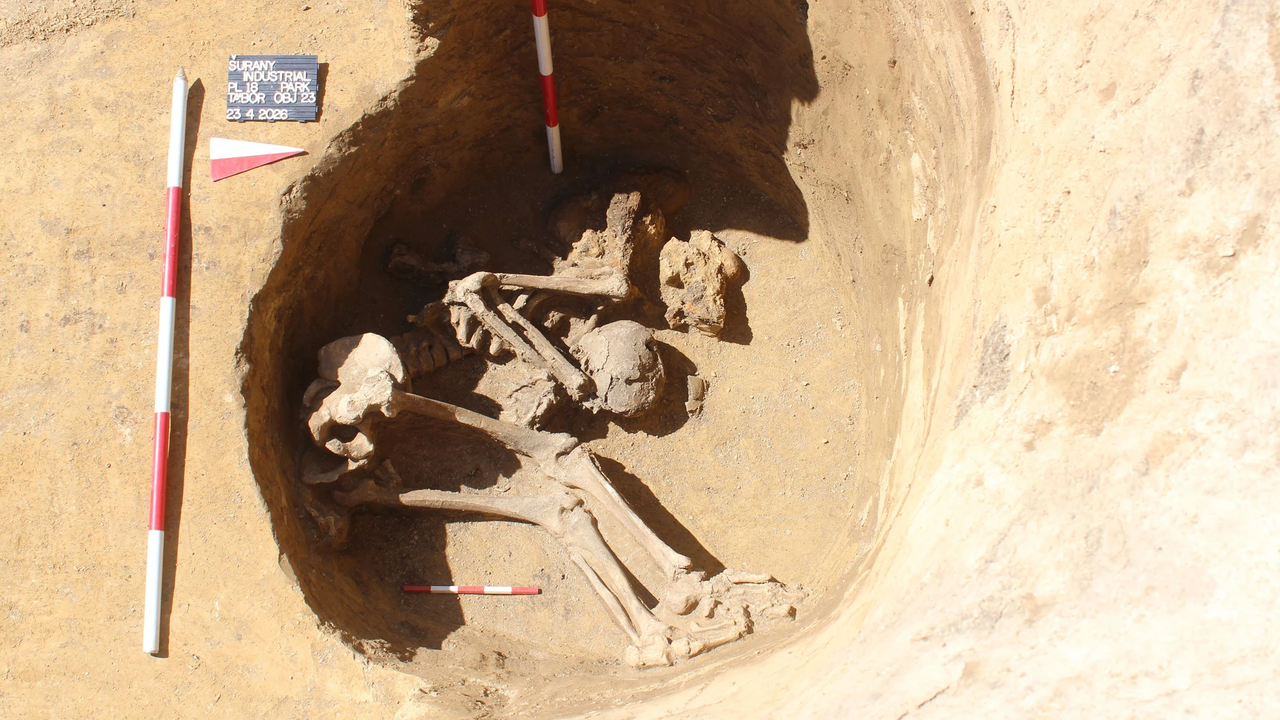
Archaeologists excavating a Roman military camp in Slovakia have discovered the hastily buried remains of soldiers who likely died during Marcus Aurelius' Marcomannic Wars in the second century. The camp itself ranks as "extremely rare" for the region, according to researchers studying the site.
The soldiers' remains show signs of rushed burial practices. Some bodies were deposited directly into wells, while others received minimal preparation before interment. This haphazard approach to funeral rites contrasts sharply with typical Roman military burial customs, suggesting the soldiers died during active conflict or under emergency conditions that prevented proper ceremonial treatment.
The Marcomannic Wars (166-180 CE) pitted Roman forces against Germanic tribes along the Danube frontier. These campaigns tested the Roman military system severely, with extensive casualties reported across multiple theaters of operation. Slovakia lay within the contested border zone where Roman legions clashed with Marcomanni and allied groups.
The discovery of a military camp in Slovakia with associated human remains provides rare archaeological evidence of Roman military presence and conflict in Central Europe during this period. Most known Marcomannic War sites concentrate in other regions. Skeletal analysis of the recovered remains could yield details about the soldiers' origins, ages, health status, and injuries sustained in combat.
Archaeologists have not yet released full details about the camp's size, layout, or the number of burials discovered. The wells containing remains present particular research opportunities, as waterlogged conditions sometimes preserve organic material better than standard soil burial. Isotopic analysis of teeth and bones might reveal where these soldiers originated before deployment to this distant frontier post.
This excavation illuminates the human cost of Rome's frontier conflicts and demonstrates how even Marcus Aurelius, often remembered as a philosopher-emperor, maintained an aggressive military posture along his empire's borders. The hastily buried soldiers represent casualties from wars that stretched imperial resources and claimed thousands of