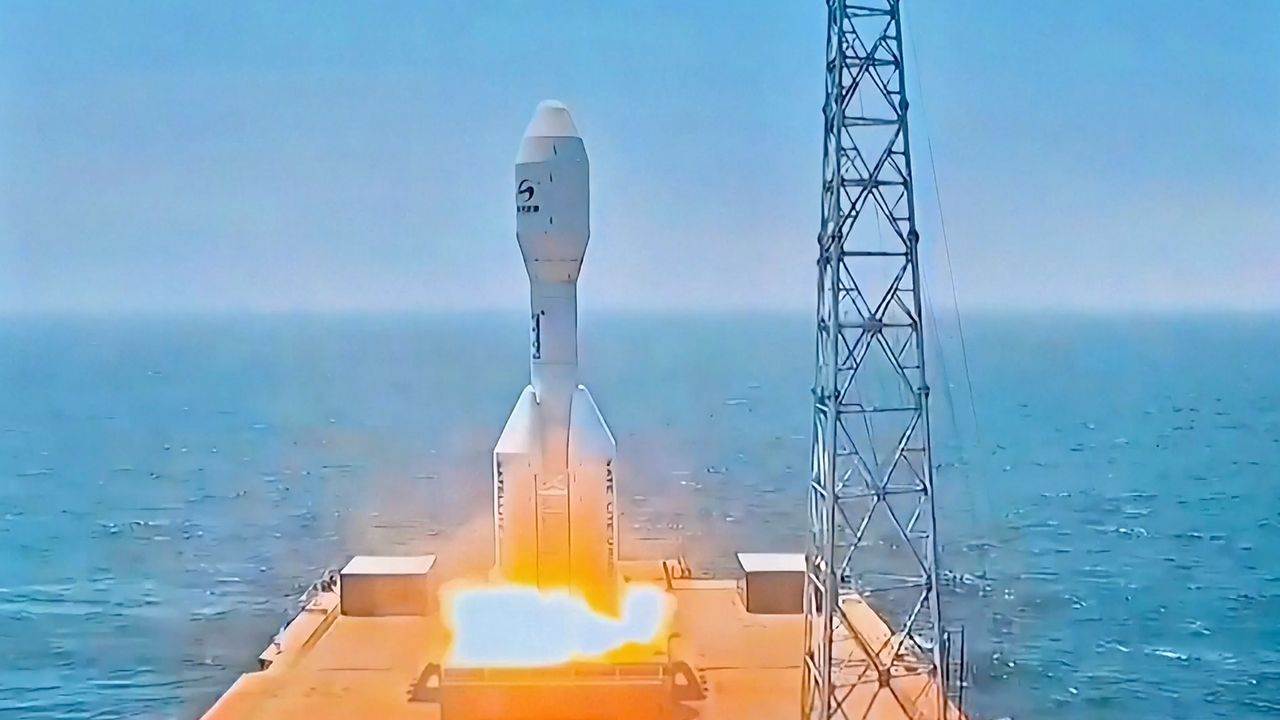
Orienspace's Gravity-1 rocket completed its third successful mission on July 21, launching nine satellites to orbit from a vessel at sea. The solid-fuel rocket holds the distinction of being the world's most powerful solid rocket currently operational.
The maritime launch represents a growing trend in commercial spaceflight, where companies deploy rockets from ships to access equatorial launch zones and reduce geographic constraints. This approach offers flexibility for operators seeking optimal orbital insertion angles without requiring fixed ground infrastructure.
Gravity-1 stands apart from liquid-fueled competitors through its solid propellant design, which simplifies logistics and reduces launch preparation time. The rocket's power output exceeds other solid-rocket systems globally, making it a notable entry in China's expanding commercial space sector.
Orienspace, a Beijing-based launch company founded in 2018, has rapidly progressed from inaugural flight to repeated successful operations. The company's three successful missions within a relatively short timeframe demonstrate engineering maturity and operational reliability. Each test strengthens the commercial viability of solid-rocket launches for small-to-medium payload delivery.
The nine satellites launched on this mission serve various commercial purposes, though specific payload details remain limited in available reports. The successful orbital insertion of multiple satellites in a single launch shows the rocket's capability to handle diverse mission profiles.
China's commercial space sector has accelerated development of launch vehicles to compete with international operators including SpaceX, Axiom Space, and others. Solid-rocket systems offer distinct advantages for certain mission profiles: they generate no complex engine ignition sequences, require minimal ground support equipment, and enable rapid turnaround between launches.
The July 21 mission marks continued validation of Gravity-1's performance envelope. As Orienspace scales operations, the company positions itself as an alternative launch provider for operators seeking options beyond traditional liquid-fueled rockets. Maritime launch capabilities add strategic flexibility, particularly