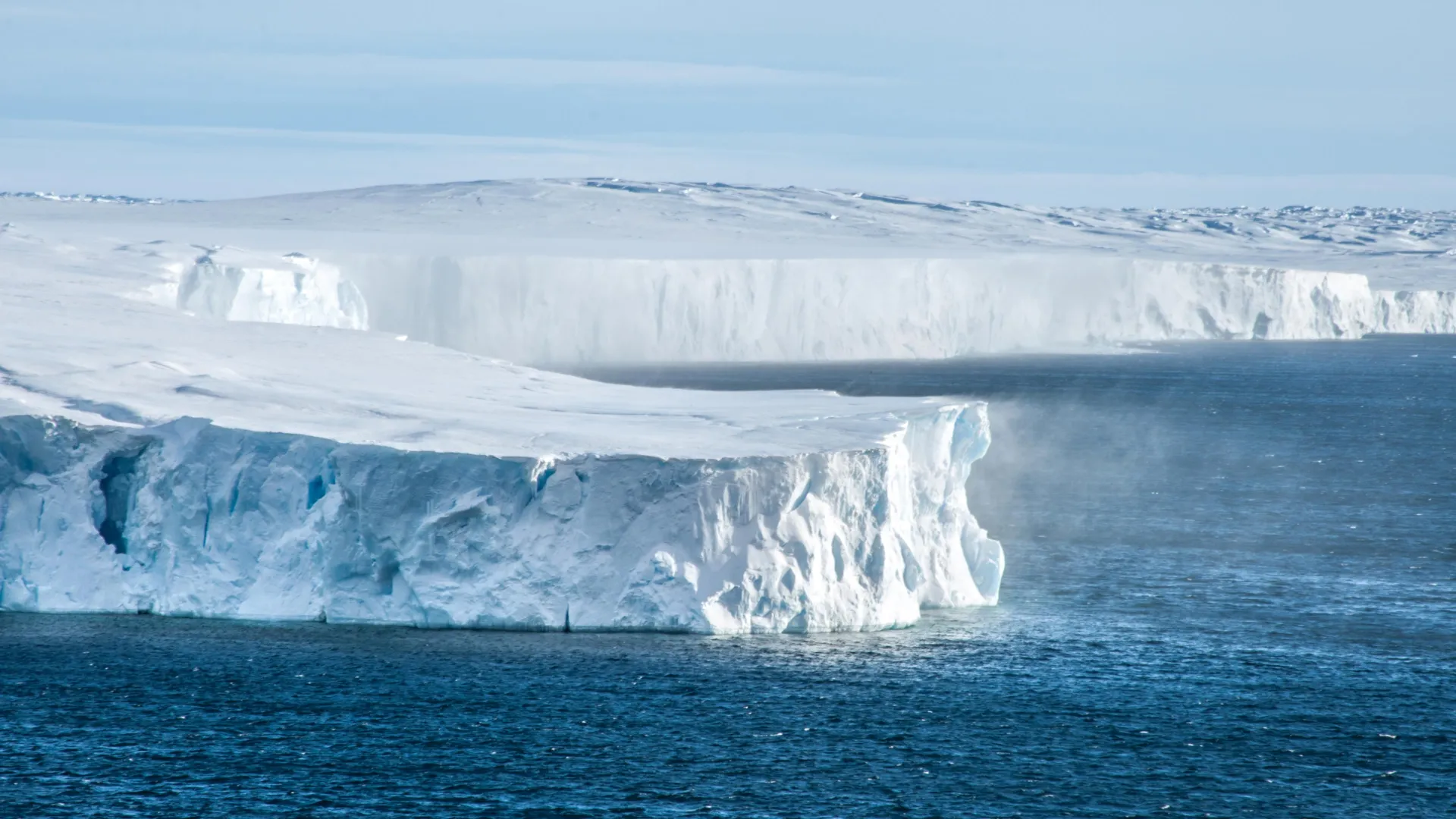
Researchers have identified a critical window for predicting Antarctic ice loss that extends to roughly 2050, giving policymakers decades to prepare for rising seas. Beyond that threshold, ice retreat becomes unpredictable and potentially catastrophic.
The finding emerges from new modeling work examining how Antarctic ice sheets respond to warming temperatures. Scientists can currently forecast ice loss with reasonable confidence through the mid-century mark because the physics governing ice sheet behavior remains relatively stable during that period. The major uncertainties center on processes that accelerate after 2050, including how quickly ice shelves collapse and how meltwater interacts with bedrock beneath the ice.
This creates an asymmetry in predictability. The next 30 years offer a window of relative clarity. Governments can plan coastal infrastructure, relocate populations, and invest in adaptation measures with some confidence about sea level trajectories. The uncertainty explodes after 2050, when feedback mechanisms could trigger rapid, irreversible changes.
The implications are sobering. Antarctica holds enough ice to raise global sea levels by roughly 58 meters if it melts completely. Current projections suggest several meters of rise this century, but the post-2050 period could see acceleration that renders long-term planning nearly impossible.
The research highlights a paradox. Scientists have gained better understanding of Antarctic ice dynamics in recent years, yet that knowledge reveals the limits of prediction itself. The most consequential changes may occur precisely when forecasting becomes most difficult.
For coastal nations already facing existential threats from sea level rise, the news offers both opportunity and urgency. The decades ahead represent the last extended period when adaptation strategies can be based on predictable projections. After that, humanity enters territory where surprise becomes the dominant possibility.